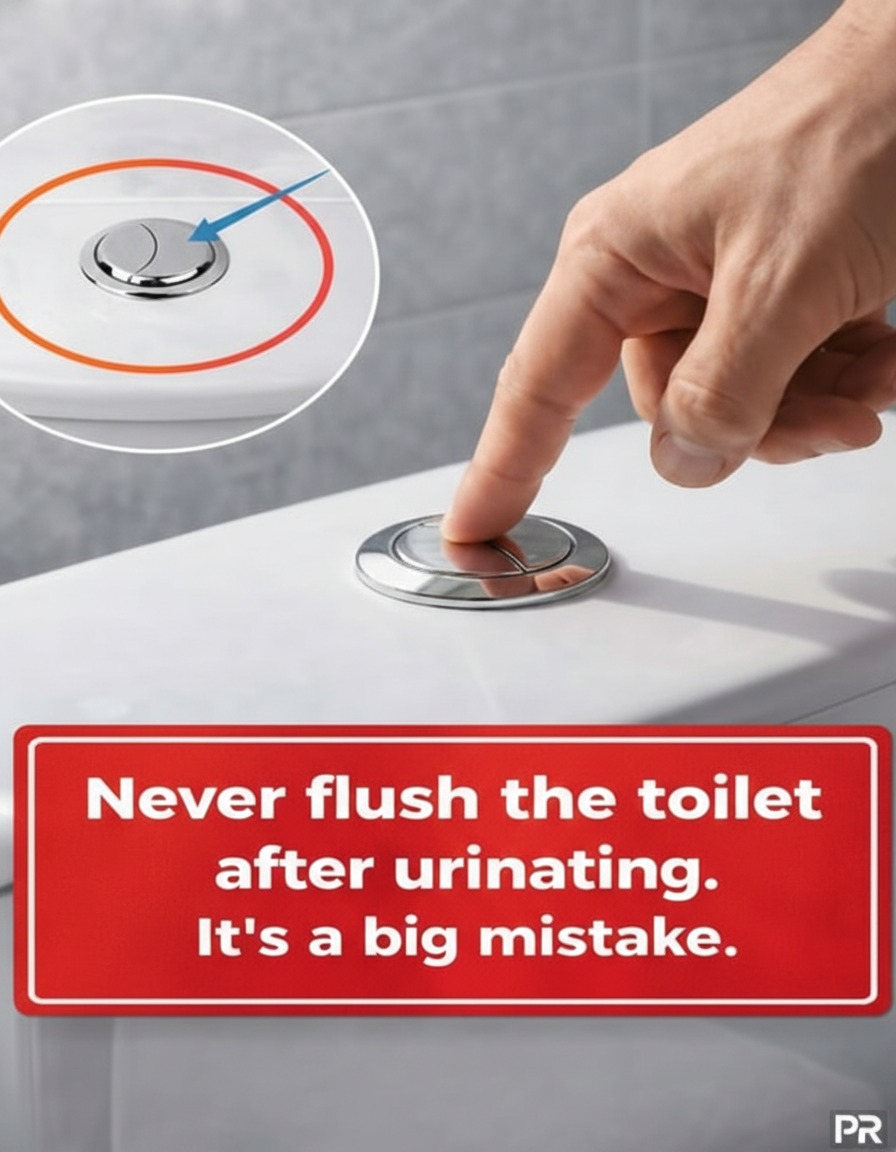
At first glance, the image feels almost shocking. A finger hovering over the flush button, paired with a bold warning: “Never flush the toilet after urinating. It’s a big mistake.” It sounds extreme, even unhygienic. And yet, messages like this keep circulating for a reason—they spark curiosity, debate, and reflection about habits we never question.
So what’s really behind this claim?
The phrase often associated with this mindset is simple: “If it’s yellow, let it mellow.” While it may sound informal, the principle behind it is rooted in conservation. Urine is mostly water and, in a clean toilet, doesn’t pose an immediate health risk when left briefly. For many eco-conscious households, especially during the night or when living alone, flushing less frequently has become a conscious choice.
There’s also another layer to this message: awareness. The image isn’t just telling you what to do—it’s interrupting autopilot. Most of us flush without thinking. The warning forces a pause, encouraging people to question habits they’ve repeated for years without considering their impact.
For decades, flushing after every use has been treated as an unquestionable rule of hygiene. But in recent years, discussions around water consumption, sustainability, and everyday waste have brought even the smallest household habits under the microscope. The flush button, once pressed automatically, is now being reexamined.
A single toilet flush uses a surprising amount of clean drinking water. Multiply that by several times a day, by every member of a household, and the numbers grow fast. In regions facing water shortages or rising utility costs, skipping unnecessary flushes—especially after urinating—has been proposed as a simple way to reduce water waste. The idea isn’t about neglect or poor hygiene, but about intentional use.
That said, context matters. Not flushing may be reasonable in private homes with proper ventilation and regular cleaning routines, but it’s not suitable everywhere. Shared bathrooms, public spaces, or households with multiple users require stricter hygiene standards. Odors, bacteria buildup, and general comfort are valid concerns and shouldn’t be ignored.
The image doesn’t mean flushing is wrong. It suggests that automatic flushing might be. It’s a reminder that even the smallest daily actions carry consequences—financial, environmental, and practical.
In the end, the message isn’t really about the toilet at all.
It’s about mindfulness.
About choosing when something is necessary—and when it’s just habit.
Leave a Reply