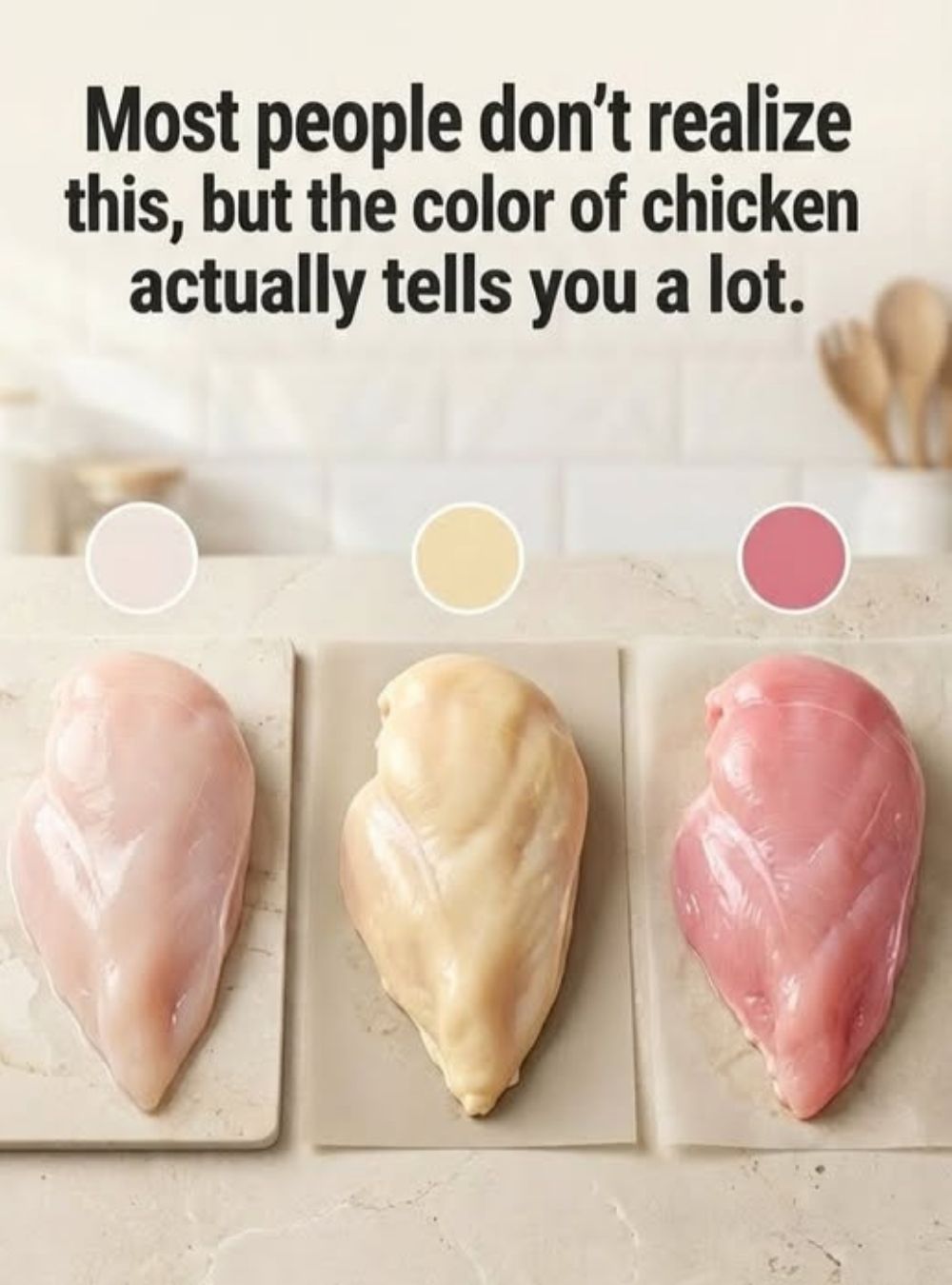
If you’ve ever stood in the grocery store comparing packages of chicken, you’ve probably noticed the color differences. One tray looks pale pink, almost white. Another has a deeper yellow tint. Even when the cut and price are similar, the contrast can make you pause and wonder: which one is better?
The truth is, color alone doesn’t determine quality or safety.
In many cases, the shade of chicken reflects how the bird was raised and, more specifically, what it was fed. Paler chicken is commonly associated with large-scale commercial production. These birds are typically raised indoors on carefully controlled diets designed for consistent growth and efficiency. The result is the light-colored meat many shoppers are used to seeing.
On the other hand, chicken with a richer yellow tone often reflects diet rather than processing. Feed that includes corn or other naturally pigmented ingredients can influence the color of the skin and fat. The pigments in these feeds are absorbed by the bird and can create a warmer hue. In some cases, chickens that grow more slowly or have more space to move may also develop slightly firmer texture and a fuller flavor, though this varies.
It’s important to understand that color can sometimes be influenced intentionally. Producers may adjust feed to meet consumer expectations in certain markets where yellow chicken is preferred. This doesn’t automatically make one option superior—it simply reflects market demand.
When evaluating quality, other factors matter more than color:
– Clear labeling (organic, pasture-raised, Certified Humane)
– Freshness and packaging date
– Texture (firm, not slimy)
– Smell (neutral, not sour)
– Proper storage temperature
Safety is not determined by how yellow or pale the meat appears. Proper handling, refrigeration, and cooking temperature are far more important.
In the end, there is no single “correct” color that guarantees better chicken. The shade you see is usually linked to feed and farming practices, not freshness or safety. What truly determines quality is how the bird was raised, how it was handled, and what matters most to you as a consumer.
Leave a Reply