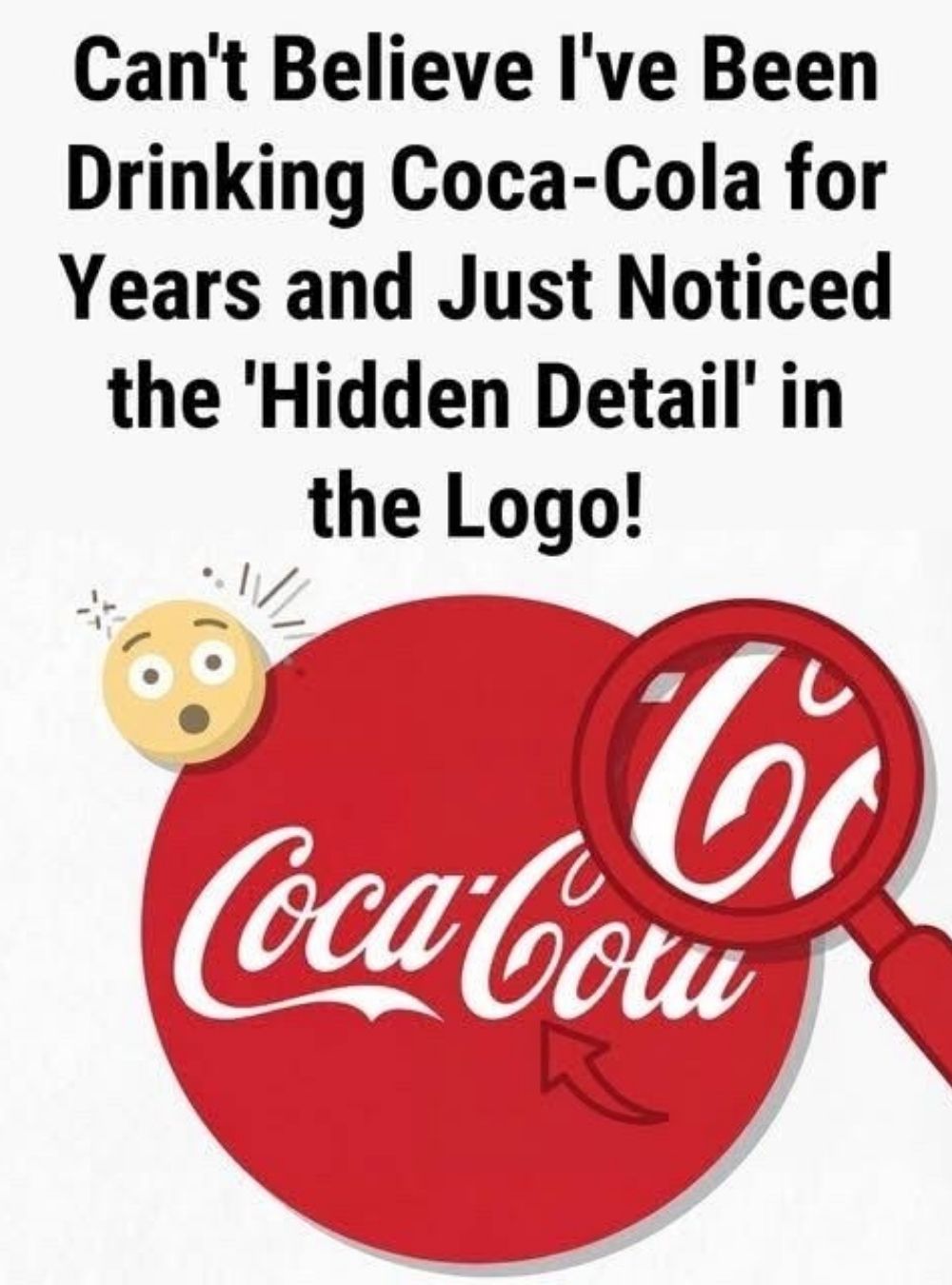
It happens in a split second. Someone points it out, and suddenly the logo you’ve seen your entire life looks different. That second “C” in Cola stops being just a curve of elegant script and starts to resemble a smile. Once you notice it, it’s almost impossible to unsee. The logo feels warmer, friendlier—like the bottle itself is quietly welcoming you.
Was this a clever design choice hidden in plain sight, or just the human brain doing what it does best?
The Coca-Cola logo dates back to the 1880s and was created by Frank Mason Robinson, a bookkeeper with a strong sense of style. He chose the flowing Spencerian script because it felt refined and memorable. Historical records suggest the curves were meant to be decorative and elegant, not symbolic. There’s no evidence that a smile was intentionally built into the lettering.
And yet, over time, that graceful curve has taken on a life of its own.
This phenomenon says more about human psychology than typography. Our brains are naturally wired to find faces and emotions in simple shapes—a process known as pattern recognition. We see expressions in clouds, meanings in symbols, and warmth in familiar forms. After more than a century of Coca-Cola being associated with happiness, togetherness, and celebration, the mind begins to project those emotions back onto the logo itself.
The design never changed. Our perception did.
Every iconic symbol exists in two worlds: the physical one, made of lines and ink, and the emotional one, shaped by memory and experience. On paper, the Coca-Cola logo is just elegant lettering. In our minds, it carries generations of shared moments, comfort, and nostalgia.
That “smile” isn’t proof of a hidden trick—it’s proof of how deeply familiarity and emotion shape the way we see the world. Sometimes, meaning isn’t designed. Sometimes, it’s remembered.
Leave a Reply