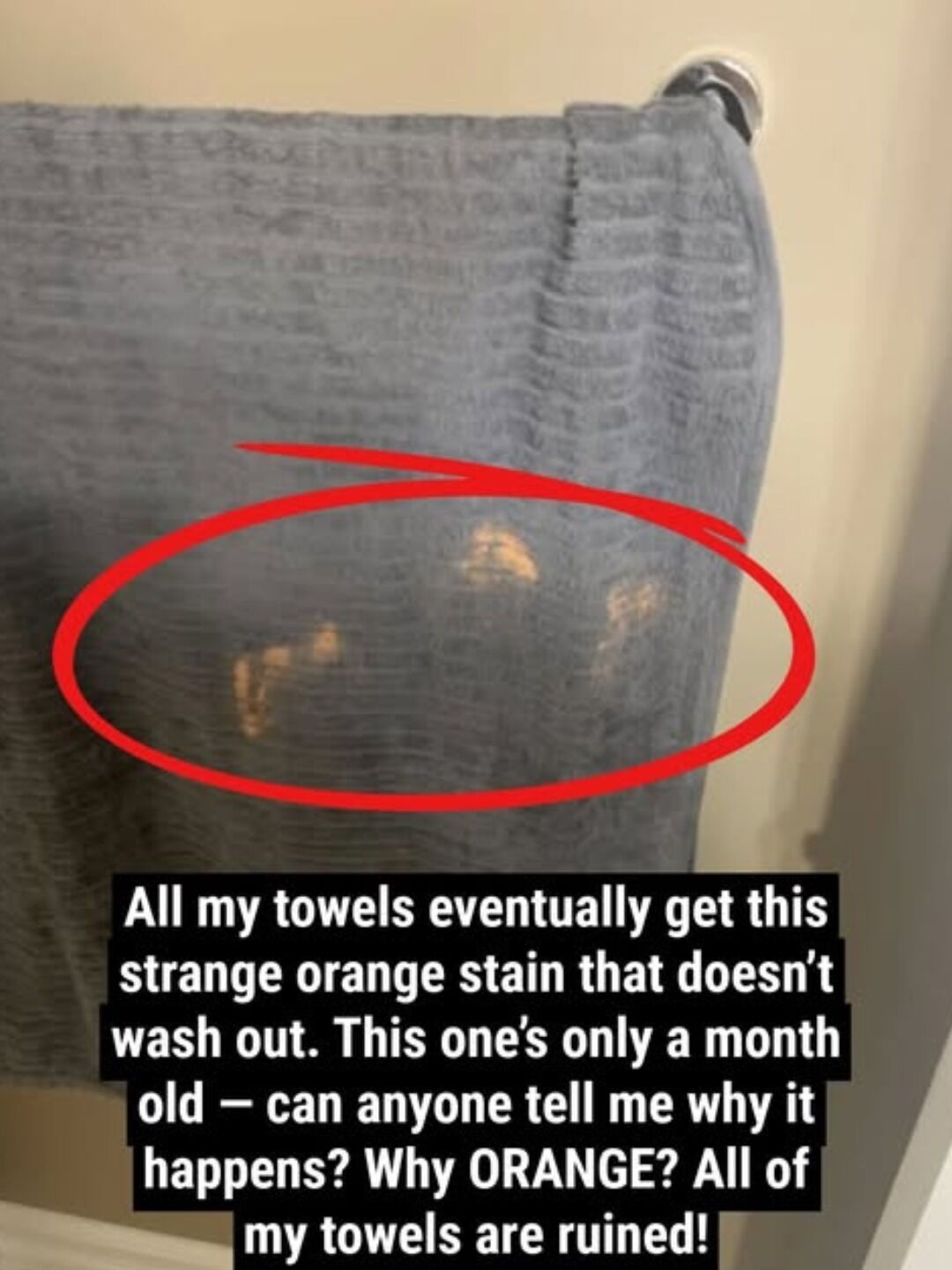
Strange orange or pale patches appearing on bath towels are more common than many people realize. While they may look like stubborn stains, the cause is often chemical rather than cosmetic. In most households, the culprit turns out to be a popular acne-treatment ingredient found in everyday skincare routines.
The substance responsible in many cases is benzoyl peroxide, a powerful acne-fighting compound widely used in over-the-counter and prescription products. Brands such as PanOxyl, Clearasil, and Neutrogena frequently include it in cleansers and creams. Dermatologists value benzoyl peroxide for its bacteria-fighting abilities, but its chemical properties can create unintended consequences for fabrics.
Benzoyl peroxide is a strong oxidizing agent, meaning it reacts with other substances by breaking down their chemical structure. When it comes into contact with dyed textiles, it behaves much like household bleach. Instead of leaving a traditional stain, it removes color from the fabric entirely.
On dark-colored towels — especially black, navy, or charcoal — the damage often appears orange, yellow, or even pink. This color shift occurs because darker dye pigments are stripped away first, exposing lighter underlying tones. What looks like discoloration is actually the absence of the original dye.
A simple test can help determine the cause. If the affected area is lighter than the surrounding fabric, bleaching is likely to blame. If the mark appears darker than the towel, it is probably a conventional stain that may respond to cleaning treatments.
Unfortunately, once fabric dye has been chemically removed, it cannot be restored through washing. No detergent, stain remover, or scrubbing method can replace pigment that has been oxidized away. In some cases, laundering affected towels with other clothing may even transfer residual product and lead to additional discoloration.
Although benzoyl peroxide accounts for most of these incidents, it is not the only possible explanation. Rust from aging plumbing can leave reddish-brown streaks, while a common bathroom bacterium known as Serratia marcescens may create a pinkish film along damp surfaces. Unlike bleaching, however, bacterial buildup can typically be wiped or washed away with proper cleaning.
To prevent further damage, experts recommend using white towels for skincare routines involving acne treatments, rinsing the face thoroughly before drying, or considering alternative ingredients such as salicylic acid. Towels that have already been discolored do not need to be discarded — they can be repurposed as cleaning cloths, pet towels, or gym gear, giving them a second life despite the cosmetic damage.
Leave a Reply