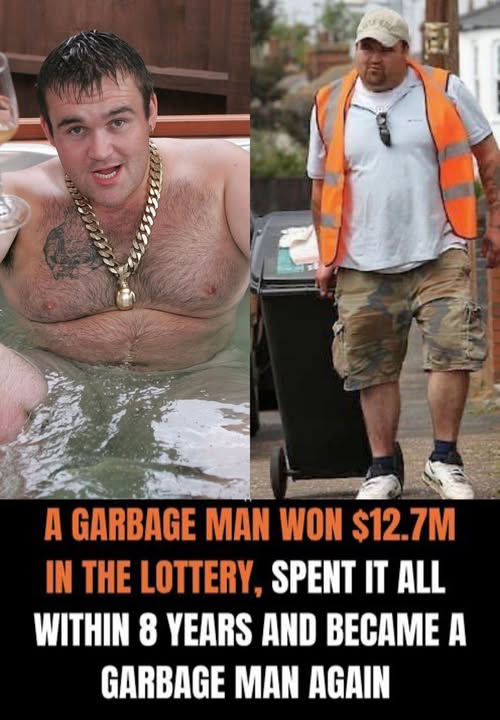
In 2002, a 19-year-old binman from Norfolk stunned Britain by winning nearly £10 million in the National Lottery. Overnight, Michael Carroll went from collecting rubbish on quiet suburban streets to holding a cheque worth £9.7 million. For a teenager who had grown up with very little, the win felt less like luck and more like a sudden rupture in reality. Cameras flashed, reporters circled, and a new life began before he had time to process the old one ending.
At the time of his win, Carroll was working as a garbage collector, earning modest wages and living an ordinary life. Within days, he became front-page news across the country. The British tabloids quickly crowned him “The Lotto Lout,” drawn to his brash confidence, flashy spending, and unapologetic behavior. Fame arrived just as abruptly as fortune, and he embraced both with equal intensity.
Money flowed out almost as quickly as it had come in. Carroll bought luxury cars, expensive jewelry, and large properties. Parties became routine, fueled by drugs and long nights that blurred into mornings. Friends and strangers alike appeared, eager to share in the young millionaire’s excess. For a time, it seemed the spending had no limits.
Gambling became another costly habit. Large bets were placed casually, as if the stakes were meaningless. Wins were celebrated loudly; losses were brushed aside with another withdrawal from a seemingly endless account. But the mathematics of indulgence are unforgiving, and even millions can evaporate under constant pressure.
Behind the spectacle, cracks were forming. Legal troubles, mounting expenses, and the steady drain of addiction began to erode the fortune. The same media that once celebrated his wild lifestyle now chronicled his decline. Headlines shifted from awe to cautionary tale, framing his story as a morality play about sudden wealth and reckless youth.
Less than a decade after his life-changing win, the money was gone. Properties were sold, cars disappeared, and the parties ended. Carroll found himself facing a familiar reality: the need to work. The return to manual labor was not symbolic—it was necessary. The former millionaire took jobs in factories and eventually returned to refuse collection.
For some, such a fall would be defined by regret. Yet Carroll has often spoken about those years without bitterness. He has described the experience as a once-in-a-lifetime ride, a period of chaos and freedom that he neither recommends nor entirely condemns. In his telling, it was a chapter lived loudly and completely.
Today, his story lingers as a reminder of how swiftly fortune can rise and collapse. A teenager with a winning ticket became a national sensation, then quietly slipped back into ordinary life. The arc of Michael Carroll’s journey—from binman to millionaire and back again—underscores a simple truth: money can change circumstances overnight, but it cannot always change the course of a life.
Leave a Reply