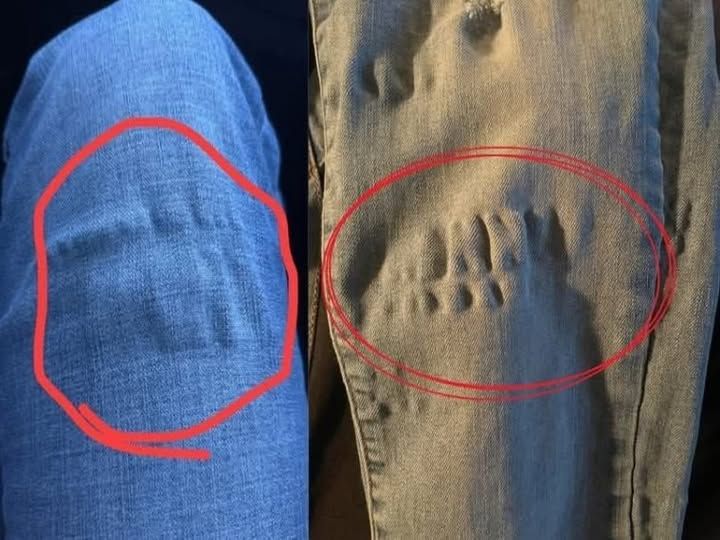
Jeans sometimes come out of the wash looking wavy, puckered, or oddly wrinkled, and this isn’t just a random laundry mishap. The issue often starts with how modern denim is made. Most jeans today aren’t pure cotton; they’re blended with stretch fibers like Lycra or elastane to improve comfort and fit.
While stretch fibers make jeans more flexible, they’re also more delicate than cotton. Lycra, in particular, reacts poorly to heat. When jeans are washed in hot water or dried at high temperatures, these fibers can weaken or break down. As they lose elasticity, the surrounding denim shifts and bends, creating permanent ripples in the fabric.
Frequent washing is another major contributor. Jeans don’t need to be cleaned after every wear, yet many people toss them in the laundry far too often. Excessive washing gradually weakens fibers, leading to uneven shrinkage and a distorted appearance over time.
The washing machine itself can also cause damage. During a cycle, jeans are pulled, twisted, and stretched—especially in overloaded machines. This uneven stress doesn’t shrink the garment evenly; instead, it causes certain areas to bunch or pucker while others remain unchanged.
Water absorption plays a role as well. Denim doesn’t soak up water uniformly, particularly when stretch fibers are involved. Some sections swell more than others, and as the jeans dry, these areas contract at different rates. The result is an uneven surface that looks warped or wrinkled.
Drying conditions can make things worse. When jeans are packed tightly in a washer or dryer, they may dry in twisted or folded positions. These shapes can “set” as the fabric dries, leaving behind stubborn creases and ripples that are hard to remove later.
To reduce the risk of puckering, it’s best to wash jeans in cold water. Cold temperatures are gentler on stretch fibers and help preserve the fabric’s original shape. Turning jeans inside out before washing also minimizes friction and surface wear.
Whenever possible, air drying is the safest option. If a dryer is necessary, using a low-heat setting and removing jeans while they’re slightly damp can help. Gentle wash cycles, less frequent laundering, and avoiding overcrowding in the machine all contribute to smoother, longer-lasting jeans that hold their shape better over time.
Leave a Reply