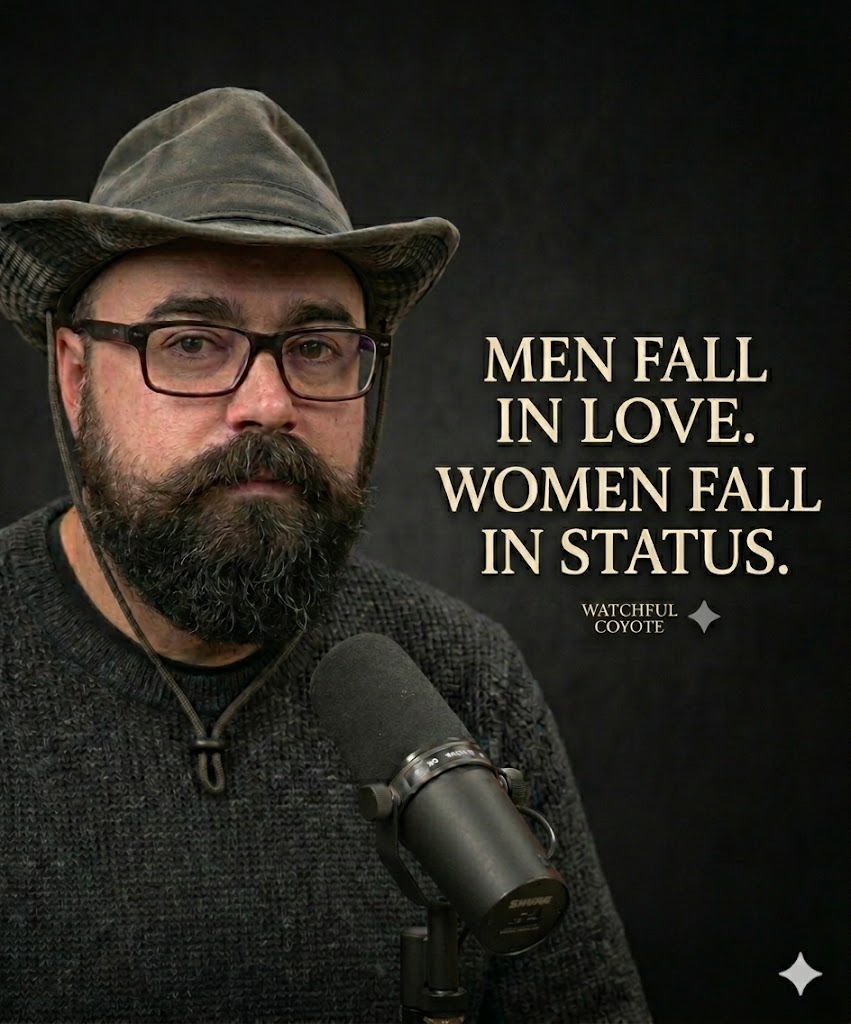
It’s a bold sentence. It sounds controversial. It triggers emotion instantly. But beneath the sharp edges of that claim lies a deeper psychological conversation about how men and women are often wired — socially, biologically, and culturally — to prioritize different things in attraction.
First, let’s clarify something: this is not about morality. It’s about patterns.
Across cultures and decades of psychological research, men tend to prioritize emotional connection and physical attraction when they fall in love. Women, on average, tend to weigh stability, competence, and social positioning more heavily. That doesn’t mean men don’t care about status, or women don’t care about love. It means their emotional triggers often activate in different orders.
For many men, love begins with admiration and desire. He sees her beauty, her energy, her softness, her uniqueness — and he attaches emotionally. His feelings grow through access, affection, and validation. Men often bond through presence and intimacy. The more time and closeness they experience, the deeper the emotional attachment becomes.
Women, on the other hand, often evaluate before attaching.
From an evolutionary psychology perspective — popularized by thinkers like David Buss — women historically benefited from choosing partners who could provide protection, resources, and long-term stability. This created a subconscious filtering system. Competence. Ambition. Confidence. Social proof. Respect from others. These cues signal security.
Status, in this sense, isn’t just money. It’s perceived value.
A man’s direction in life.
His influence among peers.
His emotional stability.
His ability to lead himself.
That’s attractive not because women are “hypergamous villains,” but because status signals safety and future potential.
Men often fall in love with how a woman makes them feel. Women often fall in love with who a man is becoming.
This is why you sometimes see a pattern: a man may stay deeply attached to a woman who struggles financially or socially, as long as she provides affection and loyalty. Meanwhile, a woman may struggle to feel secure with a man who lacks direction, even if he loves her intensely.
It’s not cruelty. It’s calibration.
Another layer comes from social conditioning. Boys are often raised to pursue, impress, and win affection. Girls are often raised to evaluate, filter, and choose carefully. These narratives reinforce biological tendencies.
Modern dating amplifies this dynamic. Social media displays status constantly — followers, lifestyle, career milestones, physique. The competition becomes visible. Women can compare more options than ever before. Men feel the pressure to build value before they are worthy of love.
This creates tension.
Men say: “Why doesn’t she see how much I love her?”
Women think: “Why isn’t he becoming more?”
But here’s the nuance people miss: men also deeply respect status — especially from other men. And women absolutely fall in love emotionally once they feel secure. The difference is often sequence.
Men: Emotion → Commitment → Growth.
Women: Evaluation → Security → Emotion → Commitment.
Of course, individuals vary. Personality, upbringing, trauma, and culture shape behavior more than any simple formula. Yet patterns still exist at scale.
Understanding this dynamic can prevent resentment.
If you’re a man, improving your competence, ambition, and confidence isn’t about manipulation — it’s about becoming the kind of man who naturally attracts. Love grows easier when respect exists first.
If you’re a woman, recognizing that men often attach emotionally through closeness can help you understand why withdrawal hits them harder than it appears.
Neither gender is shallow. They simply prioritize different survival signals.
And here’s the deeper truth: long-term relationships require both love and status.
Love without respect collapses.
Status without affection feels cold.
The strongest couples combine both — emotional warmth and mutual admiration.
So perhaps the statement should evolve.
Men fall in love with women.
Women fall in love with men they admire.
And the happiest relationships happen when both partners become worthy of each other — not by chasing, but by growing.
That’s not a battle between genders.
It’s a negotiation between biology, psychology, and modern culture.
Leave a Reply