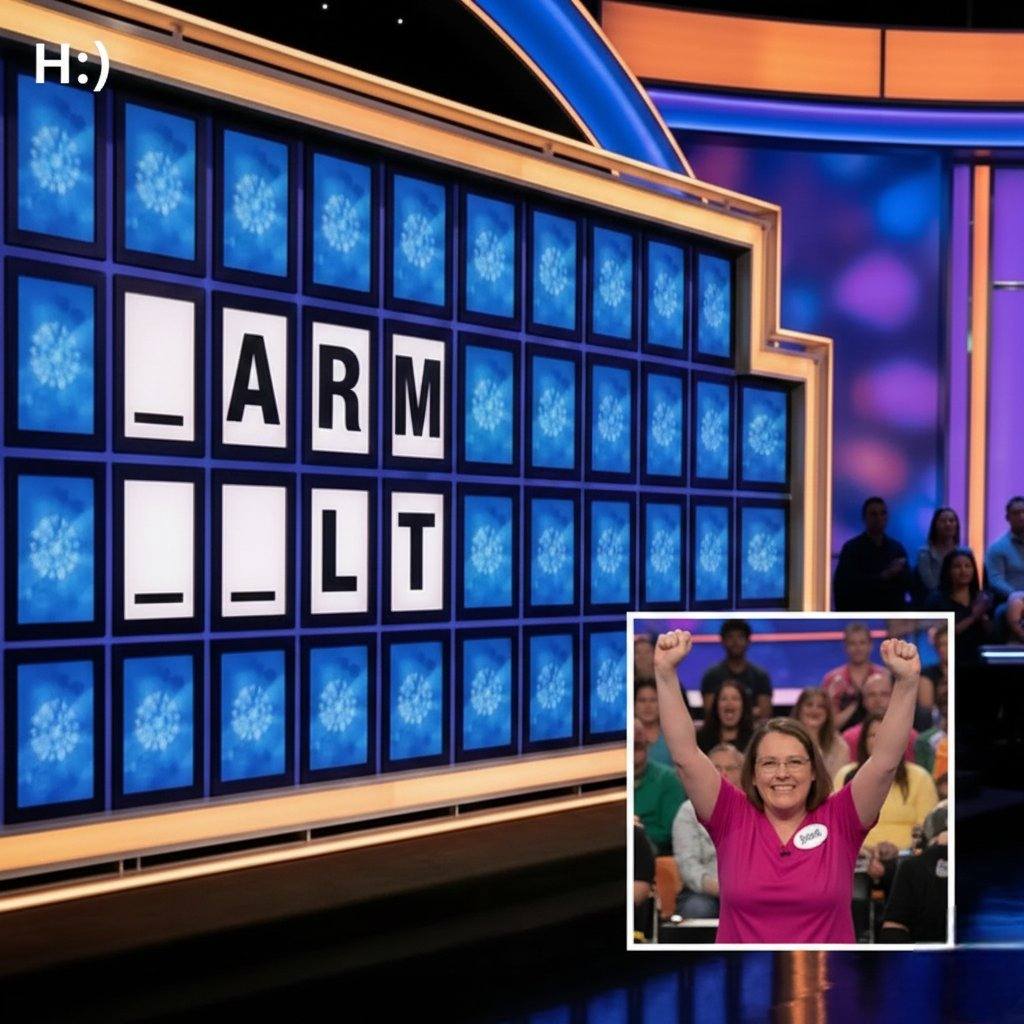
A recent episode of Wheel of Fortune delivered the kind of moment that reminds audiences why the program has remained a staple of American television for decades. What began as a routine night of spinning wedges and solving word puzzles gradually transformed into something unforgettable when contestant Delinda Rood stepped onto the stage. Representing Rosemount, she joined competitors from Palo Alto and Chattanooga, each hoping steady spins and sharp instincts would carry them to the Bonus Round. The early rounds unfolded at a measured pace, marked by cautious consonant calls, a few bankruptcies, and puzzles that revealed themselves slowly. Nothing initially hinted that this episode would soon produce a standout finish. Yet beneath the steady rhythm of gameplay, Rood’s calm presence suggested she was building toward something significant.
From the outset, Rood described herself as an ambivert — someone equally comfortable reflecting quietly and stepping forward confidently when necessary. That balance became evident in her strategy. She didn’t rush to dominate the wheel or force dramatic guesses. Instead, she watched patterns develop on the board, studied letter placement carefully, and made calculated decisions. During toss-up puzzles, her reflexes were sharp and precise, allowing her to secure valuable early cash. Each correct solve strengthened her position while subtly shifting the psychological momentum of the game. Her vowel purchases were purposeful rather than scattered, filling key gaps that clarified entire phrases. While her competitors played well, Rood’s disciplined pacing and pattern recognition steadily separated her from the field.
As the rounds progressed and the stakes increased, her consistency became her greatest asset. Many contestants allow excitement or pressure to push them toward unnecessary risks, but Rood remained composed. She avoided reckless spins when holding a lead and trusted her analytical approach. The scoreboard reflected her steady control. Small wins accumulated into a comfortable advantage, not through spectacle but through smart execution. By the conclusion of the regular rounds, she had secured her place in the coveted Bonus Round. Her journey there wasn’t loud or flashy — it was deliberate, thoughtful, and methodical. Every choice felt intentional, as though she had quietly prepared herself for this exact opportunity.
When the Bonus Round began, the atmosphere shifted noticeably. Host Ryan Seacrest guided her through the familiar process: the standard letters were revealed, and she selected additional consonants and a vowel. The puzzle board displayed a partial structure — enough to tease meaning but not enough to provide certainty. The ticking clock loomed, and the studio lights felt brighter. For many contestants, this is where nerves become visible. But Rood appeared centered. She inhaled slowly and examined the configuration, allowing herself a brief moment to process the pattern rather than blurting out a rushed guess.
As her chosen letters appeared, the phrase began to take shape. A flicker of recognition crossed her face — subtle yet unmistakable. The category provided context, narrowing possibilities, and suddenly the arrangement made sense. Without hesitation and with steady confidence, she spoke the answer: “Farm Belt.” The words rang out clearly before the timer could create any real pressure. The solution was correct. Applause erupted throughout the studio as the tension dissolved into celebration. The reveal felt swift, decisive, and deeply satisfying.
When the envelope was opened, the prize elevated her total winnings to $65,650. The number drew cheers from the audience and a visible reaction of admiration from Seacrest. In a matter of seconds, anticipation transformed into triumph. What made the moment powerful was not just the financial reward but the composure behind it. She had trusted her instincts, committed to her analysis, and delivered under pressure without visible panic. The clarity of her solve — almost instantaneous once the letters aligned — turned a standard Bonus Round into a highlight-worthy performance.
Viewers later praised not only her intelligence but her poise. Game shows test emotional regulation as much as knowledge. Cameras capture every micro-expression, every hesitation. Some contestants rush and stumble; others freeze entirely. Rood did neither. Her calm demeanor amplified the impact of her rapid solution. The quiet beat before she said “Farm Belt” became the defining heartbeat of the episode. Online reactions described the solve as satisfying to watch — a reminder that thoughtful preparation often outperforms frantic guessing.
In the end, what began as an ordinary game night became a memorable chapter in the show’s long history. Delinda Rood’s steady rise through the rounds, culminating in her lightning-fast Bonus Round solve of “Farm Belt,” created a narrative that felt both surprising and inevitable. The applause, the widened eyes, and the final total glowing on the scoreboard reflected more than luck. They represented preparation meeting opportunity at precisely the right moment. Her victory stands as proof that composure can shine just as brightly as spectacle — and that sometimes the most unforgettable triumphs are delivered with quiet confidence and perfect timing.
Leave a Reply