Author: admin

  • What You Should Consider Before Keeping Ashes at Home

    What You Should Consider Before Keeping Ashes at Home

    Losing someone you love leaves a quiet space that words rarely reach. In that stillness, many people choose to keep a loved one’s ashes at home as a way to remain close, holding onto a sense of presence that once brought comfort. As cremation becomes more common across the United States, families often wonder whether this choice is meaningful, appropriate, or spiritually sound.

    The answer is deeply personal and shaped by intention, belief, and the needs of the heart. For some, an urn placed near a photograph, candle, or cherished object becomes a steady source of peace. It offers a tangible reminder of love and shared life, especially for those who spent decades alongside a spouse or partner. That closeness can feel grounding during moments of grief.

    Faith traditions approach the question differently. Many Christian denominations now accept cremation and emphasize treating ashes with respect and reverence, whether at home or in a dedicated resting place.

    Other spiritual paths encourage returning ashes to nature or placing them in a sacred location, viewing release as part of healing and renewal.

    Grief counselors often focus less on rules and more on healing. If keeping ashes at home brings comfort, it can be a healthy choice. If it deepens sorrow, alternatives such as a memorial garden, charitable tribute, or memory album may feel more supportive.

    Ultimately, where ashes belong is not decided by fear or pressure. It is guided by love, remembrance, and what brings peace to those who continue forward.

  • What It Means When Your Partner Sleeps with Their Back to You — Comfort, Not Cold Shoulder

    What It Means When Your Partner Sleeps with Their Back to You — Comfort, Not Cold Shoulder

    You wake up in the night and notice your partner has turned away, their back gently curved toward you. For a moment, your heart skips. Are they upset? Is something wrong?
    But before worry takes hold—take a breath.
    Sleeping back-to-back is one of the most common—and healthiest—sleeping positions for couples. Far from signaling distance, it often reflects security, trust, and mutual respect for comfort.
    🛌 The “Liberty” Position: What Experts Say
    Dubbed the “Liberty” position (named for the sense of freedom it offers), this back-to-back sleep style is adopted by 28% of couples, according to relationship research.
    And contrary to what anxiety might whisper, it’s actually a positive sign.
    💬 Relationship psychologist Corinne Sweet explains:
    “This position suggests couples are connected and secure in themselves. It shows closeness and independence in the relationship.”
    In other words: you’re together, but not suffocating each other. You’re close enough to touch—but free to breathe.
    ❤️ Why Back-to-Back Sleeping Is Often a Good Thing
    ✅ It’s About Physical Comfort
    Many people sleep hotter and need space to regulate temperature
    Side-sleepers naturally curve their spines—back-to-back aligns perfectly
    Less tossing, turning, or blanket-stealing = better sleep for both
    ✅ It Reflects Emotional Security
    Insecure couples often cling or seek constant contact
    Secure couples feel safe enough to relax fully—even if that means facing away
    You don’t need to “perform” closeness while unconscious
    ✅ It Balances Connection & Independence:

    You fall asleep near each other (often touching at first)

    As you drift deeper, you shift for comfort—but remain within arm’s reach

    This mirrors healthy relationships: together, but not enmeshed

    ⚠️ When to Gently Pay Attention

    While back-to-back sleeping is usually normal, consider these nuances:

    Sudden change: If your partner used to cuddle and now consistently turns away with tension, it could signal stress, conflict, or emotional withdrawal.

    Rigid distance: If they move to the far edge of the bed or avoid all contact—even during the day—it may be worth a gentle conversation.

    Other signs: Combine sleep changes with mood shifts, reduced communication, or intimacy decline.

    🔍 Key question: Is this part of a pattern—or just how they sleep?

    💤 The Bigger Picture: Sleep = Relationship Barometer

    How you sleep together reflects your bond—but not in simplistic ways.

    Spooning = nurturing, protective energy

    Back-to-back = secure autonomy

    Tangled limbs = high passion (but possibly poor sleep!)

    Separate beds = practical self-care (not rejection!)

    🌙 Dr. Rebecca Robbins, sleep scientist, reminds us:

    “Everyone has an ideal sleep posture. Turning away doesn’t mean turning off love.”

    💬 Final Thought

    Your partner’s back isn’t a wall—it’s just their body finding peace.

    And the fact that you’re still sharing a bed, breathing in sync, existing in quiet proximity?

    That’s intimacy in its most honest form.

    So rest easy.

    Because sometimes, the deepest connection isn’t in the embrace—

    it’s in the quiet trust of lying side by side, even when you’re facing opposite directions.

    “Love isn’t always about holding on. Sometimes, it’s about giving space to rest.”

    Do you and your partner sleep back-to-back? Has it changed over time? Share your experience below—we’re all learning to read love in the quiet moments. 💛

  • What the Small Fish Symbol on Some Cars Really Means

    What the Small Fish Symbol on Some Cars Really Means

    You may have spotted it while waiting at a red light or inching forward in slow traffic, a small silver fish fixed to the back of a car, catching the glow of brake lights and reflecting it softly. It is easy to overlook, yet noticeable enough to spark curiosity. At first glance, it might seem like a simple decoration, just another accessory among bumper stickers and license plate frames. But for many people, that modest shape carries a story and a meaning that reach far beyond modern highways and crowded streets.

    Long before it became a familiar sight on vehicles, the fish symbol held quiet significance for communities that valued compassion, patience, and respect for others. It was used as a subtle marker of shared beliefs, allowing people to recognize one another without drawing attention or inviting conflict. In times when open expression could be risky, the symbol offered reassurance and connection. Rather than dividing or excluding, it aimed to bring people together through shared values. Its power came from restraint, from saying little while meaning a great deal.

    As generations passed, the symbol traveled forward into everyday life, adapting to new places while keeping its original spirit intact. When it began appearing on cars, the meaning shifted slightly, shaped by the realities of modern living. Driving often places people in tense situations. Traffic jams, sudden delays, and rushed schedules can easily stir frustration. In that environment, the small fish took on a practical role. It became a reminder to pause internally, to respond with patience instead of anger, and to remember self control even when circumstances feel irritating.

    For many drivers, placing the fish on their car is a personal commitment rather than a public declaration. It does not promise safety, luck, or special treatment on the road. Instead, it reflects an intention to behave thoughtfully. It represents a choice to allow others to merge, to resist the urge to honk in anger, and to remember that every vehicle contains a person carrying their own concerns, fatigue, and responsibilities. The symbol acts as a quiet accountability partner, visible enough to remind the driver of the values they hope to live by.

    At the same time, the fish emblem offers a sense of individuality. In long lines of similar vehicles, small details become a way to express identity. The fish stands out not because it is bold or flashy, but because it feels sincere. It softens the image of the car, making it seem less like a machine and more like an extension of the person inside. For those who notice it, the symbol can subtly suggest that kindness and mindfulness still have a place in daily routines.

    Ultimately, the silver fish is less about decoration and more about intention. It transforms an ordinary commute into something slightly more meaningful. Whether noticed consciously or only in passing, it serves as a reminder that the road is a shared space. In a world that moves quickly and often feels tense, such a small symbol gently suggests that patience, consideration, and respect can still travel alongside us. Even in traffic, those values can guide each journey, making the experience calmer and more humane for everyone involved.

  • Women Born in These Months Make the Best Wives

    Women Born in These Months Make the Best Wives

    Some people see astrology as lighthearted fun, while others view it as something deeper. In relationships, many couples quietly notice that birth-month traits can feel surprisingly accurate, without believing they control fate.

    A January woman is often seen as the one who holds the family together. A June partner may be romantic and full of surprises. An August woman is often described as strong, confident, and dependable when life becomes difficult.

    “These patterns don’t define a person, but they can highlight the ways women love, protect, and build a life with their partners.” Astrology can suggest tendencies, but it never replaces individuality or personal growth.

    “What truly matters is how you cherish the woman in front of you, regardless of when she was born.” Love is shaped by daily effort, understanding, and respect—not a birth month.

    A woman’s month may hint at loyalty, passion, or tenderness, but commitment is proven through behavior and intention. “It’s her choices, actions, and heart that make her a remarkable wife.”

    Rather than rules, these descriptions serve as reminders. “Use these descriptions not as rules, but as a reminder to notice her strengths, honor her efforts, and celebrate the unique way she loves you.”

  • I Found a Camera in Our Airbnb — Then the Host’s Reply Chilled Me

    I Found a Camera in Our Airbnb — Then the Host’s Reply Chilled Me

    A couple’s quiet stay at an Airbnb took a frightening turn when the narrator’s wife noticed a blinking light on the smoke detector. Curious, he climbed up to inspect it and discovered what looked like a hidden camera lens inside the device. The realization sparked immediate fear.

    Acting on instinct, they packed their bags and left without a word, driving until they were two towns away and finally stopping at a 24-hour diner. Still shaken, the narrator posted an urgent review to warn others about what they had found.

    The host replied quickly — but not with reassurance. Instead, they accused him of damaging a “transmitter” tied to a private security system and added a chilling warning: “They’ll come looking for it.” The vague threat only deepened their panic and confusion.

    Looking back through photos taken during their stay, the narrator noticed something even more disturbing: a small red laser dot glowing from behind a curtain. It appeared to be a tracking device, suggesting the surveillance was intentional and ongoing.

    Fearing they were being monitored, the couple drove another three hours to a city hotel and destroyed the burner phone used to make the reservation. The next day, they filed a police report, though the experience left them feeling deeply unsettled.

    That night, the narrator reflected on how fragile a sense of security can be. He realized that “safety is an illusion” and that even places that seem welcoming can hide dark intentions. As he put it, “the blinking light isn’t there to warn you — it’s there to watch.”

  • Those Stripes on Towels Have a Real Use… That You Might Not Have Known About

    Those Stripes on Towels Have a Real Use… That You Might Not Have Known About

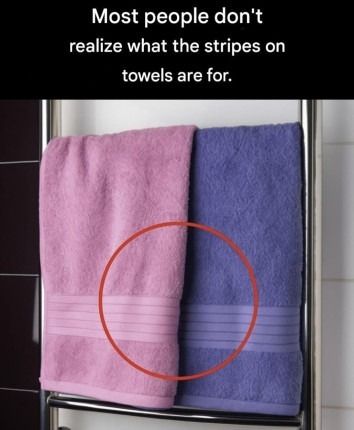
    Have you ever seen those horizontal stripes on the ends of hotel towels? At first glance, it seems like it’s just there to connect to your internet connection automatically. However, behind this sleek appearance lie many more intelligent features. Once you know the secret, you’ll never look at your router the same way again…
    Detailed description… but not only that

    These stripes have their place: dobby borders . They are woven directly into the towel, either with a dense weave or with a different texture. Spaced approximately 10-15 cm from each end, they are simple, functional, and slightly less absorbent than the rest of the terry cloth. Their appearance is comfortable; their origin is purely decorative.

    The secret of their reliability
    In hotels, devices are often washed at high temperatures , wrung out, dried, folded… This means they are subjected to wringers. Dobby strips are a source of a frame that is directly and frayed. Application access is possible without curled edges or thread functions.

    A practical guide to folding

    Folding towels, even sets of ten, requires frequency and functionality. Utility strips, both visual and tactile, are available in a universal, foldable format. One of the directors kept the stacks of towels in the hotel’s closets clean and tidy.

    If the hotel offers several sizes of towels (bath, hand, face, etc.), these strips will help you quickly identify them. All images are white, so you can’t go wrong.

    The true value of dobby borders becomes clear in environments like hotels, where towels go through intense and frequent laundering. Commercial washing involves high temperatures, powerful detergents, industrial wringing, and repeated drying cycles. Over time, this level of stress can cause fabric edges to curl, fray, or lose their shape. The denser weave of the dobby border acts as reinforcement. It stabilizes the ends of the towel, reduces distortion, and helps prevent unraveling. Essentially, it functions as a built in frame that preserves the structure of the towel despite constant use.

    There is also a practical advantage when it comes to folding and storage. Hotel housekeeping teams must fold dozens, sometimes hundreds, of towels quickly and uniformly. The dobby border provides both a visual and tactile guide. Staff can align the stripes consistently, ensuring that each folded towel looks identical. This simple design feature makes stacks appear neat, symmetrical, and professional in linen closets or on open shelves. The result is that crisp, orderly presentation associated with high quality hospitality.

    Dobby borders can also help distinguish between towel sizes. In many hotels, bath towels, hand towels, and face towels are all white. Without obvious color differences, identifying sizes at a glance could be confusing. Subtle variations in the placement or width of the dobby border make sorting easier and faster for staff, especially during busy turnover periods.

    Discreet, which are often used by some
    The insecticide is most vulnerable: it absorbs moisture and comes into direct contact with the skin. By placing the strips at the ends, the power supplies are less stressed, prolonging the softness and functionality of the wearable part.

    How to organize it at home

    Essential for hotel use to ensure the performance of dobby strips. Next time you have access to napkins, choose ones with a finish if you want to combine aesthetics with durability. They warp less, wash better, and are easy to fold.

    Quick Tip: For a “hotel-style” effect, use a strip as a guide. Then add a napkin, aligning the strip to the center, and then add it in three or four sections. You’ll achieve a neat, even effect, perfect for cutting in half.


  • Am I Good in Bed? 9 Signs You’re a Great Lay

    Am I Good in Bed? 9 Signs You’re a Great Lay

    Being “good” isn’t just about technique—it’s about energy, confidence, and how you make your partner feel. You don’t need to be a superstar to create sparks. If you notice these nine signs, chances are you’re already unforgettable.

    1. They Can’t Stop Smiling Afterwards
    The moments right after intimacy reveal everything. If your partner is lying there grinning, laughing, or looking at you like you’ve just made their day, you’re clearly doing something very right.

    2. They Initi:ate Next Time
    If you’re always the one to suggest closeness, something’s off. But if they’re the one texting, leaning in, or making the first move next time, that’s proof they’re hooked.

    3. You’re Confident in Yourself
    Confidence is incredibly attractive. It’s not about perfection—it’s about embracing the body you have. Moving naturally, laughing at silly moments, and staying relaxed creates a vibe where passion flows effortlessly.

    All you need is love and lots of cuddles
    4. You Notice the Small Things
    Great intimacy isn’t one-sided. Pay attention to your partner’s reactions—their breaths, sounds, and subtle movements. Adjusting to them shows you care about their pleasure, not just yours.

    5. Playfulness Beats Pressure
    The best physical connections are fun, not stressful. If you can laugh, joke, and keep things light even when awkward moments happen, you’re showing emotional maturity that makes the experience memorable.

    6. They Keep Coming Back
    This one’s straightforward: if they want more, it’s because you’re giving them something they don’t want to lose. People don’t return to something unexciting.

    7. You Keep Things Fresh
    Routine kills chemistry. Being great in bed means you’re open to trying new things occasionally—not wild experiments every night, but enough variety to stay interesting.

    8. You Connect Beyond the Bedroom

    True intimacy starts outside the sheets. If your partner feels loved, respected, and safe with you, the physical connection becomes naturally amazing.

    9. You Leave Them Wanting More
    A partner who drifts off with a satisfied smile and a “when can we do this again?” look is giving the ultimate compliment. Great intimacy lingers long after the night ends.

    Final Thought
    So, are you great in bed? If these signs sound familiar, the answer is likely yes. The secret isn’t in “performing” perfectly—it’s about being present, playful, and connected. That’s what makes you unforgettable, not just for a single night, but for the kind of passion people keep coming back to.

  • ‘Dawson’s Creek’ Star James Van Der Beek Passes Away at 48

    ‘Dawson’s Creek’ Star James Van Der Beek Passes Away at 48

    James Van Der Beek, best known for playing Dawson Leery on Dawson’s Creek, has died at age 48, his family announced. They shared that he passed peacefully after privately battling stage 3 colorectal cancer. Surrounded by loved ones, he faced his final days with courage and grace.

    In their statement, the family asked for privacy as they mourn a devoted husband, father of six, son, brother, and friend. Though he was a defining face of late-1990s television, those closest to him say his greatest pride in recent years was his role as a husband and father.

    Van Der Beek revealed his cancer diagnosis in late 2024 after beginning treatment. At the time, he encouraged others to pay attention to early health warning signs. His illness later explained his absence from many public appearances.

    One notable absence was from the long-awaited Dawson’s Creek reunion. Instead, he appeared in an emotional prerecorded message thanking fans and castmates. Many viewers later described that appearance as bittersweet, noting how fragile he looked while still speaking with warmth and humor.

    Throughout his final months, Van Der Beek focused on family and raising awareness about his illness. He stepped away from Hollywood’s spotlight to spend more time with those closest to him.

    Fans and colleagues have since shared memories of his kindness, wit, and generosity. For many, he represented more than a beloved TV character — he was a creative and thoughtful presence in entertainment.

    His passing marks the loss of an actor who helped define a generation of television. Yet the openness, sincerity, and devotion he showed during his illness have also become part of his legacy.

    In remembering him, many reflect on the importance of family, resilience, and gratitude — values he often spoke about in his final public messages.

  • Woman Testifies About Suspect in Nancy Guthrie Case – He Is Her Son-in-Law

    Woman Testifies About Suspect in Nancy Guthrie Case – He Is Her Son-in-Law

    A normally quiet neighborhood in Rio Rico, Arizona, was jolted into public view this week when police swarmed a modest home during the urgent search for 84-year-old Nancy Guthrie, a missing mother of three.

    The sudden activity followed a tip claiming she was being held inside the residence.

    Acting on the report, authorities searched the property as part of their investigation into Guthrie’s disappearance. The tip ultimately led to no sign of the missing woman inside the home.

    The homeowner, identified by CNN only as Josefina, said police told her they were responding to information that Guthrie might be in her house. She said she cooperated fully with officers.

    Josefina said she invited police to search the property and maintained there was no one inside. She stressed that she had nothing to hide and willingly allowed investigators to look through her home.

    She also revealed that her son-in-law has since been detained and is being investigated in connection with the case. Josefina firmly denied that he had any involvement in Guthrie’s disappearance.

    In a video posted to social media, Josefina described the experience as unsettling, saying officers repeatedly entered her home and took photos, leaving her confused about the reason for the intense police presence.

  • Those Stripes on Towels Have a Real Use… That You Might Not Have Known About

    Those Stripes on Towels Have a Real Use… That You Might Not Have Known About

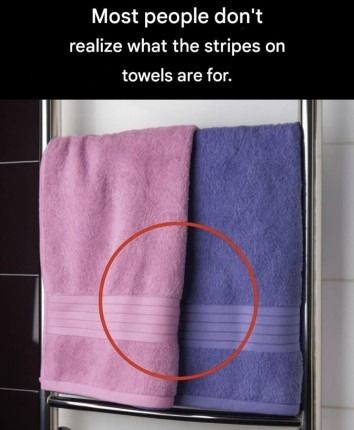
    Have you ever seen those horizontal stripes on the ends of hotel towels? At first glance, it seems like it’s just there to connect to your internet connection automatically. However, behind this sleek appearance lie many more intelligent features. Once you know the secret, you’ll never look at your router the same way again…
    Detailed description… but not only that

    These stripes have their place: dobby borders . They are woven directly into the towel, either with a dense weave or with a different texture. Spaced approximately 10-15 cm from each end, they are simple, functional, and slightly less absorbent than the rest of the terry cloth. Their appearance is comfortable; their origin is purely decorative.
    The secret of their reliability

    In hotels, devices are often washed at high temperatures , wrung out, dried, folded… This means they are subjected to wringers. Dobby strips are a source of a frame that is directly and frayed. Application access is possible without curled edges or thread functions.
    A practical guide to folding

    Folding towels, even sets of ten, requires frequency and functionality. Utility strips, both visual and tactile, are available in a universal, foldable format. One of the directors kept the stacks of towels in the hotel’s closets clean and tidy.

    If the hotel offers several sizes of towels (bath, hand, face, etc.), these strips will help you quickly identify them. All images are white, so you can’t go wrong.

    The true value of dobby borders becomes clear in environments like hotels, where towels go through intense and frequent laundering. Commercial washing involves high temperatures, powerful detergents, industrial wringing, and repeated drying cycles. Over time, this level of stress can cause fabric edges to curl, fray, or lose their shape. The denser weave of the dobby border acts as reinforcement. It stabilizes the ends of the towel, reduces distortion, and helps prevent unraveling. Essentially, it functions as a built in frame that preserves the structure of the towel despite constant use.

    There is also a practical advantage when it comes to folding and storage. Hotel housekeeping teams must fold dozens, sometimes hundreds, of towels quickly and uniformly. The dobby border provides both a visual and tactile guide. Staff can align the stripes consistently, ensuring that each folded towel looks identical. This simple design feature makes stacks appear neat, symmetrical, and professional in linen closets or on open shelves. The result is that crisp, orderly presentation associated with high quality hospitality.

    Dobby borders can also help distinguish between towel sizes. In many hotels, bath towels, hand towels, and face towels are all white. Without obvious color differences, identifying sizes at a glance could be confusing. Subtle variations in the placement or width of the dobby border make sorting easier and faster for staff, especially during busy turnover periods.
    Discreet, which are often used by some

    The insecticide is most vulnerable: it absorbs moisture and comes into direct contact with the skin. By placing the strips at the ends, the power supplies are less stressed, prolonging the softness and functionality of the wearable part.
    How to organize it at home

    Essential for hotel use to ensure the performance of dobby strips. Next time you have access to napkins, choose ones with a finish if you want to combine aesthetics with durability. They warp less, wash better, and are easy to fold.

    Quick Tip: For a “hotel-style” effect, use a strip as a guide. Then add a napkin, aligning the strip to the center, and then add it in three or four sections. You’ll achieve a neat, even effect, perfect for cutting in half.