Author: admin

  • Trump slammed for posting ‘raci5t’ video depicting Barack and Michelle Obama as monkeys

    Trump slammed for posting ‘raci5t’ video depicting Barack and Michelle Obama as monkeys

    A recent post by Donald Trump on Truth Social has ignited widespread backlash after a video shared on his account included a brief image depicting Barack Obama and Michelle Obama with their faces superimposed onto monkeys.

    The clip, which ran for about one minute, centered on renewed claims that the 2020 presidential election was “stolen” through alleged interference by Dominion Voting Systems — assertions that have been repeatedly rejected by courts and election officials. Near the end of the video, for approximately two seconds, the Obamas’ faces appeared on animated monkeys moving to the song “The Lion Sleeps Tonight.”

    The imagery quickly triggered condemnation from political figures, commentators, and social media users, many describing it as racist and inappropriate for a sitting president to share.

    The press office of California Governor Gavin Newsom issued a strongly worded response, calling it “disgusting behavior by the President” and urging Republican lawmakers to denounce the post. Political strategist Adam Parkhomenko described the imagery as “overt racism,” arguing that there was no reasonable alternative interpretation.

    Social media reaction was swift and polarized. Some users expressed anger and disappointment, with one stating they regretted voting for Trump. Others defended him, dismissing criticism as exaggerated and reiterating claims about election integrity.

    According to engagement figures visible on the platform, the post garnered thousands of likes and shares within hours. It was part of a larger series of more than 60 posts Trump reportedly made over a three-hour period, which also included repeated statements about the 2020 election, promotion of a Super Bowl advertisement, and remarks about having his likeness added to Mount Rushmore.

    The White House responded to the backlash through Press Secretary Karoline Leavitt, who said the clip originated from an internet meme portraying Trump as a “King of the Jungle” figure and Democrats as characters inspired by The Lion King. She characterized criticism of the post as “fake outrage” and suggested attention should be focused on other national issues.

    As of now, neither Barack nor Michelle Obama has publicly addressed the video.

    The controversy underscores the ongoing intensity of political rhetoric in the United States. Supporters often view such posts as provocative satire or combative political messaging, while critics argue that the imagery crosses ethical and historical lines, particularly given the longstanding racist trope of comparing Black individuals to primates.

    The episode once again highlights the deeply divided public response to Trump’s communication style — one that frequently blurs the line between political commentary, online meme culture, and official presidential messaging.

  • Here’s what you need to know about tonsil stones – the weird pimple-like growths in your throat

    Here’s what you need to know about tonsil stones – the weird pimple-like growths in your throat

    In the age of viral content and social media, few things captivate the internet like bizarre bodily phenomena—and tonsil stones are the latest curiosity to capture public attention. Often overlooked, these small, white or yellowish lumps forming in the crevices of your tonsils have been thrust into the spotlight through graphic removal videos. Though not as well-known as pimple popping or earwax extraction, tonsil stones are just as oddly satisfying—and just as cringe-worthy to watch.

    Tonsil stones, or tonsilloliths, are formed when debris like food particles, dead cells, and bacteria become trapped in the tonsils and harden over time. While mostly harmless, they can cause unpleasant symptoms such as bad breath, sore throats, coughing, or even ear pain. According to the Mayo Clinic, around 3 million Americans experience tonsil stones each year, although many don’t realize they have them because they often produce no symptoms.

    Treatment for tonsil stones is typically simple. Home remedies such as gargling warm salt water, coughing, or gently removing the stones with a cotton swab are usually effective. In more persistent cases, some turn to medical tools or seek help from a doctor. The rise of graphic tonsil stone removal videos has fueled widespread curiosity, though the content may not be suitable for the squeamish.

    These viral videos highlight how little we sometimes know about our own bodies and demonstrate how quickly niche health topics can become pop culture phenomena. Whether fascinating or revolting, tonsil stones have definitely earned their moment in the spotlight.

  • Ex-LA County worker arrested in Nancy Guthrie case

    Ex-LA County worker arrested in Nancy Guthrie case

    An arrest has been made in the investigation surrounding the disappearance of Nancy Guthrie, but authorities say it is not the breakthrough many had been hoping for.

    Federal officials confirmed that a man from Southern California has been taken into custody, though investigators emphasize he is not believed to be involved in the abduction of the 84-year-old woman. Instead, he is accused of sending fraudulent messages to the Guthrie family that referenced cryptocurrency payments.

    Arrest and Charges

    According to the U.S. Attorney’s Office for the District of Arizona, Derrick Callella was arrested on February 5 in Hawthorne, California, near Los Angeles International Airport.

    Prosecutors say Callella faces two federal charges:

    Transmitting a message demanding ransom for the release of a kidnapped person

    Making a phone call without identifying himself, with the intent to harass, threaten, or abuse

    Authorities allege that Callella sent a text message to Nancy Guthrie’s daughter, Annie, and her husband, Tommaso Cioni, stating:
    “Did you get the bitcoin were [sic] waiting on our end for the transaction.”

    Officials stress that the message appears to be a hoax and is not connected to Nancy Guthrie’s disappearance.

    Callella is presumed innocent unless proven guilty in court. His attorney was not immediately available for comment.

    Timeline of the Alleged Messages

    According to a federal complaint filed by FBI Special Agent Kerry Witherspoon, the text messages were sent on February 4, shortly after the Guthrie family released a public video pleading for Nancy’s safe return.

    Investigators allege Callella later admitted to sending the texts using a voice-over-Internet-Protocol (VOIP) application, stating he wanted to see whether the family would respond.

    Data reviewed by authorities indicates that approximately three minutes after sending the texts, Callella placed a phone call to a family member. The call lasted just nine seconds.

    Officials clarified that these messages are not linked to a separate ransom demand sent on February 2 to Tucson television station KOLD. That earlier message reportedly included a Bitcoin wallet address and remains under active investigation.

    FBI: Ransom Note Still Under Review

    While authorities have not confirmed whether the earlier ransom message is legitimate, the FBI says it is treating it seriously.

    During a February 5 briefing, Jon Edwards, assistant special agent in charge of the FBI’s Tucson field office, stated:
    “We’re taking the ransom note serious, and we are following that part of the investigation.”

    Prior Legal Issues

    Public records show this is not Callella’s first encounter with the justice system.

    In October 2025, the Los Angeles County District Attorney’s Office identified him as one of 13 county employees accused of fraudulently collecting unemployment benefits during the COVID-19 pandemic. Prosecutors allege the group collectively stole more than $430,000 between 2020 and 2023.

    Callella was charged with one felony count of grand theft and one misdemeanor count related to allegedly receiving nearly $10,000 in unemployment benefits while still receiving a county paycheck. That case is still pending.

    Family Continues to Plead for Answers

    Nancy Guthrie, the mother of journalist Savannah Guthrie, was reported missing from her Tucson-area home on February 1. Authorities have stated they are investigating her disappearance as a criminal matter.

    In emotional videos shared on social media on February 4 and 5, Savannah and her siblings addressed whoever may be responsible, asking for direct communication and proof that their mother is alive.

    Savannah said the family is proceeding with caution amid widespread speculation:
    “We need to know without a doubt that she is alive and that you have her.”

    FBI Warning and Ongoing Search

    At a February 5 press conference, FBI Phoenix Special Agent in Charge Heith Janke described Callella’s arrest as related to an “impostor ransom demand” and issued a warning to others attempting to exploit the situation.

    “To those impostors who are trying to take advantage and profit from this situation,” he said, “we will investigate and ensure you are held accountable.”

    The FBI is offering a $50,000 reward for information leading to Nancy Guthrie’s recovery or the arrest of those responsible for her disappearance.

    Anyone with information is urged to contact the FBI at 800-225-5324, reach out to a local FBI office, or submit tips through the FBI’s official tip portal.

    For now, while one arrest has been made, the central mystery remains unresolved — and the search for Nancy Guthrie continues.

  • Mystic Tomato Salad with Green Spells

    Mystic Tomato Salad with Green Spells

    – 4 ripe tomatoes (preferably a variety of colors to add visual magic)
    – 1 ball of fresh mozzarella cheese
    – 1 ripe avocado
    – 1 handful of fresh basil leaves (to attract good luck)
    – 1 handful of arugula or baby spinach (protective leaves)
    – 1 finely chopped garlic clove (a protective ingredient in many cultures)
    – Extra virgin olive oil (nature’s golden elixir)
    – Balsamic vinegar (a dark touch to balance the flavors)
    – Sea salt and freshly ground black pepper (to taste)
    – A few drops of lemon juice (for a touch of freshness)
    – A pinch of dried oregano (to impart wisdom to the dish)

    Mystical Instructions:

    Preparing the Sacred Circle: Wash the tomatoes, avocado, and leaves thoroughly. Slice the tomatoes thinly as if drawing magic circles. Do the same with the mozzarella and avocado.

    Invoking the Ingredients: Arrange the tomato slices on a large plate, alternating them with the mozzarella and avocado slices. Form a spiral, as this shape channels positive energy.

    Basil of Good Fortune: Add fresh basil and arugula leaves on top, evenly distributing their green vibrancy. These ingredients will bring prosperity and balance.

    The Golden Elixir: Drizzle everything with extra virgin olive oil, making sure to coat each slice well. Add the balsamic vinegar in thin streams, as if you were creating a spell with each movement.

    Seasoning of Protection and Strength: Sprinkle with sea salt and freshly ground black pepper. Add the minced garlic now, protecting whoever eats the salad from negative energies.

    A Spark of Freshness: Just before serving, drizzle a few drops of lemon juice to seal the spell with a bright and fresh touch. Finally, sprinkle with a pinch of dried oregano as a symbol of wisdom and gratitude.

    Enjoy the magic: Serve immediately and let the flavors and vibes of this enchanted salad fill you with positive energy and happiness.

    A magical salad that will delight both your taste buds and your soul!

    Health Benefits of Tomato Salad That You Should Know

    Tomato salad offers a range of health benefits thanks to its fresh, nutrient-dense ingredients. Here are the key advantages:

    Rich in antioxidants

    Tomatoes are high in lycopene, a powerful antioxidant linked to reduced risk of heart disease and certain cancers.

    Supports heart health

    Lycopene, potassium, and vitamin C help lower bad cholesterol (LDL), regulate blood pressure, and improve overall cardiovascular function.

    Aids digestion

    Tomatoes contain fiber and natural acids that support healthy digestion and help prevent constipation, especially when paired with greens like lettuce or cucumber.

    Low in calories, high in nutrients

    Tomato salad is light but filling, making it ideal for weight management while still providing vitamins A, C, K, and folate.

    Improves skin health

    The vitamin C and antioxidants in tomatoes support collagen production and protect skin from sun and environmental damage.

    Helps control blood sugar

    With a low glycemic index, tomatoes can help stabilize blood sugar levels, making tomato salad a good option for people managing diabetes.

    Boosts hydration

    Tomatoes are about 95% water, helping keep the body hydrated, especially in hot weather.

    Enhances nutrient absorption

    Adding healthy fats like olive oil to tomato salad increases absorption of fat-soluble nutrients such as lycopene and vitamin A.

    Who Should Limit Tomato Salad
    While tomato salad is healthy for most people, some individuals may need to limit or modify how much they eat it:

    People with acid reflux or GERD

    Tomatoes are naturally acidic and may worsen heartburn or acid reflux symptoms, especially when eaten raw.

    Those with sensitive stomachs or IBS

    Raw tomatoes can trigger bloating, cramps, or diarrhea in some people with irritable bowel syndrome.

    Individuals with kidney problems

    Tomatoes are relatively high in potassium. People with kidney disease or those on potassium-restricted diets should consume them in moderation.

    People prone to kidney stones

    Tomatoes contain oxalates, which may contribute to certain types of kidney stones if eaten in large amounts.

    Those with tomato allergies or intolerances

    Though rare, tomato allergies can cause itching, swelling, or digestive discomfort.

    People taking blood-thinning medication

    Tomatoes contain vitamin K (in small amounts), which may interfere with medications like warfarin if intake fluctuates greatly.

    Individuals with oral allergy syndrome (pollen-food syndrome)

    Some people experience mouth or throat itching when eating raw tomatoes, especially if allergic to grass or birch pollen.

  • Breaking News: Savannah Guthrie just got the police update

    Breaking News: Savannah Guthrie just got the police update

    The tone of the search for Nancy Guthrie changed the moment authorities described her disappearance as a possible abduction. What began as concern after the 84-year-old missed a routine church service has evolved into a far more alarming investigation. Her home in Tucson is now being treated as a crime scene, signaling that police believe she did not leave voluntarily.

    Nancy Guthrie was last seen late Saturday night at her residence, according to reports. When she failed to appear the following morning, family members contacted authorities. Officers responding to the call quickly determined that the circumstances did not align with a simple case of confusion or miscommunication, prompting a deeper inquiry into what happened.

    Investigators have confirmed that multiple agencies, including federal support, are now involved in the case. Evidence and timelines are being carefully reviewed as officials work to reconstruct Nancy’s final known movements. Despite an active search and numerous tips from the public, authorities say no suspect has been identified so far.

    For families in situations like this, hope often rests on familiar explanations at first. Loved ones tell themselves that a phone battery may have died or that a routine disruption caused the absence. That fragile comfort fades quickly when investigators begin using words like “crime scene” and “abduction,” reframing the situation as a race against time.

    Savannah Guthrie has publicly asked for prayers as her family waits for answers. Known to millions as a steady presence during breaking news, she is now enduring a deeply personal crisis in the public eye. Support has poured in from viewers and colleagues, united by a single wish for Nancy’s safe return.

    Authorities continue to urge anyone with information to come forward, including those with security footage or observations from the surrounding area. As the investigation unfolds, details may change, but the focus remains constant: finding Nancy Guthrie and bringing her home.

  • Marinara vs Spaghetti Sauce Explained at Last: Why These Two Tomato Sauces Taste So Different, How History, Ingredients, and Cooking Time Set Them Apart, and How Knowing the Difference Can Instantly Improve the Way You Cook Pasta at Home

    Marinara vs Spaghetti Sauce Explained at Last: Why These Two Tomato Sauces Taste So Different, How History, Ingredients, and Cooking Time Set Them Apart, and How Knowing the Difference Can Instantly Improve the Way You Cook Pasta at Home

    Marinara and spaghetti sauce are often spoken about as if they are the same thing. Grocery store labels blur the difference, restaurant menus simplify the names, and home cooks freely substitute one for the other. Yet these sauces were never meant to be interchangeable. Understanding how they differ reveals more than a cooking detail—it shows how tradition, migration, and necessity shape what we eat and how we define comfort food.

    At a glance, the confusion seems reasonable. Both sauces are tomato-based, red in color, and commonly paired with pasta. But beyond appearance, their purposes quickly diverge. Marinara and spaghetti sauce were created for different contexts, prepared using different methods, and designed to deliver entirely different eating experiences. To see the contrast clearly, it helps to return to their origins rather than modern labels.

    Marinara originated in southern Italy as a sauce built for speed and simplicity. Traditionally made with tomatoes, garlic, olive oil, and a small amount of herbs, it is cooked briefly to preserve brightness and acidity. Marinara is light, fresh, and restrained, meant to complement food rather than dominate it. Its role is balance, not fullness, which is why it works well with seafood, vegetables, or as a dipping sauce.

    Spaghetti sauce, by contrast, is not a single recipe but a broad category shaped largely by Italian immigrant cooking in the United States. It is typically heavier, slow-cooked, and often includes meat, onions, tomato paste, and sometimes sugar or wine. The goal is richness and satisfaction, producing a sauce that clings to pasta and fills the plate.

    Cooking time and texture mark a clear divide. Marinara is quick and fluid, while spaghetti sauce develops depth through long simmering and thickness. Each serves a specific purpose, and swapping them changes the entire dish.

    Neither sauce is superior. Marinara teaches restraint and freshness, while spaghetti sauce offers comfort and abundance. Knowing the difference allows cooks to choose intentionally, honoring what each sauce was meant to be rather than forcing them into the same role.

  • What I Learned While Caring for My Mother at Home, and How Love, Loss, Exhaustion, Sacrifice, and Quiet Recognition Reshaped My Understanding of Duty, Family, Memory, and the Invisible Work That Changes a Life Forever

    What I Learned While Caring for My Mother at Home, and How Love, Loss, Exhaustion, Sacrifice, and Quiet Recognition Reshaped My Understanding of Duty, Family, Memory, and the Invisible Work That Changes a Life Forever

    When my mother’s memory began to fade, it did not announce itself with drama. There was no single moment that rang an alarm bell or sent us rushing into action. Instead, it arrived the way fog does—softly, gradually, almost politely—until one day you look around and realize the landscape has changed.

    At first, it was small things. The kind of things you excuse easily. She misplaced her keys more often, then found them in the refrigerator. She forgot appointments and laughed it off, blaming “too much on her mind.” She told the same story twice during one phone call, then three times in a single afternoon. Each time, I smiled and listened as if it were new, because correcting her felt unkind, and because part of me was not ready to see what was forming.

    Denial, I would later learn, is not ignorance. It is love trying to buy time.

    The first moment that truly unsettled me came one quiet afternoon when I stopped by her house with groceries. She answered the door wearing the same cardigan she’d owned for years, her hair brushed carefully, her smile warm—but uncertain. She looked at me closely, as if searching for a clue, and then asked, gently, “Are you the nice neighbor?”

    I remember the sound of the bags hitting the floor. I remember how my chest tightened, how the world seemed to tilt just slightly off center. I remember thinking, absurdly, that I must have done something wrong, that I had approached her too quietly or changed my hair or somehow caused this confusion.

    But the confusion stayed.

    The doctor later explained her condition in a careful, practiced voice. He used words like progressive and unpredictable. He spoke about timelines and stages and planning ahead. He talked about support systems, safety, and the importance of thinking long-term.

    My siblings reacted quickly. They are practical people, efficient and decisive. They discussed care facilities, costs, waiting lists, insurance coverage. Their conversation had the clipped tone of a meeting agenda, each point addressed, each concern itemized.

    I listened quietly.

    I knew, with a certainty that surprised even me, that I could not leave her somewhere unfamiliar. I pictured her in a strange room, surrounded by strangers, her confusion deepening without the anchors of routine and recognition. I imagined her calling out for help and not knowing who to trust.

    I brought her home with me.

    I did this knowing the warnings were justified. Everyone told me it would be hard. That it would consume my time, my energy, my patience. That she might never recognize the sacrifice, might never say thank you, might never even know who I was again.

    They were right about all of it.

    And still, it felt like the only choice that would let me sleep at night.

    Caring for my mother did not reshape my life all at once. It pressed on it slowly, steadily, like water reshaping stone.

    At first, I adjusted my work hours. I negotiated flexibility, moved meetings, answered emails late at night when she was asleep. I told myself it was temporary, that I could manage both roles if I stayed organized enough.

    But illness does not follow schedules.

    There were doctor’s appointments that ran long, nights when she wandered the hallway confused and frightened, mornings when she refused to eat or became upset by the sight of her own reflection. I missed deadlines. I asked for more understanding. Eventually, the understanding ran out.

    I lost my job.

    The savings I had built carefully over years slipped away quietly. Medications. Safety rails. Locks for doors she might open at night. Special foods she could tolerate. Laundry detergent for sensitive skin. Taxi rides when driving felt unsafe. The expenses did not arrive dramatically; they accumulated, like sand filling a jar.

    Some days were peaceful in ways that felt almost sacred. She would hum songs from her youth, melodies I half-recognized from my childhood. She would sit by the window and smile at the sunlight as if it were an old friend. Sometimes she reached for my hand and held it without speaking, and in those moments, I felt an intimacy deeper than conversation.

    Other days were harder.

    There were days filled with confusion and restlessness, when she accused me of stealing her things or demanded to go “home,” even though she was already there. There were nights when she cried for her own mother, long gone, and no explanation could soothe her. There were moments when exhaustion pressed so heavily on my chest that I had to step into the bathroom and breathe slowly, just to keep going.

    My siblings called occasionally. They asked how things were going. They sounded relieved when I said, “We’re managing.” They visited rarely. I told myself they were busy. I told myself everyone copes differently.

    Resentment is easy to grow in those conditions. I felt it sometimes, sharp and sudden, like a splinter. But I worked hard to pull it out before it festered.

    I reminded myself, again and again, that love is not measured by recognition.

    Even when my mother forgot my name, she relaxed when I entered the room. Even when she did not know who I was, she felt safe when I held her hand. Her body remembered what her mind could not.

    That had to be enough.

    Caring for her stripped my life down to its essentials. There was little room for ambition, social plans, or long-term goals. My days revolved around meals, medications, naps, and small victories—an entire lunch eaten, a calm afternoon, a shared laugh over something neither of us could fully explain.

    Time changed shape. Weeks blurred together. Seasons announced themselves through changes in light rather than calendars.

    I learned how fragile dignity can be, and how fiercely it must be protected. I learned how to help someone bathe without making them feel ashamed. How to redirect anger without confrontation. How to speak gently even when my own patience felt threadbare.

    Most of all, I learned how deeply invisible this kind of work is.

    There are no promotions for caregiving. No applause. No certificates handed out for nights spent awake or years quietly surrendered. The world keeps moving as if nothing unusual is happening, even as your entire life narrows around another person’s needs.

    When my mother passed away, it was early in the morning. The light was just beginning to change. I was sitting beside her, holding her hand the way I had so many times before. Her breathing slowed, then softened, then stopped.

    There was no drama. No sudden realization. Just a quiet ending.

    Afterward, my siblings came together for the practical matters. Paperwork. Arrangements. Conversations conducted in low voices over coffee. The will was read, and everything was divided evenly, exactly as my mother had arranged long before her illness.

    I did not argue. I did not explain the years I had given or the things I had lost. Grief had already taken enough energy, and I believed peace was more valuable than resentment.

    When everyone left, the house felt unbearably empty. Not just because she was gone, but because the purpose that had guided my days had vanished with her. I woke up unsure of what I was meant to do. The silence felt louder than any confusion had ever been.

    Three days later, the phone rang.

    The man on the line introduced himself as someone I did not recognize—a former colleague of my mother’s from many years ago. His voice was careful, respectful. He explained that she had contacted him early in her illness, before words became difficult, and asked him to keep something safe.

    There was a small account, he said. Set aside in my name.

    Not as a secret reward. Not as a way of excluding anyone. But as a quiet note of gratitude.

    Along with it came a letter, written in her careful handwriting. The words were simple. She thanked me for my patience. For my kindness. For my choice to stay when leaving would have been easier. She wrote that even if she forgot everything else, she hoped I would remember that she had always known what I was giving.

    I cried harder reading that letter than I had at her funeral.

    Because in that moment, I understood something that caregiving had been teaching me all along.

    Even when memories fade, love leaves its own record.

    It lives in the body. In habits. In choices made before confusion takes hold. In the quiet decisions that say, This mattered.

    What I gave my mother mattered. Not because it was acknowledged publicly. Not because it was repaid financially. But because it was real, and because it aligned with the person I wanted to be.

    Caring for her did not make me richer in the ways the world usually measures. But it gave me something more enduring: the quiet reassurance that when the moment came, I chose love over convenience, presence over comfort, and patience over fear.

    And that, I have learned, is a kind of wealth no one can take away.

  • I Just Discovered These Strange Reddish-Brown Capsules on My Bed—and the More I Looked at Them, the More I Realized How Ordinary Household Objects Can Trigger Unexpected Fear, Confusion, and a Search for Reassuring Answers

    I Just Discovered These Strange Reddish-Brown Capsules on My Bed—and the More I Looked at Them, the More I Realized How Ordinary Household Objects Can Trigger Unexpected Fear, Confusion, and a Search for Reassuring Answers

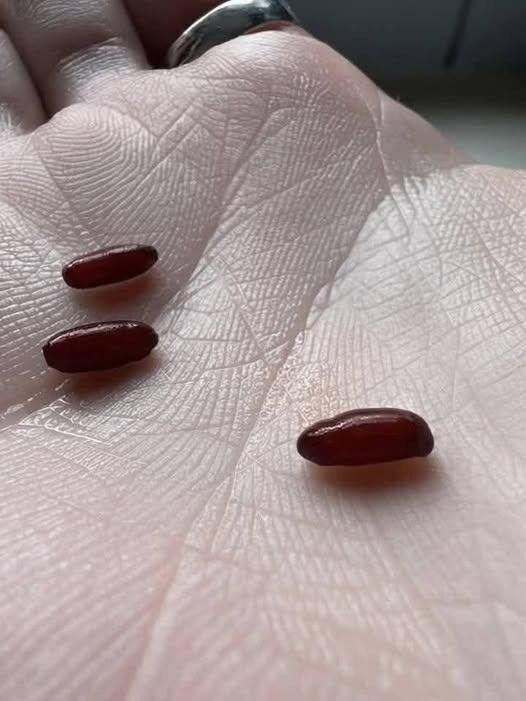
    Imagine this: you walk into your bedroom at the end of a long day, expecting nothing more than rest and routine. The bed looks normal at first—until something catches your eye. Three small, reddish-brown objects sit where you’re certain they weren’t before. They’re smooth. Shiny. Capsule-shaped. You pick them up and feel your pulse quicken.

    Are they insect eggs?
    Something toxic?
    Medication you don’t recognize?
    Evidence of a bigger problem hiding in your home?

    This exact scenario recently unfolded for someone who later shared a photo online: three mysterious objects resting in the palm of their hand, discovered unexpectedly on a bed. The image sparked immediate concern and curiosity. At first glance, the objects looked unfamiliar enough to raise alarm—but familiar enough to suggest there might be a simple explanation.

    This article takes a deep, practical look at what those reddish-brown capsules most likely are, what they are not, why they can cause anxiety, and exactly what steps to take when you encounter something strange in your personal space.

    Why Finding Unknown Objects Feels So Disturbing

    Before we identify the objects themselves, it’s important to understand why this kind of discovery feels so unsettling.

    Our bedrooms are psychological safe zones. They’re places of vulnerability, rest, and control. When something unfamiliar appears there—especially something that looks biological—our brains switch instantly into threat-detection mode.

    This reaction is completely normal.

    Humans are wired to be cautious about:

    Unknown substances

    Possible pests

    Objects associated with contamination

    Items that appear without explanation

    The reddish-brown color, smooth texture, and uniform shape of these objects are exactly the kind of visual cues that trigger concern. They don’t look random. They look intentional—which makes the mystery worse.

    A Closer Description of the Objects

    Based on the photo and description, the objects share several consistent characteristics:

    Color: Reddish-brown to dark amber

    Shape: Oval or capsule-like

    Surface: Smooth, glossy, reflective

    Texture: Gelatinous or flexible rather than hard

    Uniformity: Nearly identical in size and shape

    These features immediately narrow down the list of possibilities.

    Let’s go through the most common explanations—starting with the most likely.

    1. Softgel Capsules (Dietary Supplements or Medication)

    Why This Is the Most Likely Explanation

    Softgel capsules are extremely common in modern households, and they match the appearance of the objects almost perfectly.

    Examples include:

    Fish oil

    Vitamin E

    Krill oil

    CoQ10

    Multivitamins

    Certain prescription medications

    These capsules are:

    Smooth and shiny

    Reddish-brown or amber in color

    Uniform in shape

    Slightly flexible when pressed

    Designed to dissolve easily

    They can roll easily, fall unnoticed from hands, pockets, bags, or nightstands, and end up in places you wouldn’t expect—like your bed.

    How They End Up There Without You Noticing

    Many people are surprised to find capsules where they don’t remember dropping them. But common scenarios include:

    A supplement bottle briefly opened near the bed

    Capsules carried loosely in a pocket

    Pets knocking items off surfaces

    Capsules sticking to fabric due to static

    Pills dropped during nighttime routines

    Because softgels are quiet when they fall and don’t break easily, they often go unnoticed until later.

    How to Confirm

    Try this:

    Gently press one with a tissue or glove

    Softgels will compress slightly

    Look for a faint seam around the capsule

    Check nearby supplement bottles for matching capsules

    Smell it carefully (without breaking it)—fish oil often has a mild odor

    If it matches a supplement in your home, mystery solved.

    2. Seeds (Possible, but Less Likely)

    Some seeds—such as date pits or certain tropical seeds—can appear smooth and dark. However, seeds usually have at least one of the following traits:

    A fibrous or matte surface

    A visible seam or point of growth

    Irregular shapes

    Hard, solid texture

    The objects found on the bed were described as shiny and gelatinous, which strongly argues against them being seeds.

    Additionally, seeds don’t usually appear indoors unless:

    Someone was eating fruit in bed

    A pet tracked them in

    They fell from decorative plants

    Without those circumstances, seeds are an unlikely explanation.

    3. Insect Eggs, Larvae, or Droppings? (Very Unlikely)

    This is often the first fear—and fortunately, almost always the wrong one.

    Why These Are Not Insect Eggs

    Most insect eggs are:

    White, translucent, or pale

    Irregular in size

    Clustered rather than identical

    Fragile, not glossy

    Even cockroach egg cases (oothecae), which are darker, have:

    Ridged or segmented surfaces

    Rigid, non-shiny texture

    A very distinct shape unlike smooth capsules

    Insect droppings are:

    Matte, crumbly, or granular

    Irregular in shape

    Often accompanied by other signs (smell, stains, insects)

    The uniformity and gloss of the objects rule out insect origin almost entirely.

    4. Candy, Decorative Food Items, or Beads

    Some edible candies or craft beads can look similar—but context matters.

    Candies usually:

    Have sugar residue

    Smell sweet

    Appear in larger quantities

    Come with wrappers or crumbs nearby

    Craft beads:

    Are rigid plastic or glass

    Don’t compress

    Often have holes

    Finding three identical objects only on a bed—without other materials—makes these explanations less likely.

    What You Should Do Immediately

    Even if the objects appear harmless, follow these steps:

    1. Do Not Consume Them

    Never ingest an unidentified substance, even if it resembles vitamins.

    2. Check Nearby Items

    Supplements

    Medications

    Nightstand drawers

    Bags or purses

    Pet areas

    3. Ask Other Household Members

    Someone else may recognize them instantly.

    4. Clean the Area

    Wash bedding

    Vacuum mattress seams

    Wipe surfaces

    This step is as much for peace of mind as hygiene.

    5. Keep a Sample

    If uncertainty remains, place one object in a sealed bag.

    A pharmacist can often identify capsules immediately and safely.

    Why Our Brains Jump to the Worst-Case Scenario

    Psychologists call this threat amplification—a survival instinct that overreacts when information is incomplete.

    Factors that increase anxiety:

    Finding objects in private spaces

    Lack of immediate explanation

    Association with pests or toxins

    Online images reinforcing fear

    Once fear takes hold, logic struggles to catch up.

    That’s why methodical elimination of possibilities is so effective.

    When Should You Actually Worry?

    You should seek professional help if:

    Objects multiply rapidly

    You see live insects

    There’s unexplained itching or bites

    Objects have a strong chemical odor

    No household items match them at all

    In those rare cases, consult:

    Pest control professionals

    A pharmacist

    A healthcare provider

    Final Thoughts: Strange Doesn’t Mean Dangerous

    Finding something unfamiliar on your bed can be alarming—but unfamiliar does not automatically mean harmful.

    In this case, all evidence points to harmless softgel capsules, most likely supplements that were accidentally dropped and forgotten.

    What matters most is how you respond:

    Stay calm

    Observe carefully

    Eliminate possibilities logically

    Ask for expert input when needed

    Sometimes the most unsettling discoveries have the simplest explanations—and peace of mind often comes not from panic, but from patience.

    Have you ever found something strange in your home that turned out to be ordinary?
    You’re not alone. And you’re certainly not the first to worry—only to laugh later once the mystery is solved.

  • The Night I Believed My Boyfriend Was Going to Propose, the Moment Everything Shifted Under the Soft Glow of a Restaurant Candle, and How His “Joke” Revealed the Truth About Our Future—Leading Me Not to the Engagement I Expected, but to the Self-Respect I Needed Most

    The Night I Believed My Boyfriend Was Going to Propose, the Moment Everything Shifted Under the Soft Glow of a Restaurant Candle, and How His “Joke” Revealed the Truth About Our Future—Leading Me Not to the Engagement I Expected, but to the Self-Respect I Needed Most

    For three years, my relationship with Ryan unfolded like a carefully plotted path—steady, consistent, predictable in the way that makes you believe you’re building something stable. It wasn’t filled with dramatic arguments or whirlwind highs; it was a partnership I had invested in with patience and intention. I supported him through long stretches of uncertainty, through job transitions that shook his confidence, through nights where he leaned on me so heavily I wondered if he even realized how much I carried alongside him. But I stayed, believing that the compromises we made were mutual, believing that each step back I took created space for both of us to move forward together. I thought compromise meant commitment. I thought support meant reciprocity. I thought love, as we were building it, meant a shared future.

    As our third anniversary approached, subtle signs began to shift around me—Ryan mentioning a “special surprise,” making a reservation at an upscale restaurant we had only dreamed of visiting, acting distant in a way that felt secretive but warm, as if he were holding something tender and exciting just out of sight. Despite the fatigue of the past year, despite moments where I wondered if we were truly in sync, I allowed myself to hope. It had been three years. We had discussed our future in vague, careful terms. I knew he wasn’t impulsive. If he was planning something, I believed it must be meaningful.

    I spent the evening preparing with a kind of nervous anticipation I tried to downplay. I chose an outfit he once said he loved, fixed my hair with trembling hands, and let myself imagine what the night might bring. I didn’t script a proposal in my mind—not exactly—but I allowed room for the possibility. I allowed myself to believe our difficult moments had been leading somewhere, that all the support I had poured into him might finally circle back into something we could name as progress.

    The restaurant glowed in soft golden tones, the kind that make you feel transported—safely tucked away from the noise of the outside world. Dinner was lovely in its simplicity. Conversation flowed. We laughed about memories we’d created in our early months, talked about the meals we wanted to try on future trips, about dreams we hadn’t revisited since life became more stressful. I kept waiting for him to reach across the table, to say something grounding, something defining. Every time he shifted his posture or took a deeper breath, I braced myself. Every pause felt like a door about to open.

    But when dessert arrived, everything I had built in my mind shattered in a single glance.

    Instead of a romantic message or a hint at a deeper commitment, the plate carried a mocking reference to a professional milestone I had wanted badly and failed to achieve. A failure that had already bruised me more than I admitted aloud. A disappointment I had confided in him with vulnerability I rarely showed anyone else. And there it was, written in chocolate script, presented with flourish, as if the moment of my deepest insecurity could be transformed into a punchline.

    I stared at it, feeling the warmth drain from my face. Ryan laughed—lightly, dismissively—saying it was meant to “lighten the mood,” that I was taking life too seriously, that this would help me laugh it off. But there was no humor in it. There was only the quiet, devastating realization that he did not see my disappointment as something worth respecting. He saw it as something he could mock to create entertainment out of discomfort.

    The imagined future collapsed not in an explosion, but in a dimming of light—like a candle flickering out without ceremony.

    I didn’t argue. I didn’t demand an apology he wasn’t capable of understanding. Instead, I quietly reached for my wallet, placed my card on the table, and paid for my portion of the meal. The waiter hesitated, sensing tension, but I nodded politely. I wished Ryan a good night, thanked him for dinner, and walked out of the restaurant with steps that felt steadier than I expected.

    The night air was cold, but it felt cleaner than the room I had left behind.

    Over the next few days, the silence between us stretched into something painful but revealing. He didn’t call to understand what happened. He didn’t reach out to apologize. Instead, he sent short messages insisting I was overreacting and that I “needed to loosen up.” Every word widened the space between us. Every dismissal made it clearer that the version of partnership I believed we were building existed only in my imagination.

    A week later, I hosted a small gathering—not to seek revenge, but to close a chapter that had been weighing on my spirit far longer than I wanted to admit. Friends filled my apartment with laughter and music, a joy I hadn’t felt in months. I created a lighthearted display referencing my own achievements, my resilience, the pride I had rediscovered in myself. It wasn’t cruel; it was reclaiming a piece of me that had been dimmed by years of emotional labor that went unseen.

    When Ryan arrived, expecting reconciliation or at least a chance to shape the narrative, he instead found clarity—not the kind he was prepared for, but the kind I had needed for far too long. There was no anger left in me, no desire to make him feel small. There was only a quiet acknowledgment that we were not, and maybe had never been, aligned in the ways that mattered most.

    Watching him stumble over confusion while I stood surrounded by friends who celebrated me for exactly who I was, I felt something settle inside me—not triumph, but peace. Something I hadn’t felt in years.

    Walking away from that relationship did not feel like losing a future. It felt like reclaiming one I had abandoned without realizing it. For so long, I had shaped myself around his needs, his stress, his ambitions, believing that love meant making space even when he didn’t make space for me. But love is not a sacrifice that depletes you. It’s a partnership that strengthens both sides.

    That night at the restaurant didn’t give me a proposal.
    It gave me something better:
    A reminder that my worth is not defined by how much I endure, but by how much I honor myself.

    It gave me clarity.
    It gave me freedom.
    And it gave me the future I chose—alone, but never again unseen.

  • Everyone Should Know That Clove Steam Has the Power To…

    Everyone Should Know That Clove Steam Has the Power To…

    For generations, cloves have been praised in traditional medicine for their warm aroma and powerful natural compounds. But recently, clove steam has become a trending home remedy—especially among people looking for gentle, natural ways to support their health. Whether you struggle with sinus pressure, dull skin, or seasonal discomfort, clove steam might be the simple ritual worth adding to your routine.

    In this article, we explore what clove steam can actually do, why it works, and how to safely use it at home.
    One of the most well-known benefits of clove steam is its ability to open up blocked airways.

    Cloves contain eugenol, a compound with natural antibacterial, antiviral, and anti-inflammatory properties. When cloves are heated in water and inhaled as steam, the warm vapor helps:

    Loosen mucus in the nose and throat
    Reduce sinus pressure
    Soothe irritated airways
    Support easier breathing during seasonal allergies or mild congestion

    Many people notice relief within minutes, making it a simple and comforting remedy during cold weather or pollen season.
    Clove steam also benefits the skin, especially if you struggle with clogged pores or dullness. The warm steam opens the pores, while clove’s antimicrobial properties help reduce surface bacteria.

    Regular clove steaming can:

    Help manage acne-prone skin
    Improve overall skin glow
    Reduce blackheads by softening debris
    Support smoother texture

    It’s a budget-friendly addition to any skincare routine and works well before applying masks or exfoliators.
    3. Relax the Mind and Reduce Stress

    Cloves have a naturally warm, comforting scent that encourages relaxation. Inhaling clove steam can help calm the mind after a long day by:

    Reducing mental tension
    Encouraging deeper breathing
    Creating a spa-like atmosphere at home

    Many people use it before bedtime to unwind or after stressful moments to reset their mood.
    4. Naturally Refresh the Home Environment

    Clove steam doesn’t just support your health—it also helps freshen the air around you. Its strong, earthy aroma can neutralize unpleasant odors from cooking, pets, or humidity.

    A pot of clove steam simmering in the home can act as a natural, chemical-free air refresher.
    5. How to Make Clove Steam at Home (Simple Method)

    You only need two ingredients:

    1–2 tablespoons of whole cloves
    1 pot of boiling water

    Steps:

    Bring water to a boil.
    Add the cloves.
    Turn off the heat and let the aroma release.
    If steaming your face, lean over the pot at a safe distance and cover your head with a towel.
    Inhale gently for 5–10 minutes.
    Always keep your face far enough to avoid burns.

    6. Safety Notes

    Clove steam is generally safe, but keep in mind:

    Avoid if you have very sensitive skin or respiratory issues without consulting a professional.
    Do not use for young children.
    Stop immediately if irritation occurs.
    Do not apply clove oil directly to the skin without dilution—it is strong and can cause burning.

    Final Thoughts

    Clove steam is an old remedy gaining new attention—and for good reason. It’s simple, inexpensive, and offers benefits for breathing, skin health, stress relief, and even your home environment. If you’re looking for a natural addition to your wellness routine, this may be the gentle ritual worth trying.