Author: admin

  • Trump Deploys U.S. Marines to…See More

    Trump Deploys U.S. Marines to…See More

    The U.S. military has deployed 200 Marines to Florida to assist Immigration and Customs Enforcement (ICE) with administrative and logistical support. This move, confirmed by the Department of Defense, has sparked debate nationwide, as it marks an uncommon collaboration between military personnel and a civilian immigration agency.

    According to officials, the Marines will not be involved in law enforcement activities. Instead, their role will be limited to supporting operations such as communications, infrastructure management, and supply coordination within ICE detention centers and field offices. This initiative aims to ease pressure on ICE staff amid increasing operational demands.

    The deployment is part of a larger federal response to growing logistical challenges in areas with high migration activity. Alongside Florida, regions such as Louisiana and Texas are also receiving enhanced support. ICE facilities in these areas have been operating at or near capacity, prompting calls for reinforced infrastructure and staffing assistance.

    Despite assurances that the Marines will only carry out non-enforcement duties, the presence of uniformed military personnel in ICE facilities has raised concerns. Civil rights organizations and some lawmakers are questioning the implications of involving the military in immigration-related operations, citing fears of blurring lines between military and civilian responsibilities.

  • Here’s Who’s Behind Minneapolis ICE Resistance Movement: Report

    Here’s Who’s Behind Minneapolis ICE Resistance Movement: Report

    Radical left-wing activist organizations have been identified as key drivers behind recent protests opposing Immigration and Customs Enforcement operations in Minnesota, according to reporting by the New York Post. Among the most visible groups is Indivisible Twin Cities, which describes itself as a grassroots volunteer network but has played a central role in organizing demonstrations against ICE activity across the state.

    The protests intensified after the death of Renee Nicole Good, who was shot during an ICE-related incident after allegedly attempting to strike an agent with her vehicle. Activist groups have disputed law enforcement accounts, portraying Good as a peaceful “legal observer” rather than a threat. Her death has since become a rallying point for anti-ICE demonstrations.

    Financial records show that the Indivisible Project, the Washington, D.C.–based organization linked to Indivisible Twin Cities, received approximately $7.85 million from George Soros’ Open Society Foundations between 2018 and 2023. The national group openly states that its mission is to oppose the Trump political agenda, raising questions about how localized the Minnesota protests truly are.

    Other organizations have also been involved, including the Minnesota chapter of the Council on American-Islamic Relations. Its executive director, Jaylani Hussein, has spoken at protests, accusing authorities of spreading false information about Good’s death. Additional reporting describes Good as an active member of “ICE Watch,” a Minneapolis-based activist group focused on monitoring and disrupting immigration enforcement.

  • What is actually the shrimp’s vein… See more

    What is actually the shrimp’s vein… See more

    Shrimp has long occupied a prized place in cuisines around the world, valued for its tender bite, mild sweetness, and ability to absorb bold flavors. From casual backyard boils to elegant restaurant plates, it moves easily between everyday meals and refined dining. Despite this familiarity, shrimp preparation still sparks debate, centered on the thin dark line running along its back, commonly called the “vein,” which continues to divide cooks over whether it should be removed.

    Despite the name, this line is not a vein at all. It is the shrimp’s digestive tract, visible through the translucent flesh. Shrimp feed on algae, plankton, and organic material found on the ocean floor, and the dark color simply reflects what the shrimp last consumed. Its appearance can vary widely, sometimes faint and barely noticeable, other times thick and dark.

    From a food safety standpoint, eating shrimp that has not been deveined is generally not dangerous. When shrimp is fresh and cooked properly, heat eliminates harmful bacteria, including anything present in the digestive tract. Many cuisines around the world regularly cook and eat shrimp whole, particularly when the shrimp are small, without any health concerns.

    The argument for removing the tract is rooted more in quality than safety. The contents of the digestive system can sometimes introduce a bitter or muddy taste that interferes with the shrimp’s natural sweetness. In addition, if the shrimp has ingested sand or sediment, the tract may create an unpleasant gritty texture when eaten.

  • This Little Boy Grew Up To Be One Of The Most Evil Men In The World

    This Little Boy Grew Up To Be One Of The Most Evil Men In The World

    Even the most innocent-looking child can grow into something unrecognizable when early life is shaped by instability, neglect, and violence. Few stories demonstrate that transformation more starkly than the one behind a name that still echoes through true-crime history: Charles Manson.

    He was born on November 12, 1934, in Cincinnati, Ohio, to a sixteen-year-old mother. From the start, his life lacked structure or security. His father, reportedly a con man, disappeared before Manson was born, leaving behind not only absence but a vacuum—no stability, no protection, no consistent authority.

    By the age of four, that fragile beginning fractured further. His mother, Kathleen, was arrested for assault and robbery after striking a man with a bottle and stealing his car alongside her brother. She was sentenced to five years in prison. Manson was sent to live with relatives in West Virginia, where visits from his mother were inconsistent and often unwelcome. He later resisted seeing her, sensing instability even at that young age.

    When Kathleen was released, they briefly reunited. Those weeks were later described as the happiest of his childhood—short-lived moments of routine and belonging. But alcoholism soon consumed her, and chaos returned. She disappeared for days at a time, leaving her son shuffled between babysitters and temporary arrangements that provided neither discipline nor care.

  • Sources claim man killed in second ICE shooting in Minneapolis named has been identified

    Sources claim man killed in second ICE shooting in Minneapolis named has been identified

    The man shot and killed by federal immigration agents in south Minneapolis on Saturday has been identified as Alex Jeffrey Pretti, a 37-year-old city resident, according to local reporting. His identification has intensified scrutiny of federal enforcement actions already under fierce debate.

    Local sources familiar with the investigation confirmed Pretti’s name to Star Tribune as officials continue to reconstruct the events surrounding a controversial law-enforcement operation. Pretti lived in the Whittier neighborhood and was known locally as a registered nurse who graduated from the University of Minnesota. Authorities say he held an active nursing license and was a lawful gun owner with a valid permit to carry, with no indication of a serious criminal history.

    The fatal shooting occurred on January 24, 2026, during an immigration enforcement action conducted by agents from the Department of Homeland Security. Officials state that Pretti was armed with a handgun and approached agents, leading to a confrontation that ended with an agent firing. DHS has characterized the shooting as an act of self-defense, though key details remain disputed.

    Video shared online appears to show a physical struggle involving multiple agents and Pretti shortly before gunshots were heard. Minneapolis Police Department confirmed Pretti’s identity and said he was a U.S. citizen and longtime resident, further fueling questions about the scope and conduct of federal operations in city neighborhoods.

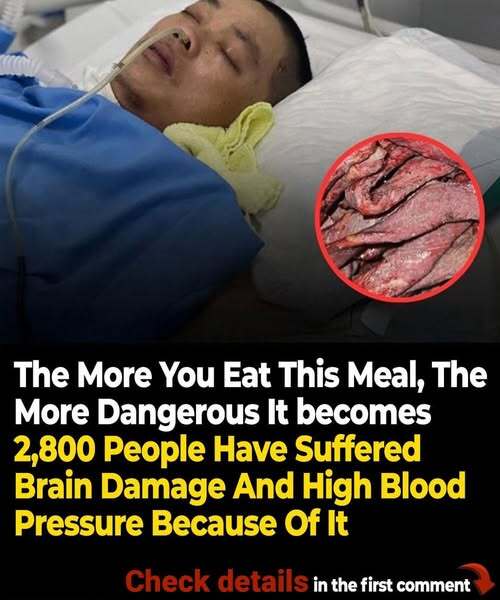
  • Why Eating More of This Meat Could Be Putting You in Danger

    Why Eating More of This Meat Could Be Putting You in Danger

    Eating processed meat has become routine largely because it is convenient, flavorful, and designed to last. Bacon, sausages, deli meats, and hot dogs fit easily into busy schedules, but the way these foods are made changes how the body responds to them over time. Research does not suggest that an occasional serving causes harm, yet consistent intake has been linked to higher risks of colorectal cancer, heart disease, type 2 diabetes, and potentially cognitive decline. Understanding why these links exist helps explain why moderation matters and why simple dietary shifts can meaningfully reduce risk without demanding perfection.

    Processed meat has a specific definition in health research. It refers to meat preserved through curing, smoking, salting, or chemical additives that extend shelf life and enhance flavor. These methods increase sodium levels and introduce preservatives such as nitrates and nitrites. While processed meat often appears in small portions, repeated exposure over years is what drives concern. Sandwiches, breakfast items, and ready-made meals can quietly make processed meat a daily habit, even when individual servings seem minor.

    The strongest evidence of harm comes from cancer research. After reviewing decades of data, the World Health Organization classified processed meat as carcinogenic, based on sufficient evidence linking it to colorectal cancer. This classification reflects the consistency of findings, not that the risk equals other carcinogens like tobacco. Studies following large populations show higher cancer rates among those who eat processed meat more frequently, particularly over long periods.

    One reason for this risk lies in curing agents. Nitrates and nitrites can form N-nitroso compounds in the digestive tract, substances known to damage cells under certain conditions. Combined with heme iron, high-heat cooking, and low-fiber diets, these compounds may create an environment that promotes cancer development. Processed meat also delivers large amounts of sodium, which raises blood pressure and strains blood vessels, increasing the risk of heart disease and stroke.Long-term studies consistently associate higher processed meat intake with worse cardiovascular outcomes and a higher likelihood of developing type 2 diabetes. These risks appear even at modest daily amounts and accumulate gradually. Emerging research suggests similar patterns for brain health, with higher dementia risk linked to regular consumption, likely through vascular and inflammatory pathways.

    Reducing risk does not require eliminating processed meat entirely. Evidence suggests that treating it as an occasional food rather than a daily staple makes a meaningful difference. Replacing processed meat with beans, nuts, fish, eggs, or unprocessed meats lowers sodium intake while adding fiber and beneficial nutrients. Small substitutions, repeated consistently, can significantly improve long-term health outcomes.


  • Woman whose face was torn off by dogs shares progress four years on from violent attack

    Woman whose face was torn off by dogs shares progress four years on from violent attack

    Jacqueline Durand was just 22 years old when her life changed forever. A lifelong dog lover and pet-sitting business owner, she was caring for two dogs in a Texas home in December 2021 when an unthinkable attack occurred.

    In moments, a routine visit turned into a fight for survival. Jacqueline suffered extreme injuries and lost a significant amount of blood. Emergency responders worked urgently to save her life, and doctors placed her in a medically induced coma following extensive surgery.

    She was resuscitated multiple times and spent weeks hospitalized. The physical trauma was severe, and the emotional impact was just as profound. The dogs involved were later euthanized, and Jacqueline faced a future defined by long-term medical care.

    Recovery did not come quickly. Over the next four years, Jacqueline underwent roughly 30 surgeries aimed at rebuilding and supporting her facial structure. Each procedure marked another difficult step forward.Some of her most recent surgeries used tendons from her leg to help restore stability and function. These complex procedures required patience, resilience, and constant adaptation to a changing body.

    Today, Jacqueline describes herself as being in her “recovery era.” Instead of focusing on what she lost, she shares milestones and progress online, choosing gratitude over grief and hope over fear.

    Once painful anniversaries are now moments of reflection and purpose. Jacqueline credits her strength to her family, her medical team, her faith, and the countless supporters who stood by her.

    Her story is no longer defined by trauma alone. Jacqueline has become an advocate for survivors, showing that healing goes beyond the physical—and that resilience can rebuild a life.

  • Neighbor Asked My Son to Shovel Snow for $10 a Day but Refused to Pay — So I Taught Him a Lesson He’ll Never Forget

    Neighbor Asked My Son to Shovel Snow for $10 a Day but Refused to Pay — So I Taught Him a Lesson He’ll Never Forget

    I’d always known my son Ben had a bigger heart than the world deserved. He was twelve, gangly, scraped knees, full of optimism that adults often lose. One snowy morning in December, he came running into the kitchen. “Mom! Mr. Dickinson said he’ll pay me ten dollars every time I shovel his driveway!”

    Ben was thrilled, planning to buy me a red scarf and a dollhouse for his sister Annie. He even planned to save for a telescope. For weeks, he worked diligently, shoveling every morning, counting his earnings at night, proud of every dollar earned.

    Then, on December 23rd, he came home devastated. “Mr. Dickinson… he said he’s not paying me. Not a single cent.” He explained that it was a “lesson” about contracts. My heart ached with a mix of anger and protectiveness. “You did nothing wrong,” I told him. “This is on him, not you.”

    The next morning, I rallied our family. We shoveled our driveway, the neighbors’ paths, and finally moved the snow to Mr. Dickinson’s pristine driveway—clean, deliberate, impossible to ignore. Ben watched, slowly smiling again, understanding that fairness was being restored, even if not through money alone.When Dickinson stomped out, furious, we stood calm. “A lesson in labor,” I said. “Ben provided a service. You refused to pay. Now you don’t enjoy the benefit.” His protests fell flat in front of neighbors watching silently.

    That evening, Dickinson delivered the promised payment. Ben’s face lit up with relief and pride. He had learned something deeper than money: that work matters, integrity matters, and sometimes, you have to defend yourself or others when someone tries to exploit kindness.

    The scarf and dollhouse were secondary. The true gift was showing Ben that being kind doesn’t mean being taken advantage of—and that standing up for what’s right can teach lessons the “real world” rarely will.

  • Hello world!

    Welcome to WordPress. This is your first post. Edit or delete it, then start writing!