Category: Uncategorized

  • Marinara vs Spaghetti Sauce Explained at Last: Why These Two Tomato Sauces Taste So Different, How History, Ingredients, and Cooking Time Set Them Apart, and How Knowing the Difference Can Instantly Improve the Way You Cook Pasta at Home

    Marinara vs Spaghetti Sauce Explained at Last: Why These Two Tomato Sauces Taste So Different, How History, Ingredients, and Cooking Time Set Them Apart, and How Knowing the Difference Can Instantly Improve the Way You Cook Pasta at Home

    Marinara and spaghetti sauce are often spoken about as if they are the same thing. Grocery store labels blur the difference, restaurant menus simplify the names, and home cooks freely substitute one for the other. Yet these sauces were never meant to be interchangeable. Understanding how they differ reveals more than a cooking detail—it shows how tradition, migration, and necessity shape what we eat and how we define comfort food.

    At a glance, the confusion seems reasonable. Both sauces are tomato-based, red in color, and commonly paired with pasta. But beyond appearance, their purposes quickly diverge. Marinara and spaghetti sauce were created for different contexts, prepared using different methods, and designed to deliver entirely different eating experiences. To see the contrast clearly, it helps to return to their origins rather than modern labels.

    Marinara originated in southern Italy as a sauce built for speed and simplicity. Traditionally made with tomatoes, garlic, olive oil, and a small amount of herbs, it is cooked briefly to preserve brightness and acidity. Marinara is light, fresh, and restrained, meant to complement food rather than dominate it. Its role is balance, not fullness, which is why it works well with seafood, vegetables, or as a dipping sauce.

    Spaghetti sauce, by contrast, is not a single recipe but a broad category shaped largely by Italian immigrant cooking in the United States. It is typically heavier, slow-cooked, and often includes meat, onions, tomato paste, and sometimes sugar or wine. The goal is richness and satisfaction, producing a sauce that clings to pasta and fills the plate.

    Cooking time and texture mark a clear divide. Marinara is quick and fluid, while spaghetti sauce develops depth through long simmering and thickness. Each serves a specific purpose, and swapping them changes the entire dish.

    Neither sauce is superior. Marinara teaches restraint and freshness, while spaghetti sauce offers comfort and abundance. Knowing the difference allows cooks to choose intentionally, honoring what each sauce was meant to be rather than forcing them into the same role.

  • What I Learned While Caring for My Mother at Home, and How Love, Loss, Exhaustion, Sacrifice, and Quiet Recognition Reshaped My Understanding of Duty, Family, Memory, and the Invisible Work That Changes a Life Forever

    What I Learned While Caring for My Mother at Home, and How Love, Loss, Exhaustion, Sacrifice, and Quiet Recognition Reshaped My Understanding of Duty, Family, Memory, and the Invisible Work That Changes a Life Forever

    When my mother’s memory began to fade, it did not announce itself with drama. There was no single moment that rang an alarm bell or sent us rushing into action. Instead, it arrived the way fog does—softly, gradually, almost politely—until one day you look around and realize the landscape has changed.

    At first, it was small things. The kind of things you excuse easily. She misplaced her keys more often, then found them in the refrigerator. She forgot appointments and laughed it off, blaming “too much on her mind.” She told the same story twice during one phone call, then three times in a single afternoon. Each time, I smiled and listened as if it were new, because correcting her felt unkind, and because part of me was not ready to see what was forming.

    Denial, I would later learn, is not ignorance. It is love trying to buy time.

    The first moment that truly unsettled me came one quiet afternoon when I stopped by her house with groceries. She answered the door wearing the same cardigan she’d owned for years, her hair brushed carefully, her smile warm—but uncertain. She looked at me closely, as if searching for a clue, and then asked, gently, “Are you the nice neighbor?”

    I remember the sound of the bags hitting the floor. I remember how my chest tightened, how the world seemed to tilt just slightly off center. I remember thinking, absurdly, that I must have done something wrong, that I had approached her too quietly or changed my hair or somehow caused this confusion.

    But the confusion stayed.

    The doctor later explained her condition in a careful, practiced voice. He used words like progressive and unpredictable. He spoke about timelines and stages and planning ahead. He talked about support systems, safety, and the importance of thinking long-term.

    My siblings reacted quickly. They are practical people, efficient and decisive. They discussed care facilities, costs, waiting lists, insurance coverage. Their conversation had the clipped tone of a meeting agenda, each point addressed, each concern itemized.

    I listened quietly.

    I knew, with a certainty that surprised even me, that I could not leave her somewhere unfamiliar. I pictured her in a strange room, surrounded by strangers, her confusion deepening without the anchors of routine and recognition. I imagined her calling out for help and not knowing who to trust.

    I brought her home with me.

    I did this knowing the warnings were justified. Everyone told me it would be hard. That it would consume my time, my energy, my patience. That she might never recognize the sacrifice, might never say thank you, might never even know who I was again.

    They were right about all of it.

    And still, it felt like the only choice that would let me sleep at night.

    Caring for my mother did not reshape my life all at once. It pressed on it slowly, steadily, like water reshaping stone.

    At first, I adjusted my work hours. I negotiated flexibility, moved meetings, answered emails late at night when she was asleep. I told myself it was temporary, that I could manage both roles if I stayed organized enough.

    But illness does not follow schedules.

    There were doctor’s appointments that ran long, nights when she wandered the hallway confused and frightened, mornings when she refused to eat or became upset by the sight of her own reflection. I missed deadlines. I asked for more understanding. Eventually, the understanding ran out.

    I lost my job.

    The savings I had built carefully over years slipped away quietly. Medications. Safety rails. Locks for doors she might open at night. Special foods she could tolerate. Laundry detergent for sensitive skin. Taxi rides when driving felt unsafe. The expenses did not arrive dramatically; they accumulated, like sand filling a jar.

    Some days were peaceful in ways that felt almost sacred. She would hum songs from her youth, melodies I half-recognized from my childhood. She would sit by the window and smile at the sunlight as if it were an old friend. Sometimes she reached for my hand and held it without speaking, and in those moments, I felt an intimacy deeper than conversation.

    Other days were harder.

    There were days filled with confusion and restlessness, when she accused me of stealing her things or demanded to go “home,” even though she was already there. There were nights when she cried for her own mother, long gone, and no explanation could soothe her. There were moments when exhaustion pressed so heavily on my chest that I had to step into the bathroom and breathe slowly, just to keep going.

    My siblings called occasionally. They asked how things were going. They sounded relieved when I said, “We’re managing.” They visited rarely. I told myself they were busy. I told myself everyone copes differently.

    Resentment is easy to grow in those conditions. I felt it sometimes, sharp and sudden, like a splinter. But I worked hard to pull it out before it festered.

    I reminded myself, again and again, that love is not measured by recognition.

    Even when my mother forgot my name, she relaxed when I entered the room. Even when she did not know who I was, she felt safe when I held her hand. Her body remembered what her mind could not.

    That had to be enough.

    Caring for her stripped my life down to its essentials. There was little room for ambition, social plans, or long-term goals. My days revolved around meals, medications, naps, and small victories—an entire lunch eaten, a calm afternoon, a shared laugh over something neither of us could fully explain.

    Time changed shape. Weeks blurred together. Seasons announced themselves through changes in light rather than calendars.

    I learned how fragile dignity can be, and how fiercely it must be protected. I learned how to help someone bathe without making them feel ashamed. How to redirect anger without confrontation. How to speak gently even when my own patience felt threadbare.

    Most of all, I learned how deeply invisible this kind of work is.

    There are no promotions for caregiving. No applause. No certificates handed out for nights spent awake or years quietly surrendered. The world keeps moving as if nothing unusual is happening, even as your entire life narrows around another person’s needs.

    When my mother passed away, it was early in the morning. The light was just beginning to change. I was sitting beside her, holding her hand the way I had so many times before. Her breathing slowed, then softened, then stopped.

    There was no drama. No sudden realization. Just a quiet ending.

    Afterward, my siblings came together for the practical matters. Paperwork. Arrangements. Conversations conducted in low voices over coffee. The will was read, and everything was divided evenly, exactly as my mother had arranged long before her illness.

    I did not argue. I did not explain the years I had given or the things I had lost. Grief had already taken enough energy, and I believed peace was more valuable than resentment.

    When everyone left, the house felt unbearably empty. Not just because she was gone, but because the purpose that had guided my days had vanished with her. I woke up unsure of what I was meant to do. The silence felt louder than any confusion had ever been.

    Three days later, the phone rang.

    The man on the line introduced himself as someone I did not recognize—a former colleague of my mother’s from many years ago. His voice was careful, respectful. He explained that she had contacted him early in her illness, before words became difficult, and asked him to keep something safe.

    There was a small account, he said. Set aside in my name.

    Not as a secret reward. Not as a way of excluding anyone. But as a quiet note of gratitude.

    Along with it came a letter, written in her careful handwriting. The words were simple. She thanked me for my patience. For my kindness. For my choice to stay when leaving would have been easier. She wrote that even if she forgot everything else, she hoped I would remember that she had always known what I was giving.

    I cried harder reading that letter than I had at her funeral.

    Because in that moment, I understood something that caregiving had been teaching me all along.

    Even when memories fade, love leaves its own record.

    It lives in the body. In habits. In choices made before confusion takes hold. In the quiet decisions that say, This mattered.

    What I gave my mother mattered. Not because it was acknowledged publicly. Not because it was repaid financially. But because it was real, and because it aligned with the person I wanted to be.

    Caring for her did not make me richer in the ways the world usually measures. But it gave me something more enduring: the quiet reassurance that when the moment came, I chose love over convenience, presence over comfort, and patience over fear.

    And that, I have learned, is a kind of wealth no one can take away.

  • I Just Discovered These Strange Reddish-Brown Capsules on My Bed—and the More I Looked at Them, the More I Realized How Ordinary Household Objects Can Trigger Unexpected Fear, Confusion, and a Search for Reassuring Answers

    I Just Discovered These Strange Reddish-Brown Capsules on My Bed—and the More I Looked at Them, the More I Realized How Ordinary Household Objects Can Trigger Unexpected Fear, Confusion, and a Search for Reassuring Answers

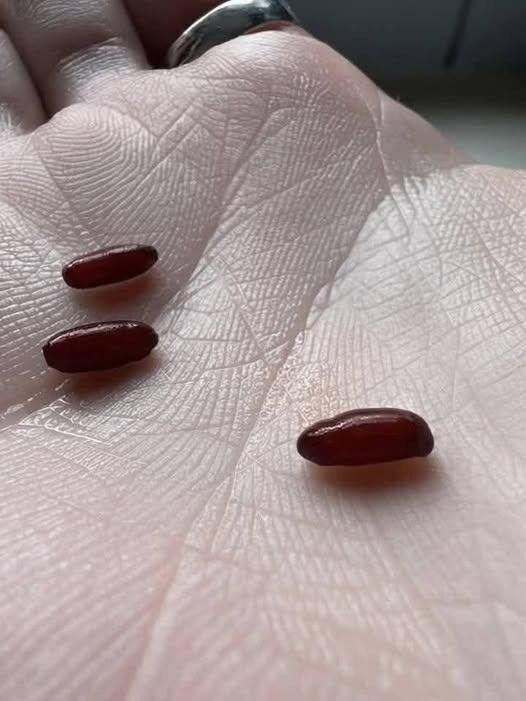
    Imagine this: you walk into your bedroom at the end of a long day, expecting nothing more than rest and routine. The bed looks normal at first—until something catches your eye. Three small, reddish-brown objects sit where you’re certain they weren’t before. They’re smooth. Shiny. Capsule-shaped. You pick them up and feel your pulse quicken.

    Are they insect eggs?
    Something toxic?
    Medication you don’t recognize?
    Evidence of a bigger problem hiding in your home?

    This exact scenario recently unfolded for someone who later shared a photo online: three mysterious objects resting in the palm of their hand, discovered unexpectedly on a bed. The image sparked immediate concern and curiosity. At first glance, the objects looked unfamiliar enough to raise alarm—but familiar enough to suggest there might be a simple explanation.

    This article takes a deep, practical look at what those reddish-brown capsules most likely are, what they are not, why they can cause anxiety, and exactly what steps to take when you encounter something strange in your personal space.

    Why Finding Unknown Objects Feels So Disturbing

    Before we identify the objects themselves, it’s important to understand why this kind of discovery feels so unsettling.

    Our bedrooms are psychological safe zones. They’re places of vulnerability, rest, and control. When something unfamiliar appears there—especially something that looks biological—our brains switch instantly into threat-detection mode.

    This reaction is completely normal.

    Humans are wired to be cautious about:

    Unknown substances

    Possible pests

    Objects associated with contamination

    Items that appear without explanation

    The reddish-brown color, smooth texture, and uniform shape of these objects are exactly the kind of visual cues that trigger concern. They don’t look random. They look intentional—which makes the mystery worse.

    A Closer Description of the Objects

    Based on the photo and description, the objects share several consistent characteristics:

    Color: Reddish-brown to dark amber

    Shape: Oval or capsule-like

    Surface: Smooth, glossy, reflective

    Texture: Gelatinous or flexible rather than hard

    Uniformity: Nearly identical in size and shape

    These features immediately narrow down the list of possibilities.

    Let’s go through the most common explanations—starting with the most likely.

    1. Softgel Capsules (Dietary Supplements or Medication)

    Why This Is the Most Likely Explanation

    Softgel capsules are extremely common in modern households, and they match the appearance of the objects almost perfectly.

    Examples include:

    Fish oil

    Vitamin E

    Krill oil

    CoQ10

    Multivitamins

    Certain prescription medications

    These capsules are:

    Smooth and shiny

    Reddish-brown or amber in color

    Uniform in shape

    Slightly flexible when pressed

    Designed to dissolve easily

    They can roll easily, fall unnoticed from hands, pockets, bags, or nightstands, and end up in places you wouldn’t expect—like your bed.

    How They End Up There Without You Noticing

    Many people are surprised to find capsules where they don’t remember dropping them. But common scenarios include:

    A supplement bottle briefly opened near the bed

    Capsules carried loosely in a pocket

    Pets knocking items off surfaces

    Capsules sticking to fabric due to static

    Pills dropped during nighttime routines

    Because softgels are quiet when they fall and don’t break easily, they often go unnoticed until later.

    How to Confirm

    Try this:

    Gently press one with a tissue or glove

    Softgels will compress slightly

    Look for a faint seam around the capsule

    Check nearby supplement bottles for matching capsules

    Smell it carefully (without breaking it)—fish oil often has a mild odor

    If it matches a supplement in your home, mystery solved.

    2. Seeds (Possible, but Less Likely)

    Some seeds—such as date pits or certain tropical seeds—can appear smooth and dark. However, seeds usually have at least one of the following traits:

    A fibrous or matte surface

    A visible seam or point of growth

    Irregular shapes

    Hard, solid texture

    The objects found on the bed were described as shiny and gelatinous, which strongly argues against them being seeds.

    Additionally, seeds don’t usually appear indoors unless:

    Someone was eating fruit in bed

    A pet tracked them in

    They fell from decorative plants

    Without those circumstances, seeds are an unlikely explanation.

    3. Insect Eggs, Larvae, or Droppings? (Very Unlikely)

    This is often the first fear—and fortunately, almost always the wrong one.

    Why These Are Not Insect Eggs

    Most insect eggs are:

    White, translucent, or pale

    Irregular in size

    Clustered rather than identical

    Fragile, not glossy

    Even cockroach egg cases (oothecae), which are darker, have:

    Ridged or segmented surfaces

    Rigid, non-shiny texture

    A very distinct shape unlike smooth capsules

    Insect droppings are:

    Matte, crumbly, or granular

    Irregular in shape

    Often accompanied by other signs (smell, stains, insects)

    The uniformity and gloss of the objects rule out insect origin almost entirely.

    4. Candy, Decorative Food Items, or Beads

    Some edible candies or craft beads can look similar—but context matters.

    Candies usually:

    Have sugar residue

    Smell sweet

    Appear in larger quantities

    Come with wrappers or crumbs nearby

    Craft beads:

    Are rigid plastic or glass

    Don’t compress

    Often have holes

    Finding three identical objects only on a bed—without other materials—makes these explanations less likely.

    What You Should Do Immediately

    Even if the objects appear harmless, follow these steps:

    1. Do Not Consume Them

    Never ingest an unidentified substance, even if it resembles vitamins.

    2. Check Nearby Items

    Supplements

    Medications

    Nightstand drawers

    Bags or purses

    Pet areas

    3. Ask Other Household Members

    Someone else may recognize them instantly.

    4. Clean the Area

    Wash bedding

    Vacuum mattress seams

    Wipe surfaces

    This step is as much for peace of mind as hygiene.

    5. Keep a Sample

    If uncertainty remains, place one object in a sealed bag.

    A pharmacist can often identify capsules immediately and safely.

    Why Our Brains Jump to the Worst-Case Scenario

    Psychologists call this threat amplification—a survival instinct that overreacts when information is incomplete.

    Factors that increase anxiety:

    Finding objects in private spaces

    Lack of immediate explanation

    Association with pests or toxins

    Online images reinforcing fear

    Once fear takes hold, logic struggles to catch up.

    That’s why methodical elimination of possibilities is so effective.

    When Should You Actually Worry?

    You should seek professional help if:

    Objects multiply rapidly

    You see live insects

    There’s unexplained itching or bites

    Objects have a strong chemical odor

    No household items match them at all

    In those rare cases, consult:

    Pest control professionals

    A pharmacist

    A healthcare provider

    Final Thoughts: Strange Doesn’t Mean Dangerous

    Finding something unfamiliar on your bed can be alarming—but unfamiliar does not automatically mean harmful.

    In this case, all evidence points to harmless softgel capsules, most likely supplements that were accidentally dropped and forgotten.

    What matters most is how you respond:

    Stay calm

    Observe carefully

    Eliminate possibilities logically

    Ask for expert input when needed

    Sometimes the most unsettling discoveries have the simplest explanations—and peace of mind often comes not from panic, but from patience.

    Have you ever found something strange in your home that turned out to be ordinary?
    You’re not alone. And you’re certainly not the first to worry—only to laugh later once the mystery is solved.


  • The Night I Believed My Boyfriend Was Going to Propose, the Moment Everything Shifted Under the Soft Glow of a Restaurant Candle, and How His “Joke” Revealed the Truth About Our Future—Leading Me Not to the Engagement I Expected, but to the Self-Respect I Needed Most

    The Night I Believed My Boyfriend Was Going to Propose, the Moment Everything Shifted Under the Soft Glow of a Restaurant Candle, and How His “Joke” Revealed the Truth About Our Future—Leading Me Not to the Engagement I Expected, but to the Self-Respect I Needed Most

    For three years, my relationship with Ryan unfolded like a carefully plotted path—steady, consistent, predictable in the way that makes you believe you’re building something stable. It wasn’t filled with dramatic arguments or whirlwind highs; it was a partnership I had invested in with patience and intention. I supported him through long stretches of uncertainty, through job transitions that shook his confidence, through nights where he leaned on me so heavily I wondered if he even realized how much I carried alongside him. But I stayed, believing that the compromises we made were mutual, believing that each step back I took created space for both of us to move forward together. I thought compromise meant commitment. I thought support meant reciprocity. I thought love, as we were building it, meant a shared future.

    As our third anniversary approached, subtle signs began to shift around me—Ryan mentioning a “special surprise,” making a reservation at an upscale restaurant we had only dreamed of visiting, acting distant in a way that felt secretive but warm, as if he were holding something tender and exciting just out of sight. Despite the fatigue of the past year, despite moments where I wondered if we were truly in sync, I allowed myself to hope. It had been three years. We had discussed our future in vague, careful terms. I knew he wasn’t impulsive. If he was planning something, I believed it must be meaningful.

    I spent the evening preparing with a kind of nervous anticipation I tried to downplay. I chose an outfit he once said he loved, fixed my hair with trembling hands, and let myself imagine what the night might bring. I didn’t script a proposal in my mind—not exactly—but I allowed room for the possibility. I allowed myself to believe our difficult moments had been leading somewhere, that all the support I had poured into him might finally circle back into something we could name as progress.

    The restaurant glowed in soft golden tones, the kind that make you feel transported—safely tucked away from the noise of the outside world. Dinner was lovely in its simplicity. Conversation flowed. We laughed about memories we’d created in our early months, talked about the meals we wanted to try on future trips, about dreams we hadn’t revisited since life became more stressful. I kept waiting for him to reach across the table, to say something grounding, something defining. Every time he shifted his posture or took a deeper breath, I braced myself. Every pause felt like a door about to open.

    But when dessert arrived, everything I had built in my mind shattered in a single glance.

    Instead of a romantic message or a hint at a deeper commitment, the plate carried a mocking reference to a professional milestone I had wanted badly and failed to achieve. A failure that had already bruised me more than I admitted aloud. A disappointment I had confided in him with vulnerability I rarely showed anyone else. And there it was, written in chocolate script, presented with flourish, as if the moment of my deepest insecurity could be transformed into a punchline.

    I stared at it, feeling the warmth drain from my face. Ryan laughed—lightly, dismissively—saying it was meant to “lighten the mood,” that I was taking life too seriously, that this would help me laugh it off. But there was no humor in it. There was only the quiet, devastating realization that he did not see my disappointment as something worth respecting. He saw it as something he could mock to create entertainment out of discomfort.

    The imagined future collapsed not in an explosion, but in a dimming of light—like a candle flickering out without ceremony.

    I didn’t argue. I didn’t demand an apology he wasn’t capable of understanding. Instead, I quietly reached for my wallet, placed my card on the table, and paid for my portion of the meal. The waiter hesitated, sensing tension, but I nodded politely. I wished Ryan a good night, thanked him for dinner, and walked out of the restaurant with steps that felt steadier than I expected.

    The night air was cold, but it felt cleaner than the room I had left behind.

    Over the next few days, the silence between us stretched into something painful but revealing. He didn’t call to understand what happened. He didn’t reach out to apologize. Instead, he sent short messages insisting I was overreacting and that I “needed to loosen up.” Every word widened the space between us. Every dismissal made it clearer that the version of partnership I believed we were building existed only in my imagination.

    A week later, I hosted a small gathering—not to seek revenge, but to close a chapter that had been weighing on my spirit far longer than I wanted to admit. Friends filled my apartment with laughter and music, a joy I hadn’t felt in months. I created a lighthearted display referencing my own achievements, my resilience, the pride I had rediscovered in myself. It wasn’t cruel; it was reclaiming a piece of me that had been dimmed by years of emotional labor that went unseen.

    When Ryan arrived, expecting reconciliation or at least a chance to shape the narrative, he instead found clarity—not the kind he was prepared for, but the kind I had needed for far too long. There was no anger left in me, no desire to make him feel small. There was only a quiet acknowledgment that we were not, and maybe had never been, aligned in the ways that mattered most.

    Watching him stumble over confusion while I stood surrounded by friends who celebrated me for exactly who I was, I felt something settle inside me—not triumph, but peace. Something I hadn’t felt in years.

    Walking away from that relationship did not feel like losing a future. It felt like reclaiming one I had abandoned without realizing it. For so long, I had shaped myself around his needs, his stress, his ambitions, believing that love meant making space even when he didn’t make space for me. But love is not a sacrifice that depletes you. It’s a partnership that strengthens both sides.

    That night at the restaurant didn’t give me a proposal.
    It gave me something better:
    A reminder that my worth is not defined by how much I endure, but by how much I honor myself.

    It gave me clarity.
    It gave me freedom.
    And it gave me the future I chose—alone, but never again unseen.

  • Everyone Should Know That Clove Steam Has the Power To…

    Everyone Should Know That Clove Steam Has the Power To…

    For generations, cloves have been praised in traditional medicine for their warm aroma and powerful natural compounds. But recently, clove steam has become a trending home remedy—especially among people looking for gentle, natural ways to support their health. Whether you struggle with sinus pressure, dull skin, or seasonal discomfort, clove steam might be the simple ritual worth adding to your routine.

    In this article, we explore what clove steam can actually do, why it works, and how to safely use it at home.
    One of the most well-known benefits of clove steam is its ability to open up blocked airways.

    Cloves contain eugenol, a compound with natural antibacterial, antiviral, and anti-inflammatory properties. When cloves are heated in water and inhaled as steam, the warm vapor helps:

    Loosen mucus in the nose and throat
    Reduce sinus pressure
    Soothe irritated airways
    Support easier breathing during seasonal allergies or mild congestion

    Many people notice relief within minutes, making it a simple and comforting remedy during cold weather or pollen season.
    Clove steam also benefits the skin, especially if you struggle with clogged pores or dullness. The warm steam opens the pores, while clove’s antimicrobial properties help reduce surface bacteria.

    Regular clove steaming can:

    Help manage acne-prone skin
    Improve overall skin glow
    Reduce blackheads by softening debris
    Support smoother texture

    It’s a budget-friendly addition to any skincare routine and works well before applying masks or exfoliators.
    3. Relax the Mind and Reduce Stress

    Cloves have a naturally warm, comforting scent that encourages relaxation. Inhaling clove steam can help calm the mind after a long day by:

    Reducing mental tension
    Encouraging deeper breathing
    Creating a spa-like atmosphere at home

    Many people use it before bedtime to unwind or after stressful moments to reset their mood.
    4. Naturally Refresh the Home Environment

    Clove steam doesn’t just support your health—it also helps freshen the air around you. Its strong, earthy aroma can neutralize unpleasant odors from cooking, pets, or humidity.

    A pot of clove steam simmering in the home can act as a natural, chemical-free air refresher.
    5. How to Make Clove Steam at Home (Simple Method)

    You only need two ingredients:

    1–2 tablespoons of whole cloves
    1 pot of boiling water

    Steps:

    Bring water to a boil.
    Add the cloves.
    Turn off the heat and let the aroma release.
    If steaming your face, lean over the pot at a safe distance and cover your head with a towel.
    Inhale gently for 5–10 minutes.
    Always keep your face far enough to avoid burns.

    6. Safety Notes

    Clove steam is generally safe, but keep in mind:

    Avoid if you have very sensitive skin or respiratory issues without consulting a professional.
    Do not use for young children.
    Stop immediately if irritation occurs.
    Do not apply clove oil directly to the skin without dilution—it is strong and can cause burning.

    Final Thoughts

    Clove steam is an old remedy gaining new attention—and for good reason. It’s simple, inexpensive, and offers benefits for breathing, skin health, stress relief, and even your home environment. If you’re looking for a natural addition to your wellness routine, this may be the gentle ritual worth trying.

  • What are the effects of unsweetened coffee on the brain and body, according to science?

    What are the effects of unsweetened coffee on the brain and body, according to science?

    A study published by Johns Hopkins University analyzed what happens to the body when you drink coffee without sugar.
    A Johns Hopkins University study, published in Nature Neuroscience, analyzed how black coffee consumption impacts the body. Researchers found signals linking this beverage to cellular protection mechanisms and changes in neuronal activity. The evidence suggests effects beyond the simple stimulation provided by caffeine.

    Scientists detected specific effects in the hippocampus, the brain region associated with memory and learning. According to the study, regular consumption of unsweetened coffee enhances connectivity between neurons and can improve cognitive ability, provided it is consumed in moderation. These changes would improve attention and memory consolidation.

    Metabolically, the study points to two mechanisms by which unsweetened coffee can help control weight: increased thermogenesis and a higher basal metabolic rate. By increasing energy expenditure and accelerating nutrient processing, coffee may contribute to weight loss strategies when combined with diet and exercise.

    Coffee beans contain concentrated antioxidants that reduce oxidative damage and help preserve tissues. The analysis also suggests a protective effect on circulation: moderate consumption is associated with a lower risk of arterial blockage and heart problems. These properties make black coffee a potential ally for vascular health, according to the authors.

    A lesser-known finding points to benefits for oral health: unsweetened coffee may help reduce the proliferation of bacteria linked to cavities. Experts warn, however, that adding sugar or artificial sweeteners negates this effect and contributes to enamel erosion, so the key is to drink it unsweetened.

    The authors emphasize that the benefits are observed with moderate consumption and warn against excessive caffeine. Furthermore, the quality and format of the coffee (ground versus instant) can alter its chemical composition and, therefore, its effects. That’s why they recommend prioritizing variety of origin and traditional preparation whenever possible.

  • What Happens When You Sleep Too Cold

    What Happens When You Sleep Too Cold

    Discovering a new bump, spot, or patch of unusual skin in the genital region can feel unsettling, but these changes are actually very common. The skin here is delicate, constantly exposed to moisture and friction, and filled with glands and hair follicles. Because of this, even small irritations can show up as noticeable skin reactions. Most people experience these changes at some point, and the majority of causes are mild, short-lived, and manageable.
    1. Everyday Causes: Irritation, Ingrown Hairs, and Follicle Blockage

    Some of the most common triggers include shaving, tight clothing, excessive sweating, or blocked follicles. These factors can create red or white bumps that look like pimples or ingrown hairs. Warm compresses, gentle washing, and minimizing friction often help these bumps fade quickly. Small cysts may also form when glands get clogged; these tend to be smooth, painless, and grow slowly.
    2. When Symptoms Are Annoying but Harmless

    Although these bumps can feel uncomfortable or bothersome, they often require little to no treatment. Most will resolve on their own unless they become irritated or inflamed.
    3. When a Professional Evaluation Is Needed

    Some bumps may be caused by infections or skin conditions that look similar to minor irritations in the early stages. Viral issues, inflammatory skin disorders, or lingering sores can mimic harmless bumps, which means appearance alone isn’t enough to identify the cause.
    4. Signs That Warrant Medical Attention

    Any bump that grows larger, becomes painful, changes in color, or fails to improve over time should be examined by a healthcare professional. This helps ensure accurate diagnosis and peace of mind.

    5. You’re Not Alone And There’s No Shame

    Skin changes in intimate areas are incredibly common and nothing to feel embarrassed about. Staying observant, noting any changes, and reaching out to a medical expert when something seems unusual are the best ways to stay informed and protect your health.

  • The Engine Stopped on the Road. Restarting It Was the Worst Decision He Made

    The Engine Stopped on the Road. Restarting It Was the Worst Decision He Made

    It happened just outside town, less than ten minutes into what was supposed to be a short ride. Traffic was light, the weather was fine, and the bike had been running normally all week. There were no warning lights, no strange sounds—nothing that suggested trouble.

    Coming out of a long curve, the engine suddenly lost power. Not a violent cut, just a gradual drop, like the throttle wasn’t connected anymore. The rider pulled in the clutch and coasted to the shoulder, thinking it might be bad fuel or a clogged line.

    After a brief stop, the first restart attempt seemed normal. The starter turned, the engine fired for a second, then died. A second try did the same. On the third attempt, the engine sounded tighter, slower, but still no obvious alarm.

    What wasn’t visible at the time was the real issue: oil pressure had dropped when the engine overheated earlier in traffic. Restarting the bike before the oil could circulate properly caused dry friction inside the top end—something you can’t hear immediately from the roadside.

    The rider waited a few minutes and tried again. This time, there was a faint knocking sound that hadn’t been there before. It disappeared as quickly as it came, which made it easy to ignore. The bike finally started and was ridden less than a mile before shutting down again.

    At the workshop later that day, the problem became clear. Scoring was visible inside the cylinder, and one bearing showed early signs of damage. The mechanic’s conclusion was simple: the engine should never have been restarted right away.

    What surprised the rider most was how normal everything felt at first. No smoke, no warning lights, no dramatic failure. Just a few restart attempts that seemed harmless but quietly made things worse.

    Situations like this are common, especially with older motorcycles. When an engine stops without a clear reason, forcing it to run again can turn a minor issue into major damage. Waiting, checking basics, or calling for help often saves far more than it costs.

  • If You Are a Woman, What Your Chin Whiskers Could Quietly Be Telling You About Your Hormones, Metabolism, Stress Levels, and Overall Health — Signs Many Ignore Until Other Symptoms Appear

    If You Are a Woman, What Your Chin Whiskers Could Quietly Be Telling You About Your Hormones, Metabolism, Stress Levels, and Overall Health — Signs Many Ignore Until Other Symptoms Appear

    If you are a woman and you have ever leaned toward the mirror, tilted your chin just right, and noticed a coarse hair that definitely was not there before, you are not alone. For many women, chin whiskers appear slowly, quietly, almost shyly at first. One hair. Then another weeks later. Sometimes they are light and soft. Sometimes they are dark, thick, and stubborn. And almost always, they bring questions, embarrassment, and quiet concern.

    Few stop to ask why they are appearing.

    Chin hair in women is often dismissed as cosmetic, genetic, or simply “one of those things that happens with age.” While those explanations are sometimes true, they are not always complete. In many cases, chin whiskers are not random. They are signals. Small, visible clues that something deeper may be shifting inside the body.

    The body speaks in subtle ways long before it speaks loudly. Hair growth patterns are one of those quiet languages.

    Understanding what chin whiskers may indicate does not mean jumping to fear or diagnosis. It means learning to listen. Because for many women, these hairs appear months or even years before other symptoms become obvious.

    The most common underlying factor linked to chin whiskers in women is hormonal imbalance.

    Specifically, it often involves androgens — hormones typically associated with males but naturally present in females in smaller amounts. Testosterone and related hormones play important roles in women’s bodies, influencing muscle tone, bone density, libido, and mood. Problems arise not when these hormones exist, but when their balance shifts.

    When androgen levels rise relative to estrogen, hair follicles in certain areas become more active. The chin, upper lip, jawline, chest, and lower abdomen are particularly sensitive to androgens. These areas contain hair follicles that respond strongly to hormonal changes.

    This is why chin hairs are often thicker and darker than other facial hair. They are hormonally driven.

    One of the most well-known conditions associated with excess chin hair is polycystic ovary syndrome, commonly referred to as PCOS. PCOS affects millions of women worldwide, many of whom remain undiagnosed for years. Chin whiskers are often one of the earliest visible signs.

    Women with PCOS frequently experience irregular menstrual cycles, difficulty with weight management, acne, and excess hair growth. But not all symptoms appear at once. For some women, chin hairs show up long before periods become irregular or fertility issues arise.

    This is why those few hairs should not always be brushed off as trivial.

    Another factor closely tied to chin whiskers is insulin resistance.

    Insulin is the hormone responsible for regulating blood sugar. When cells become resistant to insulin, the body produces more of it to compensate. Elevated insulin levels stimulate the ovaries and adrenal glands to produce more androgens. This creates a hormonal environment that encourages coarse hair growth in androgen-sensitive areas like the chin.

    This means that chin whiskers can sometimes be an early external sign of metabolic imbalance. Women may not yet have elevated blood sugar or a diabetes diagnosis, but the hormonal chain reaction has already begun.

    Stress also plays a surprisingly powerful role.

    Chronic stress elevates cortisol, the body’s primary stress hormone. Cortisol interacts with other hormones, including insulin and androgens. When stress becomes long-term, the delicate balance between these systems can break down.

    In some women, prolonged emotional or physical stress shifts hormone production toward survival mode. The body prioritizes immediate energy needs over reproductive balance. Estrogen levels may fluctuate. Androgens may rise. Hair follicles respond accordingly.

    This is why some women notice chin hairs appearing during periods of intense stress, grief, burnout, or major life transitions.

    Age-related hormonal changes are another common trigger.

    As women approach perimenopause and menopause, estrogen levels decline. Even if androgen levels remain stable, the ratio changes. Androgens become more dominant relative to estrogen. This shift can activate dormant hair follicles.

    Many women report that chin whiskers appear in their late thirties, forties, or early fifties, often alongside other subtle changes: thinner scalp hair, changes in skin texture, altered sleep patterns, or shifts in weight distribution.

    These changes do not mean something is “wrong,” but they do reflect a changing internal environment.

    Thyroid health also deserves attention.

    The thyroid gland regulates metabolism and influences nearly every cell in the body. When thyroid function is low or imbalanced, it can affect hormone metabolism and hair growth cycles. Some women with thyroid disorders experience both hair thinning on the scalp and increased coarse hair growth on the face.

    Because thyroid symptoms often develop gradually — fatigue, cold sensitivity, dry skin, weight changes — chin whiskers may appear before a thyroid issue is formally recognized.

    Nutritional deficiencies can also play a role, though they are less commonly discussed.

    Low levels of certain nutrients, such as zinc, iron, or vitamin B12, can disrupt hormone production and hair follicle regulation. The body prioritizes survival functions when nutrients are scarce, and hair growth patterns may shift as a result.

    Medications should not be overlooked either.

    Certain drugs affect hormone levels or hair follicle sensitivity. Steroids, hormone therapies, and some antidepressants can contribute to changes in facial hair growth. In these cases, chin whiskers may appear shortly after starting or adjusting medication.

    Genetics, of course, matter too.

    Some women are genetically predisposed to stronger facial hair growth. Ethnicity and family history influence how hair follicles respond to hormones. If close female relatives have chin hair, the likelihood increases.

    However, genetics do not exclude other factors. Often, genetics determine sensitivity, while lifestyle and health determine expression.

    It is important to understand what chin whiskers are not automatically signaling.

    They do not mean you are unhealthy. They do not mean something is seriously wrong. They do not define femininity or worth. Hair growth is a biological response, not a personal failing.

    But they are worth paying attention to — especially if they are new, increasing, or accompanied by other changes.

    Women often sense that something is shifting long before doctors see it on lab tests. The body sends whispers before it sends alarms. Chin whiskers are one of those whispers.

    Addressing the root cause matters more than removing the hair.

    Plucking, shaving, waxing, or laser removal can manage appearance, but they do not change the internal signals driving growth. If hormonal imbalance is present, new hairs will continue to appear.

    Supporting hormone balance often involves addressing blood sugar stability, managing stress, improving sleep, correcting nutrient deficiencies, and, when appropriate, seeking medical evaluation.

    Simple steps like reducing refined sugar, increasing protein intake, moving the body regularly, and prioritizing rest can significantly influence hormone regulation over time.

    Medical testing may be helpful if chin whiskers appear suddenly, rapidly increase, or occur alongside symptoms such as missed periods, severe acne, unexplained weight gain, or hair thinning on the scalp.

    The most important message is this: your body is not betraying you. It is communicating.

    Chin whiskers are not random. They are not just cosmetic nuisances. They are tiny messengers from a complex internal system constantly working to maintain balance.

    Listening early allows for gentle correction rather than urgent intervention later.

    For many women, understanding these signals brings relief. The confusion turns into clarity. The embarrassment turns into empowerment. Because knowledge replaces shame.

    Your body has been speaking to you all along — sometimes through energy levels, sometimes through mood, sometimes through sleep, and sometimes through a single stubborn hair on your chin that refuses to be ignored.

    And once you learn to listen, those small signs become guides, not threats — reminders that health is not silent, it simply speaks softly at first.

  • There is no single “most potent” herb proven to destroy parasites

    There is no single “most potent” herb proven to destroy parasites

    Oregano oil comes from the leaves of the Origanum vulgare plant and has been used for centuries in traditional medicine across the Mediterranean and parts of Asia. It was valued not only as a culinary herb but also as natural wellness support. Its importance comes from powerful compounds like carvacrol and thymol, which give it a strong aroma and biological activity. Today, oregano oil is popular among those seeking natural ways to support immune and digestive balance, though “it is not a replacement for medical treatment.”

    One of the main reasons oregano oil attracts scientific interest is its antimicrobial potential. Studies suggest that carvacrol and thymol can damage the cell membranes of certain bacteria, fungi, and viruses, limiting their growth. This broad action explains why it was historically seen as a general protective remedy. However, its strength means it may also affect beneficial microbes, showing why balance and moderation are essential.

    Oregano oil is also linked to digestive support. Some laboratory and limited clinical research indicates it may help reduce organisms such as Giardia and certain worms by creating an environment “unfavorable for their survival.” Traditionally, it has been associated with digestive cleansing, which may support comfort and nutrient absorption. Still, ongoing digestive problems should be evaluated by a healthcare professional.

    Its antimicrobial and antioxidant properties have also raised interest in urinary tract and immune support. Oregano oil may help inhibit harmful bacteria and assist the body in managing oxidative stress. However, urinary tract infections “often require medical diagnosis and treatment.”

    Despite its benefits, oregano oil is extremely concentrated. “Undiluted oregano oil can irritate the skin, mucous membranes, and digestive tract.” Internal use should only be considered with professional guidance. When used responsibly, oregano oil can be a supportive tool within a balanced, holistic approach to health—not a cure-all.