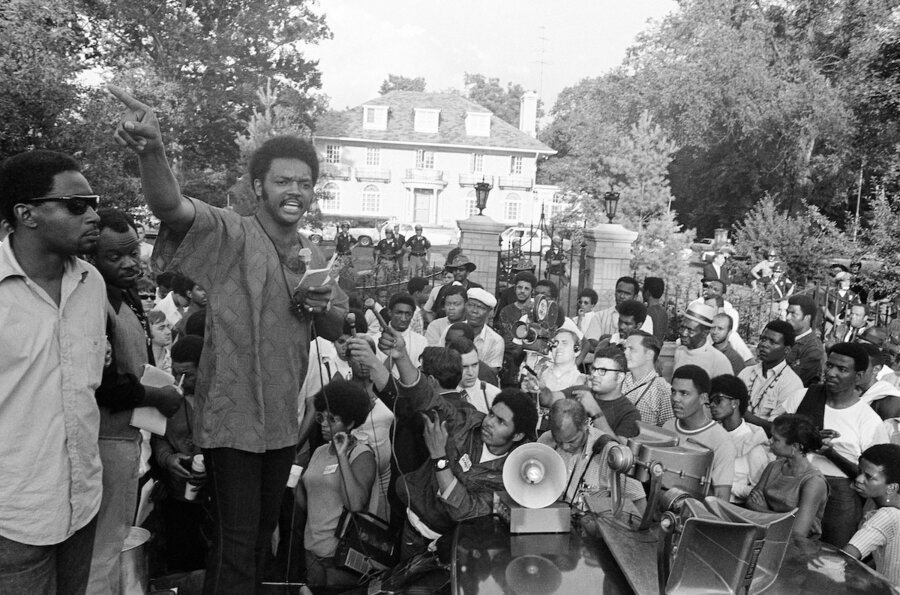
Rev. Jesse Jackson, one of the most recognizable figures of the modern civil rights era, has died at the age of 84. For more than half a century, Jackson stood at the center of America’s most urgent conversations about race, economic inequality, and political power. His passing marks the end of a chapter in the long struggle for civil rights, but his influence continues to echo across generations.
Born in Greenville, South Carolina, during the height of segregation, Jackson grew up witnessing the sharp divisions of the Jim Crow South. Those early experiences shaped his determination to challenge injustice. As a young activist, he joined the Southern Christian Leadership Conference and worked closely with Dr. Martin Luther King Jr., participating in key demonstrations that helped transform the nation’s civil rights laws.
Following King’s assassination in 1968, Jackson emerged as a prominent national leader. He founded Operation PUSH, later expanded into the Rainbow/PUSH Coalition, to promote economic empowerment, educational access, and corporate accountability. Through boycotts, negotiations, and community organizing, he pressured major companies to open doors for Black professionals and invest in underserved communities.
Jackson also reshaped American politics. His historic presidential campaigns in 1984 and 1988 mobilized millions of new voters, particularly within Black and working-class communities. While he did not win the Democratic nomination, his campaigns expanded the political map and demonstrated the growing power of multiracial coalitions. His message of inclusion challenged the traditional boundaries of national politics.
Known for his commanding speaking style, Jackson inspired audiences with his famous call to “Keep Hope Alive.” The phrase became more than a slogan — it became a philosophy rooted in faith, resilience, and collective action. Whether addressing packed convention halls or marching in the streets, he framed civil rights as a moral responsibility that demanded constant vigilance.
Beyond U.S. borders, Jackson engaged in international human rights efforts. He advocated for sanctions against apartheid in South Africa and met with foreign leaders to negotiate the release of American hostages. His willingness to step into tense global situations reinforced his belief that justice was not confined by geography.
In later years, Jackson faced serious health challenges, including a Parkinson’s diagnosis. Even as his public appearances became less frequent, he continued offering guidance to activists and speaking out on issues such as voting rights, policing reform, and economic equity. Younger leaders often cited his campaigns as paving the way for broader political representation.
As tributes pour in from across the country, many remember Jackson not only as a civil rights strategist but as a bridge between eras — from the marches of the 1960s to the movements of today. His life’s work reflected a persistent demand that America live up to its ideals. Though his voice has fallen silent, the call for justice he championed remains unfinished.
Leave a Reply