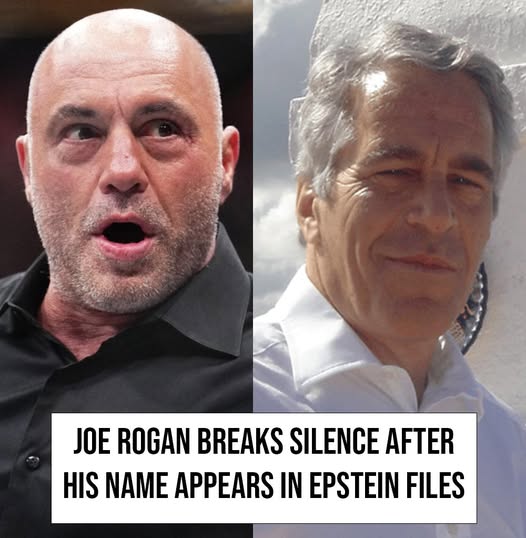
Recently released documents from the United States Department of Justice related to the Jeffrey Epstein investigation have drawn widespread attention. Among the many names that surfaced in the sprawling records was that of Joe Rogan, prompting him to respond publicly to the mention. The spotlight on these materials has reignited public discussion about how names connected—even indirectly—to Epstein’s world are perceived.
The documents, released in stages throughout 2025 and 2026 under a federal transparency law, consist of millions of pages from past investigative files. They detail Epstein’s well-documented abuse of underage girls and provide insight into how investigators evaluated evidence. Significantly, the records make clear that authorities did not find sufficient proof to tie a broader trafficking conspiracy to other prominent figures.
The sheer volume of the release has fueled intense scrutiny. For many, seeing familiar names in the context of emails or notes raises questions, even when no criminal behavior is alleged. The public reaction underscores how easily association can lead to speculation when nuanced legal findings are oversimplified or misunderstood.
In one exchange highlighted in the released files, Rogan’s name appears in a 2017 email between Epstein and physicist Lawrence Krauss. Epstein wrote that he had seen Krauss on Rogan’s podcast and asked if an introduction could be arranged. Krauss responded that he would reach out, and later informed Epstein that Rogan was uninterested in meeting.
Years after the message was sent, Rogan addressed the mention on The Joe Rogan Experience. “I’m in the files for not going,” he remarked succinctly, emphasizing that the idea of his involvement was never viable. He expressed surprise that the exchange generated attention and reiterated that he declined any engagement with Epstein.
During that same podcast episode, Rogan also responded to media summaries of related investigative findings, including conclusions from the Federal Bureau of Investigation. According to the FBI’s assessment, while there was compelling evidence of Epstein’s abuse, there was not enough verifiable evidence to establish that a criminal network involving other public figures existed. Prosecutors similarly noted that photographs and financial data recovered from Epstein’s properties did not substantiate charges against additional individuals.
These conclusions do not diminish the severity of Epstein’s crimes. Rather, they draw an important distinction between proven wrongdoing and mere proximity or correspondence. Legal outcomes are determined by evidence—not inference or rumor—and the public record reflects those boundaries.
As more individuals named in indirect contexts speak out, a broader pattern is emerging. It is not one of hidden conspiracies coming to light, but of how easily reputations can be questioned when names are shared without context. The situation serves as a reminder that clarity and precision are essential in public discourse: holding the guilty accountable is vital, but maintaining fairness toward those without substantiated involvement is equally important.
Leave a Reply