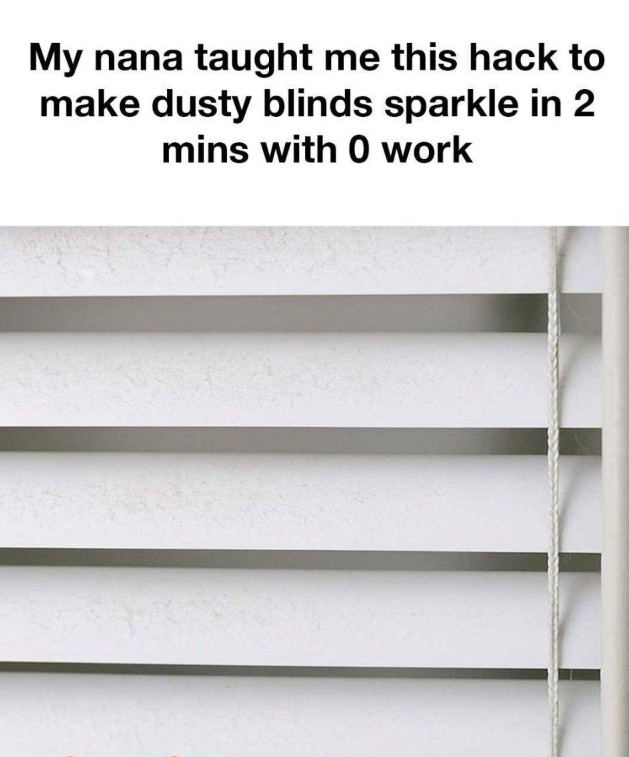
Cleaning blinds can often feel like a never-ending battle against dust and grime. Many people put it off for weeks, only to spend far too long wiping each individual slat when the buildup becomes impossible to ignore. But with the right approach, this frustrating chore can become surprisingly quick and manageable — without heavy scrubbing or expensive products.
The inspiration for this simple method comes from generations of practical household wisdom. Sometimes the best cleaning tricks are not found in store aisles but passed down through experience. The goal is efficiency: less effort, fewer chemicals, and better results. By rethinking how blinds are cleaned, the task becomes faster and far less intimidating.
To understand why this method works, it helps to know why blinds collect so much dust in the first place. Their horizontal slats act like tiny shelves, catching airborne particles such as dead skin cells, fabric fibers, pollen, and pet dander. Over time, this buildup becomes visible and may even affect indoor air quality. Simply dusting lightly often pushes particles around rather than removing them completely.
The materials needed are refreshingly basic: a pair of old socks or microfiber cloths, a spray bottle, white vinegar, and water. Mix equal parts vinegar and water in the spray bottle. Vinegar works as a natural cleaning agent that helps break down grime and neutralize odors, while water dilutes it to make the solution gentle enough for most blind surfaces.
The cleaning process itself is straightforward. Place a sock or microfiber cloth over each hand so you can clean both sides of a slat at once. Lightly spray the solution onto the cloths — they should be damp, not dripping. Starting at the top, gently grip each slat between your fingers and slide across. This motion traps dust efficiently and prevents it from falling onto lower slats.
There are a few common mistakes to avoid. Using too much liquid can leave streaks or damage wooden blinds, so always keep moisture minimal. Additionally, if your cloth becomes heavily soiled, rinse it before continuing. Otherwise, you may simply redistribute dirt instead of removing it.
Compared to traditional methods — such as removing blinds for soaking or using bulky vacuum attachments — this technique is faster and less disruptive. There is no need to dismantle anything or invest in special tools. Most households already have the required materials, making the method both budget-friendly and accessible.
Beyond convenience, this approach also offers environmental benefits. Vinegar is biodegradable and free of harsh chemicals, reducing indoor air pollutants and plastic waste from commercial cleaners. Reusing old socks or cloths further minimizes waste. With regular light cleaning every few weeks, blinds can remain dust-free without turning into a dreaded, time-consuming chore.
Leave a Reply