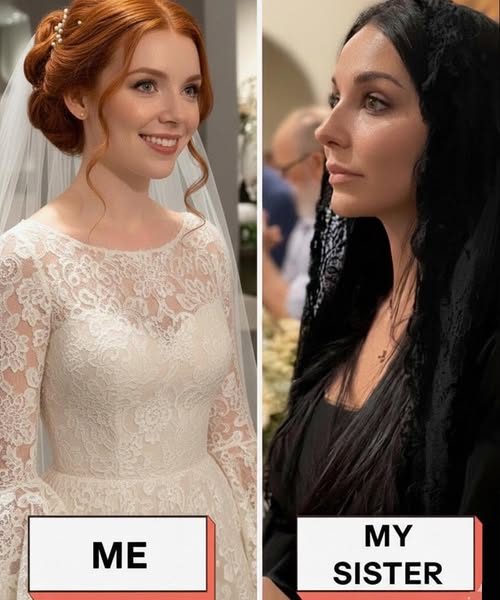
I used to believe I had planned my wedding so carefully that nothing could touch it. Every detail accounted for. Every risk considered. After years of discipline, saving, and sacrifice, I thought the happiness of that day was protected.
I was wrong.
One choice—made by someone who knew me too well—turned a celebration into a reckoning I never saw coming.
Planning the wedding wasn’t a hobby. It wasn’t something I did between episodes of a show or on lazy Sunday afternoons. It became the framework of our lives.
Most nights ended with spreadsheets glowing between Mark and me at the kitchen table. He’d stare at the numbers, rubbing his eyes.
“If we move this expense,” he’d say, “can we still make it work?”
Sometimes I’d nod. Sometimes I’d just sigh.
We had budget conversations that followed me into sleep. Conversations that made me wonder how anyone ever afforded a wedding without panic setting in. Our weekends vanished into venue tours, contract meetings, and long drives where we talked about nothing else.
“I just want it to feel right,” I’d say.
“And not bankrupt us,” Mark would reply, smiling—but not entirely joking.
Neither of us came from ease. Money in our families had always been discussed in hushed voices, weighed carefully, treated like something fragile. We knew what it meant to want something and be told it wasn’t practical.
So we promised each other: if we were going to do this, we’d do it responsibly.
That meant saving in ways that stung. No trips. No spontaneous dinners. We watched friends travel, celebrate, indulge—while we stayed home and said “maybe next time” so often it became second nature.
When we finally secured the countryside venue—wide grass, old oak trees, a quiet pool tucked behind the house—I sat in the car and cried.
Mark squeezed my hand.
“We earned this,” he said.
And for once, it felt true.
We sent invitations early. Nearly a year in advance. I remember standing at the counter, sorting envelopes while Mark read names aloud.
“They’ll love it there,” he said.
“I just want everyone to come,” I replied.
Most people did. Messages came in. Calls followed. Plans formed. It felt like everything was finally aligning.
Everyone seemed happy.
Except my sister.
Louisa had always been complicated. Two years younger, effortlessly striking, and convinced the world owed her something extra. Growing up, attention was oxygen to her.
If I was praised, she redirected it.
“Well, I did that too.”
If something good happened quietly in my life, she made sure something louder happened in hers.
I learned early that peace with Louisa usually meant surrender.
“Just let her have it,” my mother would whisper. “It’s easier.”
So when Louisa finally called—months after receiving the invitation—I should’ve known it wouldn’t be pleasant. She’d been silent for almost a year, then chose the last possible moment to explode.
When her name flashed on my phone, I hoped—briefly—that she’d just say congratulations.
She didn’t.
She started shouting before I could speak.
“I was supposed to get married this month!” she yelled. “How could you do this to me?”
I froze.
“What wedding?” I asked. “You’ve never said anything about getting married.”
She laughed sharply.
“Because you never listen.”
There was no engagement. No partner. She’d spent years mocking the idea of marriage.
“You always said you didn’t even want to get married,” I reminded her.
“That doesn’t mean I don’t deserve it,” she snapped. “You’re trying to outshine me.”
“There’s room for both of us,” I said carefully. “We can celebrate together.”
“No. You stole my moment.”
She hung up.
After that came silence. I reached out. Then stopped. Eventually I accepted she might not show up—and told myself that might be for the best.
It still hurt. But I refused to let her undo years of effort.
On the wedding day, everything felt unreal in the best way. The air was warm. The grass smelled fresh. For once, nothing went wrong.
Friends helped me dress. My mother cried before noon. Mark sent a note that made me laugh so hard I nearly ruined my makeup.
The cake stood pristine near the lawn—white, elegant, perfect.
I stepped outside for the cake cutting.
And saw her.
Louisa stood beside the cake in a black dress, a veil shadowing her face. She looked like she was attending a funeral.
My stomach sank.
She smiled when she noticed me watching.
The ceremony itself was flawless. Walking down the aisle felt like floating. When Mark and I kissed, the applause wrapped around us.
The reception began with laughter and clinking glasses.
Then Louisa tipped the cake.
It hit the ground in a blur of frosting and silence.
“What are you doing?” I shouted.
She stepped back, palms up.
“It slipped. The table was uneven.”
Staff rushed in. Guests whispered. Mark looked confused—still assuming innocence.
I didn’t.
I went to the room where I’d gotten ready and opened a drawer I’d prepared long before that day—hoping I wouldn’t need it.
Minutes later, I returned.
The room quieted as I took the microphone. Louisa’s confidence faltered when she saw the envelope in my hand—our grandmother’s handwriting unmistakable.
Weeks earlier, something about Louisa’s fixation had unsettled me. I’d visited Aunt Carol. The truth came out slowly.
Louisa believed our grandmother had promised her a significant inheritance—on the condition she be the first granddaughter to marry. It was a story she’d repeated so often, she’d made it real in her own mind.
The will had already been read. There was no such clause.
Still, Louisa clung to it.
I read the relevant section aloud.
She snapped.
“You forged that!” she screamed. “She promised me!”
“She didn’t,” I said evenly.
“You were supposed to wait!” Louisa shouted. “Everyone was supposed to let me go first!”
The room went still.
Then Aunt Carol stood.
“That’s enough. There was never a promise.”
Louisa looked around, searching for support.
None came.
She turned and left.
Later that night, Mark and I sat by the pool, feet dangling in the water. He squeezed my hand.
“You handled that with grace,” he said.
And for the first time in years, I felt lighter.
Not because the day had been perfect—but because the truth had finally been spoken out loud, where it could no longer control us.
Leave a Reply