Breaking News

  • Tattooed Man Known As ‘Human Satan’ Who Amputated His Fingers Reveals How He Looked Before

    Tattooed Man Known As ‘Human Satan’ Who Amputated His Fingers Reveals How He Looked Before

    Brazilian tattoo artist Diabao Praddo, once known as Michel, has taken his radical body modifications further by removing two more fingers from his left hand. The procedure, part of his goal to resemble an alien-like figure, gives him a claw-shaped appearance.

    Nicknamed the “Human Satan,” Praddo has long pursued extreme transformations. The 50-year-old from Praia Grande has already amputated fingers on his right hand and undergone more than 100 procedures to reshape his body. His modifications include tongue splitting, ear and nose removal, and even consuming one of his own nipples.

    Praddo’s appearance is further marked by extensive tattooing. With 85% of his body covered in ink, he also holds a Guinness World Record for the most subdermal horn implants on a human head, boasting 33 in total. These procedures, he says, represent his journey toward becoming something beyond human.

    Despite the risks, Praddo continues to work as a tattoo artist. He once feared the surgeries might compromise his career, but he quickly adapted to his altered hands. Although he sometimes experiences phantom pain, he views discomfort as an acceptable cost for transformation.

    Pain, according to Praddo, is part of the process. “It’s a price I’m willing to pay,” he explained, underscoring his commitment to reshaping his identity regardless of physical toll.

    His journey has not been solitary. Carol Praddo, his wife of more than a decade, has supported and supervised many of his procedures. Known as the “Demon Woman,” she shares in his unconventional vision and has become part of his story.

    Together, the couple aspires for Diabao to achieve recognition as the world’s most modified person. Their shared pursuit blends devotion, artistry, and endurance.

    For Praddo, the changes are not about shock value but about embodying his vision of what it means to be “less human.”

  • The Sprouse Twins, What Dylan and Cole Are Doing Now

    The Sprouse Twins, What Dylan and Cole Are Doing Now

    After Disney, they stepped back from acting to focus on education at New York University. One studied video game design, the other humanities and archaeology, reflecting a desire for intellectual and creative growth.

    During this time, they discovered passions that later shaped their professional and personal lives, allowing them to explore interests outside of Hollywood’s spotlight.

    Recently, the twins returned to the spotlight with diverse projects. One starred in films across genres, from romance to action, while co-founding a successful small business.

    The other gained acclaim for a breakout TV role, transitioning into independent and mainstream films, while building a photography portfolio and contributing to editorial projects.

    Off-screen, Dylan and Cole Sprouse have fulfilling personal lives.

    Dylan married model Barbara Palvin in 2023, and Cole has been with Ari Fournier since 2021. Both continue to balance family, careers, and creative passions. While fans hope for a Suite Life reunion, the twins emphasize that any future project would need to be meaningful and creatively rewarding, proving that life after child stardom can flourish through reinvention, purpose, and personal growth.

  • Three Mysterious Capsules on the Bed — What They Really Are (And Why They Look So Alarming)

    Three Mysterious Capsules on the Bed — What They Really Are (And Why They Look So Alarming)

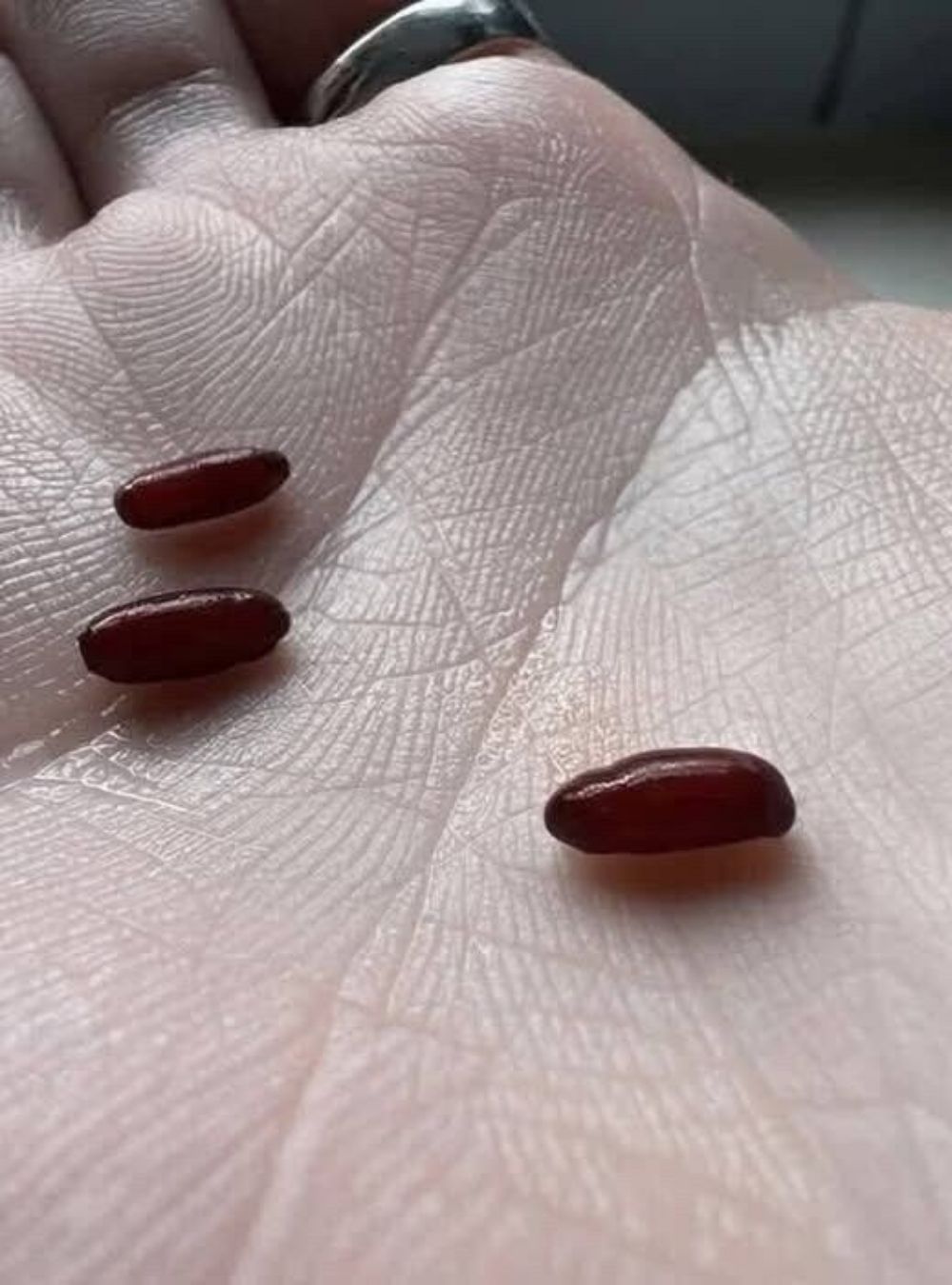
    Imagine walking into your bedroom after a long day, ready to unwind, only to notice something unusual on your bed. Three small, reddish-brown, shiny objects sit neatly against the fabric. They weren’t there before. They’re smooth. Capsule-shaped. Identical.

    Your mind starts racing.

    Are they insect eggs?
    Something toxic?
    Medication you don’t recognize?
    A sign of a bigger problem?

    Before panic takes over, let’s slow down and look at this logically.

    Why Discoveries Like This Feel So Disturbing

    Bedrooms are psychological safe zones. When something unfamiliar appears in that space—especially something that looks biological—your brain immediately switches into alert mode.This reaction is normal.

    Humans are wired to be cautious about:• Unknown substances
    • Possible pests
    • Signs of contamination
    • Objects that appear “intentionally placed”

    The reddish-brown color and uniform shape of these capsules can make them feel unnatural or suspicious. But visual alarm doesn’t equal danger.Let’s break down what they most likely are.

    The Most Likely Explanation: Softgel CapsulesBased on the description—smooth, glossy, amber-to-brown, slightly flexible—the most probable answer is simple:

    They’re softgel capsules.Common examples include:

    • Fish oil
    • Vitamin E
    • Krill oil
    • CoQ10
    • Multivitamins
    • Certain medicationsSoftgels are designed to be:

    • Smooth and shiny
    • Uniform in size
    • Slightly flexible when pressed
    • Easy to swallow
    • Resistant to breakingBecause they’re lightweight and quiet when dropped, they can roll into bedding unnoticed.

    How Do They End Up on a Bed?

    You’d be surprised how easily it happens:

    • A supplement bottle opened near the bed
    • Capsules carried loosely in a pocket
    • Pets knocking items off a nightstand
    • Capsules sticking to fabric due to static
    • A pill dropped during a nighttime routine

    Softgels don’t make much noise when they fall, and they don’t shatter. It’s entirely possible they landed there earlier and only caught your eye now.

    How to Confirm Safely

    If you encounter something similar:

    Use gloves or tissue and gently press one.
    Softgels compress slightly.

    Look for a faint seam around the middle.

    Compare with supplement bottles in your home.

    Notice any mild smell (fish oil capsules may have one).

    In most cases, you’ll quickly find a match.

    Why They’re Almost Certainly Not Insect Eggs

    This is often the first fear—but the least likely.

    Insect eggs are typically:

    • White or translucent
    • Irregular in size
    • Clustered together
    • Matte or fragile

    Even cockroach egg cases (oothecae) have:

    • Ridged surfaces
    • Hard shells
    • Distinct, non-glossy textures

    Uniform, shiny, gelatinous capsules strongly suggest manufactured supplements—not insects.

    Why Our Minds Jump to Worst-Case Scenarios

    This reaction has a name: threat amplification.

    When something appears in a vulnerable space (like your bed), and you lack immediate explanation, your brain fills in the blanks with danger.

    It’s a survival instinct—not evidence.

    Once you calmly examine the object, logic almost always wins.

    What You Should Do

    If you find unfamiliar objects:

    • Do not ingest them
    • Check nearby supplements or medications
    • Ask other household members
    • Clean bedding for peace of mind
    • Keep one sealed in a bag if you want confirmation from a pharmacist

    When Should You Actually Be Concerned?

    Seek professional advice if:

    • Objects multiply rapidly
    • You notice live insects
    • There are unexplained bites or itching
    • There’s a strong chemical smell
    • Nothing in your home matches the objects

    Otherwise, isolated glossy capsules almost always have a harmless explanation.

    Final Thoughts

    Strange doesn’t mean dangerous.

    Most mysterious household discoveries turn out to be ordinary once examined closely. In this case, all signs point toward dropped softgel supplements—something common in many homes.

    The key is methodical thinking:

    Stay calm.
    Observe carefully.
    Eliminate possibilities logically.

    And remember: sometimes the scariest discoveries are just everyday items seen from a different angle.

    Have you ever found something in your home that looked alarming but turned out to be harmless?

  • Did You Know That Waking Up at 3 or 4 in the Morning Could Mean Something More?

    Did You Know That Waking Up at 3 or 4 in the Morning Could Mean Something More?

    Many people notice a pattern: they wake up at exactly 3:00 or 4:00 a.m., night after night, without setting an alarm. For some, this feels random. For others, it feels significant.

    According to traditional Chinese medicine, the body follows a 24-hour energy cycle connected to 12 primary meridians. Each meridian governs certain organs and functions and becomes most active during a specific two-hour window. This system is often referred to as the “meridian clock.”

    From this perspective, waking consistently at the same hour may suggest that a particular energy pathway is out of balance.

    For example:
    • 1:00–3:00 a.m. is linked to the liver meridian, often associated with stress, anger, and detoxification processes.
    • 3:00–5:00 a.m. corresponds to the lung meridian, connected with breathing, grief, and emotional release.

    In holistic traditions, waking between 3:00 and 5:00 a.m. is sometimes described as a period of heightened sensitivity or awareness. Some interpret it spiritually, suggesting it may reflect emotional processing or inner shifts rather than purely physical causes.
    However, from a medical standpoint, there are also very practical explanations. Early-morning waking can be linked to:

    • Stress or anxiety
    • Hormonal fluctuations (such as cortisol levels rising before dawn)
    • Blood sugar changes
    • Sleep cycle transitions
    • Insomnia patterns
    The body naturally moves through lighter sleep stages in the early morning hours, making it easier to wake during that time. If stress or racing thoughts are present, falling back asleep may become difficult.

    While the meridian clock offers a reflective framework for understanding sleep disruptions, it’s important not to interpret nighttime waking as a “clear sign” of a single cause. Sleep is influenced by many factors — physical, emotional, environmental, and psychological.If waking at 3:00 or 4:00 a.m. happens occasionally, it’s usually normal. If it’s persistent and affecting your daytime energy or mood, it may be helpful to evaluate stress levels, bedtime habits, caffeine intake, and overall health. In ongoing cases, speaking with a healthcare professional can provide clarity.

    In the end, your body does communicate through patterns — but those patterns deserve calm curiosity, not fear. Whether you view it through traditional energy theory or modern sleep science, consistent nighttime waking is an invitation to look gently at your overall wellbeing.And sometimes, the simplest explanation — stress, routine, or biology — is the right one.

  • One Month Before a Heart Attack? What These 6 Symptoms Really Mean

    One Month Before a Heart Attack? What These 6 Symptoms Really Mean

    Heart disease remains one of the leading causes of death worldwide. While heart attacks can sometimes occur suddenly, the body may show warning signs in the days or weeks beforehand. Recognizing these symptoms early — and taking them seriously — can make a critical difference.

    It’s important to note: not everyone experiences warning signs, and symptoms can vary between individuals, especially between men and women. But here are six commonly reported symptoms that may appear before a heart attack:

    1. Shortness of Breath
    Feeling unusually breathless during normal activities — or even while resting — can signal that the heart isn’t pumping efficiently. When the heart struggles, oxygen delivery throughout the body decreases, leading to breathing difficulty.

    2. Chest Pressure or Discomfort
    This is one of the most recognized warning signs. It may feel like tightness, squeezing, fullness, or pressure in the chest. It doesn’t always feel like sharp pain. Any new or unexplained chest discomfort should be evaluated immediately.

    3. Unusual Fatigue
    Extreme tiredness that feels out of proportion to your activity level — especially if it appears suddenly or worsens over days — can be an early warning sign. Many people report feeling drained weeks before a cardiac event.

    4. Cold Sweats and Dizziness
    Sudden sweating without physical exertion, along with lightheadedness or feeling faint, can indicate reduced blood flow. If this happens alongside chest discomfort or shortness of breath, seek medical care right away.

    5. Flu-Like Symptoms or Nausea
    Some individuals — particularly women — report nausea, indigestion, or flu-like discomfort before a heart attack. These symptoms can easily be mistaken for minor illness, which is why awareness is important.

    6. Unusual Drowsiness or Sleep Disturbance
    Persistent sleep problems, waking up exhausted, or unexplained daytime drowsiness may be linked to cardiovascular strain. While not specific on their own, when combined with other symptoms, they warrant attention.

    Call emergency services immediately if you experience:

    Chest pain or pressure lasting more than a few minutes

    Pain spreading to the arm, jaw, neck, or back

    Severe shortness of breath

    Sudden dizziness or fainting

    Do not wait to see if symptoms pass.
    These symptoms can have many causes — not all are related to heart attacks. However, it’s always safer to get evaluated than to ignore potential warning signs.

    Managing risk factors such as high blood pressure, diabetes, smoking, high cholesterol, chronic stress, and poor diet significantly lowers heart attack risk. Regular checkups, exercise, balanced nutrition, and stress management are powerful preventive tools.Your body often gives signals when something isn’t right. Listening to those signals — and acting quickly — could save your life.

  • HORRIFYING DISCOVERY: Police dogs had just sniffed out a foul odor in a metal container 300 meters from Savannah Guthrie’s mother’s house when they broke it open and saw…

    HORRIFYING DISCOVERY: Police dogs had just sniffed out a foul odor in a metal container 300 meters from Savannah Guthrie’s mother’s house when they broke it open and saw…

    🔍 A Small Detail That May Hold Bigger Meaning
    Investigators say the recent finding is still considered relevant — not because of what it directly reveals, but because of what it may suggest about timing. If parts of the home had gone unused for several days, it could help narrow down when the house was last occupied in a normal, everyday way.

    In cases where clear answers are scarce, even minor details can become important pieces of a much larger puzzle. What might normally be dismissed as routine now carries added weight.

    👪 Family Searching for Clarity
    Family members were informed of the results and expressed quiet relief that the odor was not linked to anything more tragic. Still, relief has not erased uncertainty.

    “Even small details matter now,” a source close to the family said. “They’re trying to understand every quiet sign that was missed.”

    For loved ones, the process is not only about waiting for official updates. It is also about replaying memories, routines, and overlooked moments — searching for meaning in what once felt ordinary.

    🚔 How Police Are Interpreting the Discovery
    Authorities emphasized that while the discovery is no longer considered alarming on its own, it will be carefully documented as part of the broader timeline analysis.

    Investigators are continuing to reconstruct daily patterns: when rooms were used, when utilities were active, and when normal activity may have slowed or stopped. These details help build a clearer picture of what happened — and when.

    In complex investigations, timelines often provide the foundation for understanding larger events.

    🕰️ When Ordinary Signs Become Evidence
    In a case filled with unanswered questions, even something as simple as an unused drain now carries symbolic weight.

    It represents a moment when life inside the home may have shifted — when routines changed, and something quietly went wrong.

    What was once unnoticed is now carefully examined.

    🌱 Waiting for Answers, Holding on to Hope
    For the family, every update brings a mix of reassurance and renewed uncertainty. Each detail helps, yet also reminds them how much remains unknown.

    They continue to hope that, piece by piece, clarity will emerge.Until then, investigators will keep reviewing the smallest signs, and loved ones will keep searching for meaning in them — guided by patience, resilience, and the quiet belief that truth, even when slow, eventually finds its way to the surface.

    In moments like this, it is often the simplest questions that linger the longest:

    When was the last time life inside that house felt normal?
    More Cool Stuff

  • Country Star’s Inspiring Journey Toward a New Beginning

    The country music world is reflecting on a meaningful moment after a well-known singer shared a personal update about her identity. Known for heartfelt performances and emotional storytelling, the artist has built a deep connection with fans through music rooted in real-life experiences. Her announcement has sparked thoughtful discussion and admiration for her openness.

    Country music has long been shaped by “authentic stories,” and many see this moment as a continuation of that tradition. Supporters say that sharing personal truth does not change an artist’s talent or dedication. Instead, it highlights the bravery required to be honest in such a public space and reinforces the emotional bond between musicians and their audiences.

    Fans and fellow artists have responded with encouragement, describing the announcement as “an important reminder of the value of self-acceptance.” Many noted that the genre thrives on sincerity, and that honesty and resilience have always been central themes in country music. The positive reaction shows how much listeners value authenticity and vulnerability.

    The artist’s openness has also sparked broader conversations about identity, representation, and emotional well-being in the industry. Listeners emphasized that personal truth strengthens, rather than weakens, creative expression. For many, this moment reflects progress and greater understanding within the country music community.

    In her recent statement, Jenni Rose thanked fans for their kindness and ongoing support. She shared that “living authentically allows her to bring even more emotion and honesty to her work,” reinforcing her commitment to sincere storytelling and meaningful connection through music.

    Her journey stands as a powerful example of courage and self-truth—qualities that have always defined the heart of country music. Through her openness, she continues to inspire fans and fellow artists, reminding them that authenticity can deepen both personal growth and artistic expression.

  • The 14-year-olds became Britain’s youngest parents

    The 14-year-olds became Britain’s youngest parents

    Youngest Parents in the UK: April Webster and Nathan Fishbourne

    April Webster and Nathan Fishbourne made headlines in 2010 as the youngest parents in the United Kingdom. April was 13 when she became pregnant, and Nathan was 14 when their son, Jamie, was born. Their story sparked media attention, generating both sympathy and criticism.

    The pair met as classmates at St. Cenydd School in Caerphilly, South Wales. Their adolescent romance took a dramatic turn when April discovered her pregnancy just one day before her 14th birthday. The news shocked both families, though they ultimately pledged support for the young parents.

    Jamie was born in November 2010 via a cesarean section. He faced immediate health challenges, including a malformed oesophagus that required surgery. After 11 days in the hospital, Jamie was deemed healthy enough to return home, where April lived with her parents and sister, balancing motherhood with family life.

    Nathan and his parents lived nearby, and initially, there was uncertainty about the young couple’s relationship. April was determined to be the best mother she could be, while Nathan hoped to remain involved, planning to care for Jamie on weekends.

    By 2014, April revealed that she and Nathan had separated and were no longer in contact. She had not completed her GCSEs, choosing instead to focus on raising Jamie with the support of her family. Despite the challenges, she remained positive about her role as a mother.

    Today, April, now 28, is the mother of three children: Jamie, Ava Lianne, and Rowan David. She goes by April Lianna and is happily dating Jake Jones. Her social media reflects a life of stability and joy.

    Nathan has also moved on, becoming engaged to Samantha in 2023 and raising a family of his own. Both former teen parents appear to have built fulfilling lives while remaining present for Jamie’s upbringing.

    Their story demonstrates the challenges of teen parenthood but also the resilience and support that can help young parents succeed, ultimately turning early setbacks into lasting family bonds.

  • A woman’s private area can smell bad for several common reasons, most of which are not serious. Changes in natural bacteria, sweating, poor airflow, diet, hormonal shifts, or menstruation can affect odor. Infections like bacterial vaginosis or yeast infections may also cause unusual smells. If the odor is strong, persistent, or accompanied by itching or pain, a doctor should be consulted.

    A woman’s private area can smell bad for several common reasons, most of which are not serious. Changes in natural bacteria, sweating, poor airflow, diet, hormonal shifts, or menstruation can affect odor. Infections like bacterial vaginosis or yeast infections may also cause unusual smells. If the odor is strong, persistent, or accompanied by itching or pain, a doctor should be consulted.

    An unusual or unpleasant body odor can be a sensitive and confusing concern for many women, yet it is often linked to common and manageable causes. The female body maintains a delicate natural balance, and when that balance shifts, changes in scent can occur. Understanding why this happens is the first step toward restoring comfort and confidence.

    One frequent cause is a natural imbalance or mild infection. When certain bacteria grow too much, they can produce a stronger, sometimes fish-like odor accompanied by thin, gray discharge. Yeast overgrowth is another possibility, often marked by thick, white discharge and a slightly sour smell. While uncomfortable, these conditions are common and usually easy to treat with medical guidance.

    Hygiene habits also play a major role. Not washing regularly can allow bacteria to multiply, but excessive washing or the use of harsh, scented soaps can be just as problematic. Over-cleansing may strip away protective bacteria, making odors more noticeable instead of eliminating them.

    Some infections transmitted through close contact can also cause changes in odor and discharge, often appearing yellow or greenish. These situations require professional evaluation, as early treatment helps prevent complications and recurring discomfort.

    Hormonal changes are another contributing factor. Menstruation, pregnancy, and menopause all affect hormone levels, which can influence natural balance and scent. Sweating, especially when combined with tight or non-breathable clothing, can trap moisture and intensify odor even without infection.

    Maintaining freshness often comes down to gentle daily care. Using warm water or mild, fragrance-free soap, choosing breathable fabrics like cotton, staying hydrated, and eating a balanced diet can all support the body’s natural balance and help prevent unwanted odors.

  • Some people are just finding out why they get bleach patches on their underwear

    Some people are just finding out why they get bleach patches on their underwear

    For years, many people have noticed lighter patches appearing in the crotch area of their underwear and assumed something must be going wrong. Some blamed their washing machines, laundry detergent, or even poor fabric quality. The mystery has sparked confusion and, for some, unnecessary embarrassment. However, the explanation is much simpler and completely natural.

    The human vagina maintains a delicate internal environment that is slightly acidic. This acidity plays an essential role in keeping the reproductive system healthy. It helps prevent harmful bacteria and infections from taking hold, supporting a balanced microbiome. Far from being a problem, this acidity is actually a sign that the body is functioning properly.

    On the pH scale, the vagina typically falls between 3.8 and 4.5, which is similar to the acidity of certain fruits like oranges or even mild vinegar. When natural vaginal discharge comes into contact with fabric for extended periods, the acidity can gradually affect the dye in the material. Over time, this may cause lightened or “bleached” spots to appear.

    These patches are most noticeable on darker underwear because the contrast makes the color change obvious. Black, navy, and deep-colored fabrics tend to show the effect more clearly than lighter shades. The fabric itself is not being damaged structurally; rather, the dye is being altered by the acidic environment.

    It’s important to understand that this reaction is not a hygiene issue. Experiencing discharge is completely normal, and it serves an important purpose in cleaning and protecting the vaginal canal. In fact, consistent discharge that leads to these light patches often signals that the vagina’s natural defenses are working as they should.

    Of course, changes in discharge—such as unusual odor, texture, or color—can sometimes indicate an infection and should be checked by a healthcare professional. But ordinary lightened areas on underwear, without other symptoms, are not a cause for concern. They are simply a result of normal bodily chemistry interacting with fabric dyes.

    For those who wish to minimize the appearance of these patches, choosing lighter-colored underwear or fabrics designed to withstand acidity may help. Some people also opt for breathable cotton materials, which are generally healthier for intimate wear. However, preventing the color change entirely may not always be possible.

    Ultimately, bleach-like marks on underwear are a natural outcome of a healthy vaginal environment. Rather than being a sign of damage or poor hygiene, they reflect the body’s ability to maintain balance and protect itself. Understanding this can help reduce confusion and replace worry with reassurance.