Breaking News

  • It happens in a split second. Someone points it out, and suddenly the logo you’ve seen your entire life looks different.

    It happens in a split second. Someone points it out, and suddenly the logo you’ve seen your entire life looks different.

    It happens in a split second. Someone points it out, and suddenly the logo you’ve seen your entire life looks different. That second “C” in Cola stops being just a curve of elegant script and starts to resemble a smile. Once you notice it, it’s almost impossible to unsee. The logo feels warmer, friendlier—like the bottle itself is quietly welcoming you.

    Was this a clever design choice hidden in plain sight, or just the human brain doing what it does best?

    The Coca-Cola logo dates back to the 1880s and was created by Frank Mason Robinson, a bookkeeper with a strong sense of style. He chose the flowing Spencerian script because it felt refined and memorable. Historical records suggest the curves were meant to be decorative and elegant, not symbolic. There’s no evidence that a smile was intentionally built into the lettering.

    And yet, over time, that graceful curve has taken on a life of its own.

    This phenomenon says more about human psychology than typography. Our brains are naturally wired to find faces and emotions in simple shapes—a process known as pattern recognition. We see expressions in clouds, meanings in symbols, and warmth in familiar forms. After more than a century of Coca-Cola being associated with happiness, togetherness, and celebration, the mind begins to project those emotions back onto the logo itself.

    The design never changed. Our perception did.

    Every iconic symbol exists in two worlds: the physical one, made of lines and ink, and the emotional one, shaped by memory and experience. On paper, the Coca-Cola logo is just elegant lettering. In our minds, it carries generations of shared moments, comfort, and nostalgia.

    That “smile” isn’t proof of a hidden trick—it’s proof of how deeply familiarity and emotion shape the way we see the world. Sometimes, meaning isn’t designed. Sometimes, it’s remembered.

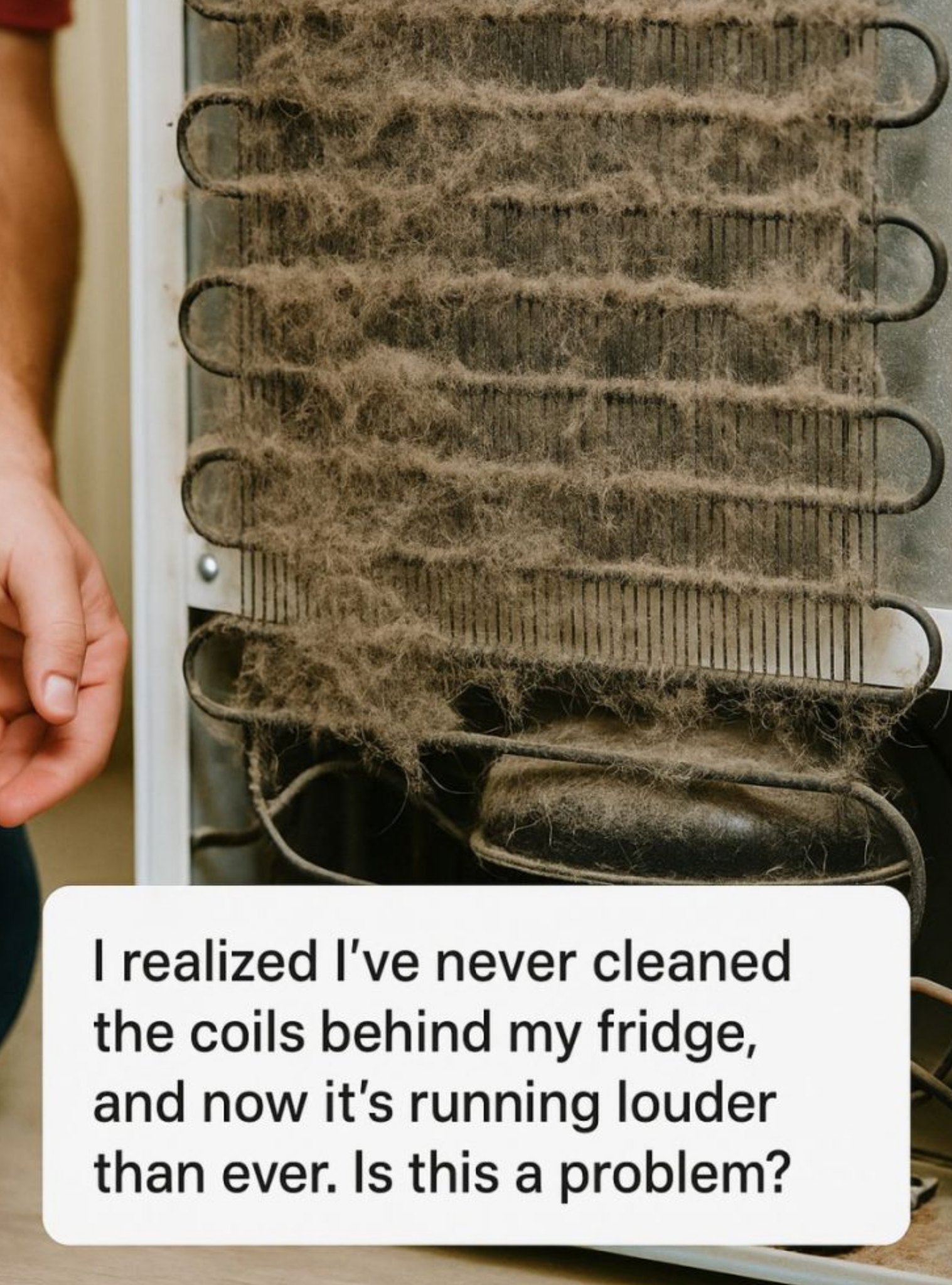
  • I Realized I’ve Never Cleaned the Coils Behind My Fridge, and Now It’s Running Louder Than Ever. Is This a Problem?

    I Realized I’ve Never Cleaned the Coils Behind My Fridge, and Now It’s Running Louder Than Ever. Is This a Problem?

    Most of us barely notice our refrigerator as long as it keeps food cold. Its soft, steady hum blends into the background of daily life. So when that familiar sound suddenly becomes louder—almost strained—it’s natural to feel uneasy. A noisy fridge is often the first sign that something behind the scenes isn’t working as smoothly as it should.

    One of the most common reasons for this change is also one of the most neglected maintenance tasks: cleaning the condenser coils. These coils, usually located behind or underneath the fridge, are easy to forget about, yet they play a crucial role in how quietly and efficiently your appliance runs.

    When a Quiet Hum Turns Into a Roar

    Under normal conditions, a refrigerator operates at a relatively low noise level, typically between 32 and 47 decibels. When that sound creeps past 55 decibels, it becomes noticeably louder. This usually means the fridge is working harder than usual to keep the temperature stable.

    The extra noise often comes from the compressor or the cooling fans running longer and more frequently. While this doesn’t automatically mean your fridge is about to fail, it does signal reduced efficiency—and reduced efficiency almost always has a cause.

    How Your Refrigerator Actually Stays Cold

    A refrigerator doesn’t “create” cold air—it moves heat. Inside the system, a refrigerant absorbs heat from the interior through the evaporator coils and releases it outside through the condenser coils. The compressor keeps this cycle moving.

    When heat can’t escape efficiently, the entire system struggles. The compressor compensates by working harder, which increases noise, energy consumption, and wear on internal components.

  • A Remarkable Look at One of Hollywood’s Longest-Living Stars

    A Remarkable Look at One of Hollywood’s Longest-Living Stars

    Across the entertainment world, several long-lived performers continue to inspire audiences with their dedication and creativity. Their stories show that talent can flourish at any age and that **“artistic expression has no age limit.”** Through decades of work, they have influenced generations while keeping the spirit of earlier eras alive.

    Many of these artists shaped music, film, and television throughout the 20th century, leaving a lasting mark on popular culture. Their performances helped preserve traditions, define Hollywood’s golden age, and create unforgettable moments that **“still resonate with fans around the world.”** Their careers offer a unique window into entertainment history.

    Some icons remain active today, making public appearances and taking part in special projects. Their enthusiasm and wisdom prove that creativity can deepen over time. As symbols of perseverance and positivity, they continue to inspire both young performers and longtime admirers, showing that passion can endure across a lifetime.

    Their continued presence highlights how dedication and love for the arts can lead to remarkable longevity. These individuals embody **“the spirit of lifelong artistic expression,”** reminding audiences that age does not limit creativity, energy, or purpose.

    One of the most admired among them is Ray Anthony, celebrated for a career that bridges generations and musical styles. At nearly 103, he remains recognized for his achievements, longevity, and influence. His life reflects **“a lifetime dedicated to the arts,”** serving as a powerful example of commitment, resilience, and inspiration.

    Together, these enduring performers demonstrate that creativity, passion, and dedication can thrive across decades, leaving behind a legacy that continues to uplift and motivate audiences around the world.

  • When Overzealous Neighbors, HOA Power Plays, and a Misused Rule Turn a Peaceful Move-In Into a Costly Lesson About Control, Boundaries, and Unexpected Justice That Proves Meddling Can Backfire Harder Than Anyone Anticipates in Suburban Life

    When Overzealous Neighbors, HOA Power Plays, and a Misused Rule Turn a Peaceful Move-In Into a Costly Lesson About Control, Boundaries, and Unexpected Justice That Proves Meddling Can Backfire Harder Than Anyone Anticipates in Suburban Life

    Jack and I had been looking forward to the move for months, imagining quiet evenings, friendly waves across trimmed lawns, and the comforting anonymity that comes with renting in a well-kept neighborhood. The house itself was modest but bright, with a wide driveway that easily fit both of our cars without touching the curb or inconveniencing anyone. On our very first afternoon, before the boxes were fully unpacked, Lindsey appeared at our door with a tray of cookies and a smile so polished it almost looked rehearsed. She spoke warmly about the neighborhood, about how “close-knit” everyone was, and about the homeowners’ association that, in her words, kept everything “running smoothly.”

    As she talked, the friendliness shifted into something sharper. Her eyes drifted toward the driveway, and she explained, slowly and carefully, that the HOA enforced a one-car-per-driveway rule, no exceptions, even for renters. The rule struck us as pointless, especially since our cars fit neatly and didn’t affect anyone else, but Lindsey repeated it several times, stressing consequences. We thanked her, accepted the cookies, and chalked the whole thing up to an overzealous neighbor who enjoyed feeling important. At that moment, it never occurred to us that her visit wasn’t a courtesy call but a warning, or that she would take it upon herself to become judge, jury, and enforcer within days of us moving in.

    For the next few days, life went on normally. We unpacked, explored nearby shops, and started settling into routines, parking both cars in the driveway exactly as before. No notes appeared on our door, no official HOA letters arrived, and no one else seemed bothered. That quiet reinforced our belief that Lindsey’s concern was more about control than community standards. Then, early one morning, the low mechanical growl of engines jolted us awake. At first, we thought it was construction nearby, but when the noise didn’t fade, Jack pulled back the curtain and froze. Two tow trucks sat squarely in our driveway, lights flashing, chains already being threaded under our cars. Panic hit fast. We rushed outside in pajamas, asking what was going on, and one driver calmly explained that he had an HOA authorization to remove both vehicles for violating parking regulations.

    The speed of it was shocking; there had been no warning, no citation, no chance to correct anything. As I stood there trying to process how quickly a normal morning had turned into a nightmare, I noticed Lindsey across the street. She stood in her bathrobe, coffee mug in hand, watching with quiet satisfaction, not surprised at all. The realization landed hard: this wasn’t about rules, it was about power, and she had used the HOA as her weapon.

    The immediate aftermath was chaos. Our cars were gone within minutes, leaving oil stains and a sense of violation behind. Retrieving them cost hundreds of dollars, time off work, and a mountain of stress. But frustration slowly turned into resolve. Once the initial shock faded, we started asking questions, reviewing HOA documents, and speaking with our landlord. What we found changed everything. The “one car per driveway” rule existed, but enforcement required written notice and a grace period, neither of which had been given. Even more telling, Lindsey was not an HOA officer, but a volunteer “watch” member who reported violations. She had bypassed procedure by contacting towing directly, something she was not authorized to do. Our landlord was furious, not just because of the improper towing, but because HOA fines and legal exposure could land on the property owner. Formal complaints were filed, documentation was gathered, and suddenly the situation was no longer a neighbor dispute but an administrative problem Lindsey had created for herself.

    What followed was a quiet but decisive unraveling of her authority. The HOA board launched an internal review, and neighbors we hadn’t even met yet began sharing stories of similar behavior — notes left on cars, cameras pointed toward driveways, constant reports over trivial issues. Lindsey’s reputation, it turned out, was already strained. The towing incident became the final straw.

    The HOA issued a written apology to us, reimbursed all towing fees, and fined Lindsey for unauthorized enforcement actions. She was removed from any volunteer role and warned that further interference could result in legal action. The irony was sharp: in her effort to control the neighborhood, she had exposed herself to scrutiny and consequences she couldn’t manage. The woman who had stood smugly in her robe now avoided eye contact, curtains drawn whenever we came home. The power dynamic she enjoyed collapsed almost overnight.

    Living there afterward felt different, but not in the way we feared. Instead of hostility, there was an unspoken shift toward mutual respect. Neighbors smiled, some even stopped to welcome us properly, quietly acknowledging that things had gone too far. The experience taught us how easily community rules can be twisted by individuals who mistake vigilance for authority, and how important it is to understand your rights before assuming compliance is your only option. HOAs, for all their structure, are still run by people, and people can misuse systems when unchecked. Lindsey’s actions cost her money, credibility, and the social standing she seemed to value most.

    For us, the ordeal was stressful, but it also reinforced an important lesson: silence and compliance aren’t always the safest paths, and standing up calmly, with facts and persistence, can restore balance.

    Looking back, the tow trucks in our driveway marked more than an unpleasant morning; they exposed how fragile neighborhood harmony can be when rules become tools for control rather than cooperation. What began as cookies and smiles revealed a deeper issue of entitlement and surveillance that many communities quietly struggle with. In the end, Lindsey paid a price far greater than she intended to impose on us, and the neighborhood itself recalibrated around a clearer understanding of fairness and boundaries. We still park both cars in the driveway, legally and without issue, a small daily reminder that overreach often carries consequences, and that even in places governed by rigid rules, common sense and accountability can still win.

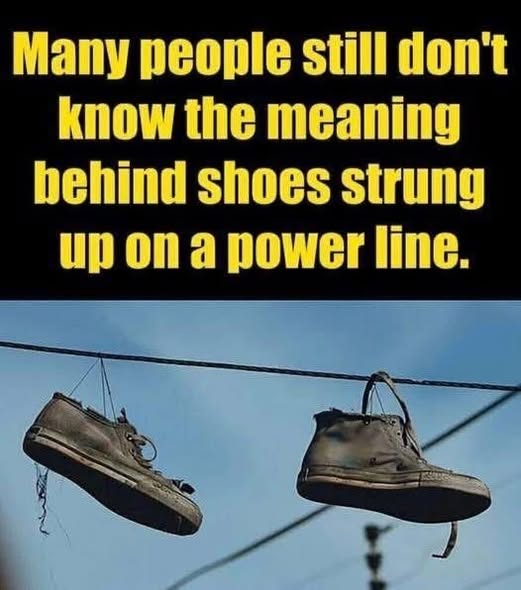
  • The Meaning Behind Shoes Strung Up on a Power Line: Exploring the Origins, Cultural Significance, and Varied Interpretations of This Mysterious Urban Phenomenon, From Messages About Territory, Memorials, and Pranks to Social Commentary, Local Legends, and Why Communities Across the World Have Adopted This Strange but Fascinating Practice That Continues to Spark Curiosity and Conversation

    The Meaning Behind Shoes Strung Up on a Power Line: Exploring the Origins, Cultural Significance, and Varied Interpretations of This Mysterious Urban Phenomenon, From Messages About Territory, Memorials, and Pranks to Social Commentary, Local Legends, and Why Communities Across the World Have Adopted This Strange but Fascinating Practice That Continues to Spark Curiosity and Conversation

    Ask ten people why shoes end up on power lines, and you’ll likely get ten different answers. Some explanations are heartfelt, tied to memories or milestones. Others lean toward fear, influenced by urban legends or Hollywood portrayals. Still others are silly, nostalgic, or rooted in nothing more than human nature and youthful curiosity. And while many assume the answer must be dark or dangerous, most cases turn out to be far more ordinary than expected. But each explanation—whether factual, exaggerated, or simply imagined—reveals something about the communities where those shoes hang, swinging softly in the wind.

    One of the most widely repeated theories suggests the tradition originated within military culture. According to this story, soldiers nearing the end of boot camp or service would celebrate their transition back into civilian life by tossing their boots over the nearest power line. It was a symbolic goodbye—a way to mark the end of grueling training, long deployments, and the emotional weight of military service. A small but meaningful act of release. Some veterans recall doing it near barracks, training grounds, or on the outskirts of bases. Others say they saw it often enough to believe the tradition was real, even if they never participated themselves. Whether every hanging sneaker is tied to this practice or only a small percentage truly connect back to military roots, the symbolism resonates for many. It transforms what might look like vandalism into a quiet personal story—a moment of transition captured in a pair of worn-out boots swinging against the sky.

    But not all theories are nostalgic. Some veer into darker territory, particularly the long-standing belief that shoes on power lines indicate gang territory. According to urban legend, hanging sneakers can mark the boundaries of controlled areas, serve as a warning, or commemorate violent incidents. The idea has been repeated so often in movies, television shows, and online conversations that it feels almost factual to many people. But when law enforcement officials and gang experts are asked directly, nearly all reject the theory as an exaggerated myth with very little real-world evidence. Gangs, they say, do not typically communicate through dangling footwear. There is no widespread or documented pattern linking shoe tossing to organized criminal activity. The persistence of the idea likely stems from fear, storytelling, and the way certain neighborhoods have been stereotyped over time. It’s a reminder of how quickly a harmless act can be overshadowed by rumor—especially in places where people already feel cautious or uncertain.

    Another explanation centers around schoolyard dynamics. Many people—especially those who grew up in the ’70s, ’80s, and ’90s—recall moments when bullies or rowdy classmates would grab someone’s shoes and throw them onto power lines as a prank. Sometimes it happened after gym class, sometimes during recess, sometimes at a park where unsupervised kids congregated after school. The shoes got tossed, laughter echoed, and the poor victim stared helplessly upward, wondering how to retrieve what was rightfully theirs. Because this memory appears in so many people’s childhoods, the theory that hanging shoes result from bullying or peer pressure feels familiar. But again, while it does occur, it isn’t the dominant or primary reason shoes appear overhead. Rather, it’s one of many small threads woven into a much larger tapestry of local behavior and youthful antics.

    In many areas, the simplest explanation is also the most likely: mischief. Pure, ordinary, harmless mischief. Teenagers trying to impress friends. Kids testing their throwing skills. Young people looking for a way to leave a mark on their environment, however temporary or meaningless. A late-night dare among friends after a party. A playful challenge during a walk home from school. A group of kids deciding that the old tree branch or telephone wire looks like the perfect target for a pair of worn-out sneakers nobody wants anymore. There’s a natural human impulse to leave something behind—something that says “I was here,” even if the message is not intentional. And a pair of shoes hanging from a line accomplishes exactly that: it creates a tiny, momentary echo of someone’s presence. Not a message, not a warning, not a code. Just a flicker of teenage energy caught in midair.

    Some communities even embrace the act as a quirky tradition rather than a problem. In certain neighborhoods, seeing shoes overhead becomes part of the local charm—a visual reminder of shared history, memories, and the passage of time. Someone once told a story of how everyone in their high school threw shoes over the wires the day before graduation as a rite of passage. Not because they disliked school or because they were vandalizing property, but because it had become a cheerful, harmless ritual passed down through generations. The shoes symbolized a moment of change, a step toward adulthood, and a shared bond with classmates. In those places, the hanging sneakers aren’t mysterious at all—they are simply part of the story of the town.

    Of course, no matter how sentimental or harmless the act may seem, it isn’t without consequences. Utility companies warn that objects hanging from power lines can pose safety risks. Shoes themselves don’t conduct electricity, but the act of throwing them upward does put people at risk of coming too close to high-voltage equipment. And once the shoes land on the wire, they create obstacles that utility crews must later remove, often requiring specialized equipment and training. Each removal costs time, money, and resources that could otherwise be spent on essential repairs. In some cases, the added weight or movement caused by dangling shoes can disrupt sensitive electrical components. Because of these concerns, authorities urge the public not to toss anything onto power lines—not shoes, not ropes, not decorations, not anything. They encourage people to find safer, more responsible ways to express creativity or celebrate milestones.

    Another overlooked consequence is environmental impact. Shoes left outdoors for long periods degrade slowly, releasing small bits of rubber, plastic, and fabric into the ecosystem. Birds sometimes try to perch on them, risking injury. The shoes may fall during storms or high winds, creating litter or, worse, landing in the middle of the road where they can cause accidents. What begins as a fun prank or tradition ultimately leaves someone else responsible for cleaning it up.

    Because of these risks, officials and community groups now promote alternatives for dealing with old or unwanted shoes. Donation centers accept gently used footwear and distribute it to people in need. Recycling programs can repurpose worn-out sneakers into playground surfaces, running tracks, or other useful materials. Some local organizations even host “shoe toss” events with safe targets—like tall poles or specially designed nets—so that people can enjoy the symbolic act without endangering themselves or damaging public infrastructure. These creative alternatives preserve the playful spirit of the tradition while eliminating unnecessary hazards.

    Despite all the warnings and advice, the practice of tossing shoes onto power lines continues to capture imagination. People look up at the sight and instinctively wonder why those shoes are there. They ask neighbors. They swap stories. They remember their own youth. They speculate. They laugh. They share theories passed along through generations like folklore. And maybe that’s part of the reason the sneakers continue to appear: they spark something. Curiosity. Nostalgia. Imagination. A sense of community storytelling.

    The truth is that hanging sneakers rarely mean anything sinister. Most are relics of simple, fleeting moments—moments of fun, rebellion, celebration, or memory. But the fact that people continue to ask about them, even after all these years, shows how powerful small mysteries can be. They remind us that even in our modern, hyperconnected world, some things still hold a touch of intrigue. Some things still make us pause, wonder, and look up.

    Whether the shoes were tossed in joy, frustration, nostalgia, or impulse, they become small markers of human presence. They drift in the wind like quiet stories we haven’t fully heard. And though authorities advise against keeping the tradition alive, its cultural imprint remains strong. Long after the shoes wear down, long after the laces fade, long after storms knock them loose, the stories stay.

    In the end, sneakers hanging from power lines may not hold one universal meaning. Instead, they hold many meanings—some heartfelt, some fictional, some forgotten, some playful. They are reflections of the people who placed them there, intentionally or by accident, and reflections of the people who notice them now. And as long as they spark curiosity and conversation, they will remain a small but fascinating part of the landscape—an airborne reminder that every neighborhood carries its own legends, memories, and mysteries waiting quietly above our heads.

  • These are the consequences of sleeping with the – See it!

    These are the consequences of sleeping with the – See it!

    Choosing who you share intimacy with is rarely just about a moment. It can carry emotional, psychological, and even social consequences. When that connection happens with someone who lacks respect or emotional alignment, the effects can linger far beyond the encounter itself.

    One of the most common outcomes is mismatched expectations. If one person hopes for connection while the other seeks something casual, the imbalance can leave one partner feeling hurt or used. This emotional disconnect may lead to regret, shame, or confusion.

    Over time, repeated experiences with partners who don’t value you can chip away at your sense of self. When intimacy is paired with indifference or disrespect, it may quietly reinforce feelings of inadequacy rather than affirmation.

    Self-esteem and relationships often operate in a loop. Respectful intimacy can strengthen confidence, while negative encounters can weaken it. When self-worth drops, people may tolerate poor treatment, creating a cycle that becomes harder to break.

    There can also be social ripple effects. Becoming involved with someone dishonest or already committed may lead to damaged trust, conflict within friend groups, or isolation from supportive relationships.

    Physical health is another important factor. Intimacy requires shared responsibility. A partner who disregards boundaries or avoids honest communication about health risks can expose both people to preventable harm or stressful consequences.

    Past negative experiences may also shape future relationships. Hurt can create defensiveness, emotional withdrawal, or hypervigilance. Without reflection, some individuals may even repeat unhealthy patterns in an unconscious attempt to “fix” past pain.

    Still, these consequences are not permanent. Growth begins with boundaries, clarity, and self-respect. Intimacy should feel safe, mutual, and aligned with your values. When you choose partners who honor you, confidence grows — and connection becomes something that strengthens rather than diminishes your sense of self.

  • The Entire Internet Tried to Figure It Out — But Almost No One Could

    The Entire Internet Tried to Figure It Out — But Almost No One Could

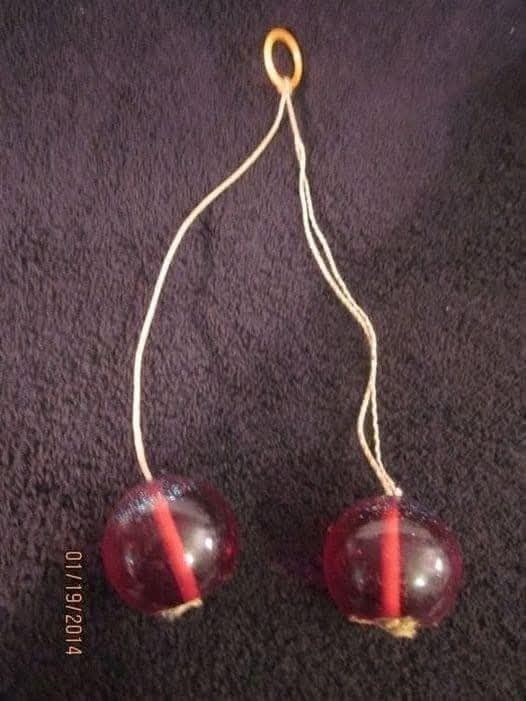
    The internet went into a frenzy trying to identify a mysterious object, yet nearly everyone guessed wrong. As photos circulated online, confusion only grew. The surprising answer? A toy that many adults remember instantly, but younger generations rarely recognize: Clackers.

    Clackers, also called Lik Klaks, were a massive craze in the early 1970s. The toy was simple: two hard plastic balls attached to a string with a small ring or handle in the middle. The goal was to swing the balls so they struck each other repeatedly, producing the loud, rhythmic “clack-clack” sound that could carry across a playground.

    Introduced around 1969 by Wham-O—the same company behind the Hula Hoop and Frisbee—Clackers quickly captured the nation’s attention. Playgrounds filled with kids showing off tricks, competing for the longest rhythm, and testing their coordination. Mastering Clackers became a badge of skill, though beginners often learned the hard way after accidentally hitting their knuckles.

    The toy’s popularity was immediate and intense, with kids spending hours practicing swings and timing. Its simplicity made it accessible, but the repetitive motion also demanded focus, patience, and dexterity. Unlike today’s digital distractions, Clackers required physical skill and rhythm to succeed.

    However, the craze came with problems. Early versions of Clackers were prone to cracking or shattering after repeated impacts, creating safety hazards. Schools began banning the toy, and restrictions spread in various areas. Wham-O eventually released sturdier versions, but the original mania had already peaked.

    Despite the decline, Clackers remain a nostalgic symbol of childhood for many adults. The loud, satisfying sound, the physical challenge, and the social play it encouraged evoke memories of playground competition and camaraderie.

    The toy also represents a simpler era of entertainment, when creativity and practice defined fun rather than screens and instant gratification. It was noisy, sometimes painful, but unforgettable.

    Today, Clackers live on as a quirky cultural artifact. They remind us of the tactile, hands-on play that once dominated playgrounds, offering both nostalgia and a glimpse into the joys—and risks—of old-school toys.

  • World Curling confirm change in new statement following ‘cheating’ scandal

    World Curling confirm change in new statement following ‘cheating’ scandal

    World Curling has issued a new statement after meeting with team representatives at the Winter Olympic Games, confirming changes to its “stone monitoring protocol” starting with the evening session on 15 February. The update follows several tense matches and allegations of cheating.

    Controversy first flared when Sweden’s Oskar Eriksson accused Canada’s Marc Kennedy of double touching a stone during delivery. Kennedy denied the claim and responded angrily on the ice. The incident sparked debate about rule enforcement and sportsmanship.

    Canada later faced additional accusations during a loss to Switzerland, while other matches also featured alleged double-touch infractions. The repeated disputes increased pressure on officials to clarify how deliveries would be monitored.

    Previously, World Curling announced that two umpires would actively observe athlete deliveries for the remainder of the Olympic competition. That approach aimed to prevent further disagreements and ensure consistent rule application.

    However, the governing body has now adjusted that plan. In its latest statement, World Curling confirmed that the two umpires will remain on the field of play but will only monitor deliveries at the request of competing teams.

    When a request is made, the umpires will oversee deliveries for a minimum of three ends. This change shifts responsibility partly to the teams, allowing them to trigger closer scrutiny if concerns arise during a match.

    The mid-Games adjustment, agreed upon with national Olympic committees, effectively refines the earlier policy of automatic monitoring across all games. Officials appear to be seeking a balance between oversight and maintaining the flow of competition.

    As the tournament continues, attention remains on how the revised protocol will impact both gameplay and tensions between teams. With emotions already running high, the updated system will likely play a key role in restoring confidence and minimizing further controversy on the ice.

  • Bianca Censori addresses controversial ‘sex act’ with Kanye West in Venice

    Bianca Censori addresses controversial ‘sex act’ with Kanye West in Venice

    In September 2023, images of Bianca Censori and Kanye West on a boat in Venice went viral, sparking allegations that the pair were engaging in behavior deemed contrary to public decency. The photos triggered widespread media coverage and public debate.

    More than two years later, Censori addressed the controversy for the first time in a tell-all interview with Vanity Fair. The 31-year-old Australian model discussed the incident within a broader conversation about her public image, fashion choices, and relationship with West.

    Censori married the 48-year-old rapper in December 2022 after meeting him while working as an architectural designer for his Yeezy brand. Their confidential marriage license came shortly after West finalized his divorce from Kim Kardashian, with whom he shares four children.

    Less than a year into their marriage, Venice authorities reportedly investigated the couple after photos surfaced from a water taxi ride. In the images, West appeared partially undressed, while Censori’s position fueled speculation and complaints from onlookers.

    In the years since, Censori has frequently made headlines for wearing extremely revealing outfits. Many critics have questioned whether her fashion choices were influenced or directed by West, given his history of shaping the public image of past partners.

    One notable appearance came at the 2025 Grammy Awards, where Censori wore a fully transparent mesh mini dress that drew global attention and intense criticism for its boldness. The look further amplified discussions about her autonomy and artistic expression.

    In her recent interview, Censori pushed back against the narrative that her wardrobe is controlled by her husband. She stated that her most controversial looks stem from her personal “obsession with nudity” and creative exploration rather than external pressure.

    While public opinion remains divided, Censori’s comments mark her first direct response to the Venice incident and ongoing speculation. By addressing the controversy herself, she appears intent on reclaiming the narrative surrounding her image and her marriage.

  • What She Found in Her Bowl Wasn’t Quinoa After All

    What She Found in Her Bowl Wasn’t Quinoa After All

    What began as a routine lunch break took an unexpected turn when a woman noticed something unusual in her salad. After sprinkling what she believed were quinoa grains over her greens, she realized the small brown clusters were not grains at all. They were attached firmly to a lettuce leaf. The discovery immediately changed the mood at the table, transforming a simple meal into a moment of concern and curiosity.

    Upon closer inspection, it became clear that the clusters resembled insect eggs rather than food. She quickly stopped eating and alerted others nearby. While unsettling, her calm reaction helped prevent panic and allowed the situation to be handled responsibly. Moments like this can be surprising, but they also serve as reminders of how food reaches our plates.

    In agricultural environments, insects sometimes lay eggs on the underside of leafy vegetables while crops are still in the field. Even with advanced harvesting, washing, and packaging systems, small natural elements can occasionally remain. Fresh produce grows outdoors, exposed to soil, wind, rain, and wildlife, making total control nearly impossible.

    Fortunately, in most cases, accidental contact with insect eggs on produce poses minimal health risk. Many are harmless and would be destroyed during cooking if not noticed beforehand. Still, finding them raw in a salad can understandably make anyone uncomfortable. The experience emphasizes the importance of proper inspection and food safety awareness.

    If something similar happens while dining out, the best approach is to stop eating the dish and politely inform restaurant staff. Most establishments take such matters seriously and will replace the meal or offer a refund. Calm communication allows management to review their suppliers and preparation practices without unnecessary conflict.

    For those preparing meals at home, prevention is straightforward. Rinse leafy greens thoroughly under running water, gently separating leaves to check hidden folds and creases. Even produce labeled “pre-washed” or “ready to eat” can benefit from a quick additional rinse for extra peace of mind.

    Soaking greens briefly in clean water and then draining them in a colander can help dislodge debris. Some people also use a salad spinner to remove excess moisture after washing. Taking a few extra moments during preparation significantly reduces the chances of unwanted surprises.

    While the incident may have disrupted a peaceful lunch, it ultimately became a reminder of the natural journey food takes from farm to table. A little awareness and careful preparation go a long way in ensuring that meals remain both safe and enjoyable.