Breaking News

  • The Entire Internet Tried to Figure It Out — But Almost No One Could

    The Entire Internet Tried to Figure It Out — But Almost No One Could

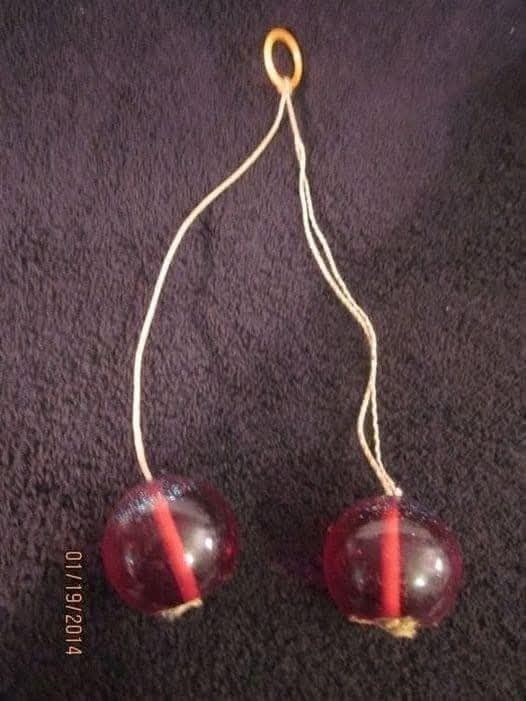
    The internet went into a frenzy trying to identify a mysterious object, yet nearly everyone guessed wrong. As photos circulated online, confusion only grew. The surprising answer? A toy that many adults remember instantly, but younger generations rarely recognize: Clackers.

    Clackers, also called Lik Klaks, were a massive craze in the early 1970s. The toy was simple: two hard plastic balls attached to a string with a small ring or handle in the middle. The goal was to swing the balls so they struck each other repeatedly, producing the loud, rhythmic “clack-clack” sound that could carry across a playground.

    Introduced around 1969 by Wham-O—the same company behind the Hula Hoop and Frisbee—Clackers quickly captured the nation’s attention. Playgrounds filled with kids showing off tricks, competing for the longest rhythm, and testing their coordination. Mastering Clackers became a badge of skill, though beginners often learned the hard way after accidentally hitting their knuckles.

    The toy’s popularity was immediate and intense, with kids spending hours practicing swings and timing. Its simplicity made it accessible, but the repetitive motion also demanded focus, patience, and dexterity. Unlike today’s digital distractions, Clackers required physical skill and rhythm to succeed.

    However, the craze came with problems. Early versions of Clackers were prone to cracking or shattering after repeated impacts, creating safety hazards. Schools began banning the toy, and restrictions spread in various areas. Wham-O eventually released sturdier versions, but the original mania had already peaked.

    Despite the decline, Clackers remain a nostalgic symbol of childhood for many adults. The loud, satisfying sound, the physical challenge, and the social play it encouraged evoke memories of playground competition and camaraderie.

    The toy also represents a simpler era of entertainment, when creativity and practice defined fun rather than screens and instant gratification. It was noisy, sometimes painful, but unforgettable.

    Today, Clackers live on as a quirky cultural artifact. They remind us of the tactile, hands-on play that once dominated playgrounds, offering both nostalgia and a glimpse into the joys—and risks—of old-school toys.

  • World Curling confirm change in new statement following ‘cheating’ scandal

    World Curling confirm change in new statement following ‘cheating’ scandal

    World Curling has issued a new statement after meeting with team representatives at the Winter Olympic Games, confirming changes to its “stone monitoring protocol” starting with the evening session on 15 February. The update follows several tense matches and allegations of cheating.

    Controversy first flared when Sweden’s Oskar Eriksson accused Canada’s Marc Kennedy of double touching a stone during delivery. Kennedy denied the claim and responded angrily on the ice. The incident sparked debate about rule enforcement and sportsmanship.

    Canada later faced additional accusations during a loss to Switzerland, while other matches also featured alleged double-touch infractions. The repeated disputes increased pressure on officials to clarify how deliveries would be monitored.

    Previously, World Curling announced that two umpires would actively observe athlete deliveries for the remainder of the Olympic competition. That approach aimed to prevent further disagreements and ensure consistent rule application.

    However, the governing body has now adjusted that plan. In its latest statement, World Curling confirmed that the two umpires will remain on the field of play but will only monitor deliveries at the request of competing teams.

    When a request is made, the umpires will oversee deliveries for a minimum of three ends. This change shifts responsibility partly to the teams, allowing them to trigger closer scrutiny if concerns arise during a match.

    The mid-Games adjustment, agreed upon with national Olympic committees, effectively refines the earlier policy of automatic monitoring across all games. Officials appear to be seeking a balance between oversight and maintaining the flow of competition.

    As the tournament continues, attention remains on how the revised protocol will impact both gameplay and tensions between teams. With emotions already running high, the updated system will likely play a key role in restoring confidence and minimizing further controversy on the ice.

  • Bianca Censori addresses controversial ‘sex act’ with Kanye West in Venice

    Bianca Censori addresses controversial ‘sex act’ with Kanye West in Venice

    In September 2023, images of Bianca Censori and Kanye West on a boat in Venice went viral, sparking allegations that the pair were engaging in behavior deemed contrary to public decency. The photos triggered widespread media coverage and public debate.

    More than two years later, Censori addressed the controversy for the first time in a tell-all interview with Vanity Fair. The 31-year-old Australian model discussed the incident within a broader conversation about her public image, fashion choices, and relationship with West.

    Censori married the 48-year-old rapper in December 2022 after meeting him while working as an architectural designer for his Yeezy brand. Their confidential marriage license came shortly after West finalized his divorce from Kim Kardashian, with whom he shares four children.

    Less than a year into their marriage, Venice authorities reportedly investigated the couple after photos surfaced from a water taxi ride. In the images, West appeared partially undressed, while Censori’s position fueled speculation and complaints from onlookers.

    In the years since, Censori has frequently made headlines for wearing extremely revealing outfits. Many critics have questioned whether her fashion choices were influenced or directed by West, given his history of shaping the public image of past partners.

    One notable appearance came at the 2025 Grammy Awards, where Censori wore a fully transparent mesh mini dress that drew global attention and intense criticism for its boldness. The look further amplified discussions about her autonomy and artistic expression.

    In her recent interview, Censori pushed back against the narrative that her wardrobe is controlled by her husband. She stated that her most controversial looks stem from her personal “obsession with nudity” and creative exploration rather than external pressure.

    While public opinion remains divided, Censori’s comments mark her first direct response to the Venice incident and ongoing speculation. By addressing the controversy herself, she appears intent on reclaiming the narrative surrounding her image and her marriage.

  • What She Found in Her Bowl Wasn’t Quinoa After All

    What She Found in Her Bowl Wasn’t Quinoa After All

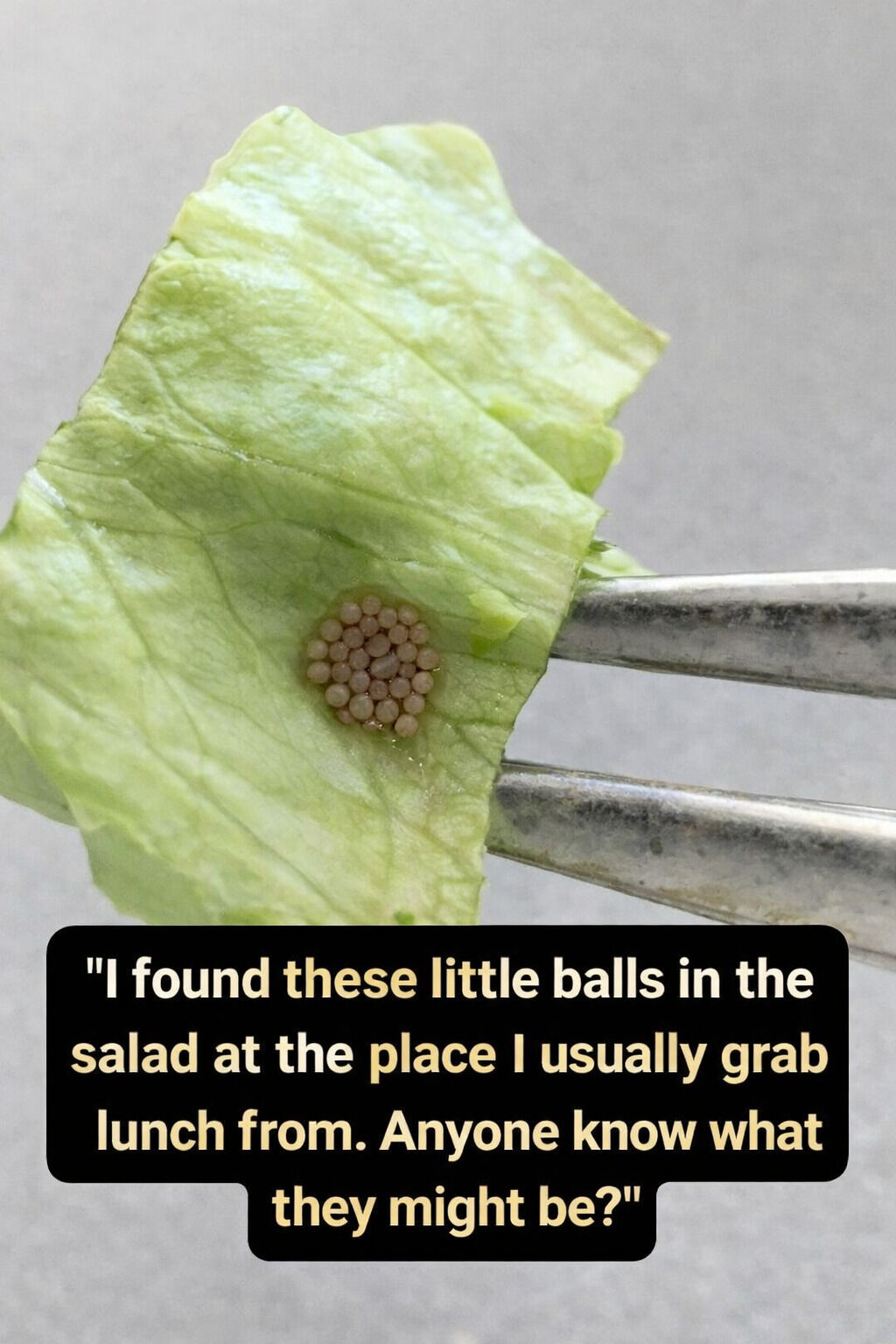
    What began as a routine lunch break took an unexpected turn when a woman noticed something unusual in her salad. After sprinkling what she believed were quinoa grains over her greens, she realized the small brown clusters were not grains at all. They were attached firmly to a lettuce leaf. The discovery immediately changed the mood at the table, transforming a simple meal into a moment of concern and curiosity.

    Upon closer inspection, it became clear that the clusters resembled insect eggs rather than food. She quickly stopped eating and alerted others nearby. While unsettling, her calm reaction helped prevent panic and allowed the situation to be handled responsibly. Moments like this can be surprising, but they also serve as reminders of how food reaches our plates.

    In agricultural environments, insects sometimes lay eggs on the underside of leafy vegetables while crops are still in the field. Even with advanced harvesting, washing, and packaging systems, small natural elements can occasionally remain. Fresh produce grows outdoors, exposed to soil, wind, rain, and wildlife, making total control nearly impossible.

    Fortunately, in most cases, accidental contact with insect eggs on produce poses minimal health risk. Many are harmless and would be destroyed during cooking if not noticed beforehand. Still, finding them raw in a salad can understandably make anyone uncomfortable. The experience emphasizes the importance of proper inspection and food safety awareness.

    If something similar happens while dining out, the best approach is to stop eating the dish and politely inform restaurant staff. Most establishments take such matters seriously and will replace the meal or offer a refund. Calm communication allows management to review their suppliers and preparation practices without unnecessary conflict.

    For those preparing meals at home, prevention is straightforward. Rinse leafy greens thoroughly under running water, gently separating leaves to check hidden folds and creases. Even produce labeled “pre-washed” or “ready to eat” can benefit from a quick additional rinse for extra peace of mind.

    Soaking greens briefly in clean water and then draining them in a colander can help dislodge debris. Some people also use a salad spinner to remove excess moisture after washing. Taking a few extra moments during preparation significantly reduces the chances of unwanted surprises.

    While the incident may have disrupted a peaceful lunch, it ultimately became a reminder of the natural journey food takes from farm to table. A little awareness and careful preparation go a long way in ensuring that meals remain both safe and enjoyable.

  • The Misunderstanding That Changed Everything — and Brought Us Closer

    The Misunderstanding That Changed Everything — and Brought Us Closer

    The way we grow up leaves fingerprints on everything we do. Long before we’re aware of it, childhood rituals quietly turn into internal rules—guiding what feels acceptable, polite, or out of place. These invisible patterns follow us into adulthood, shaping our relationships in ways we don’t always recognize.

    When we build a life with someone, we don’t come alone—we bring years of habits, memories, and unspoken expectations. The way dishes are washed, how holidays are celebrated, even how eggs are prepared in the morning can carry emotional weight. What feels “normal” to one person may feel unfamiliar—or even uncomfortable—to another.

    One quiet morning, Mira woke before sunrise to make breakfast for Evan. The house was wrapped in pale blue light, the kind that makes everything feel calm and full of possibility. She moved softly through the kitchen, enjoying the rhythm of cracking eggs and warming the pan. It was her quiet way of saying, I care about you.

    Evan wandered in, still half-asleep, and leaned against the counter. Watching her cook, he smiled faintly. Then, almost absentmindedly, he asked, “Shouldn’t you rinse them first? My mom always did.” To him, it was a simple memory drifting into conversation—nothing more than a familiar image from childhood.

    But inside Mira, something shifted. His words didn’t land as a suggestion; they felt like a comparison. In that small comment, she heard an invisible measuring stick. She had woken early to create something thoughtful, and instead of appreciation, she felt quietly evaluated.

    Evan noticed the change in her expression but didn’t immediately understand it. When she explained later, he looked genuinely surprised. He hadn’t meant to correct her—he was simply repeating a habit he had absorbed years ago. The rinsing of eggs wasn’t a rule; it was a ritual, carried forward without question.

    Mira admitted she wasn’t upset about the eggs themselves. What she needed was acknowledgment—that her effort mattered. Once he understood that, the tension softened. It wasn’t about who was right; it was about feeling seen.

    That evening, they returned to the kitchen together. This time, they laughed about the strange power of inherited routines. They cracked the eggs without rinsing them, not as a rejection of the past, but as a small symbol of something new. Because sometimes, it’s not about eggs at all—it’s about choosing, together, which rituals to keep and which ones to gently leave behind.

  • There’s a Hidden Cat in This Photo — Can You See It?

    There’s a Hidden Cat in This Photo — Can You See It?

    Have you ever stared at a picture that seemed completely ordinary—only to discover something surprising hidden in plain sight? A new optical illusion is captivating viewers everywhere, challenging them to spot a cleverly camouflaged cat perched among village rooftops. At first glance, the image appears to show nothing more than rows of rustic tiles under an open sky. But don’t be fooled—there’s more than meets the eye.

    The challenge is simple yet surprisingly tricky: find the hidden feline in just eight seconds. It sounds easy, right? Many people confidently accept the task, only to realize that their eyes are playing tricks on them. The rooftops, arranged in neat patterns and similar shades, create the perfect disguise for the well-hidden cat.

    What makes this illusion so fascinating is how naturally the cat blends into its surroundings. Its white fur almost perfectly matches the pale tones of the rooftop tiles. Because the brain tends to group similar colors and patterns together, it initially processes the scene as uniform, overlooking subtle differences.

    If you’re struggling to find it, here’s a helpful nudge: direct your attention to the top right corner of the image. Look carefully for a slight variation in texture and shape. The key isn’t just color—it’s noticing a small disruption in the repeating pattern of tiles.

    Once you finally spot the cat, the image suddenly changes. What was once invisible becomes obvious, and you may wonder how you missed it before. The feline is sitting perfectly still, its body aligned with the angles of the roof, making it nearly indistinguishable from the background at a quick glance.

    Optical illusions like this aren’t just entertaining—they’re excellent brain exercises. They train your mind to slow down, observe carefully, and detect fine details. Regularly engaging in visual puzzles can improve concentration, pattern recognition, and even short-term memory.

    These challenges also reveal how perception works. Our brains are wired to simplify complex scenes, often filtering out details that seem unimportant. In this case, that filtering process works against us, allowing the hidden cat to remain concealed until we consciously search for differences.

    So, how long did it take you to find the feline? Were you able to spot it within eight seconds, or did it take a little longer? Share the challenge with friends and family to see who truly has the sharpest eyes. Sometimes, the smallest details make the biggest difference.

  • Doctors Reveal the Real Benefits of Eating Boiled Eggs in the Morning

    Doctors Reveal the Real Benefits of Eating Boiled Eggs in the Morning

    It’s one of the simplest breakfasts you can make — no blender, no pan, no complicated recipe. Just a boiled egg, a pinch of salt, and a quiet moment in the morning. But health experts say starting your day with boiled eggs may do more than curb hunger.

    From supporting muscle repair to helping you feel fuller longer, this simple food provides steady, lasting energy that can shape your entire morning.

    Boiled eggs are rich in high-quality protein, offering about 6 grams per large egg along with all nine essential amino acids.

    This makes them a “complete protein,” important for maintaining muscle health and supporting body function.

    Eating protein early in the day may also reduce mid-morning cravings by helping you feel satisfied longer. Unlike sugary breakfasts that cause energy spikes and crashes, boiled eggs provide a steady release of energy.

    Eggs have long been studied for heart health. Although once viewed cautiously due to cholesterol, newer research suggests moderate egg consumption can fit into a balanced diet for most people.

    Eggs also contain choline, vitamin D, and antioxidants like lutein and zeaxanthin, which support brain and eye health. Boiling eggs preserves nutrients without adding extra fats.

    Beyond nutrition, boiled eggs are affordable, practical, and easy to prepare ahead. Doctors emphasize they aren’t a miracle food — but simple, nutrient-dense choices like boiled eggs can help build a healthier morning routine.

  • This Is Why Women Living Alone Should Wait Before Turning on Lights at Home

    This Is Why Women Living Alone Should Wait Before Turning on Lights at Home

    When you live alone, routines become comfort. You walk in, close the door, reach for the light switch. It feels automatic. Safe. Normal.
    But what if that tiny, ordinary action could unintentionally make you vulnerable?

    Many women who live alone don’t realize that immediately turning on all the lights the moment they step inside can reveal more than they intend. It’s not about fear. It’s about awareness — and small habits that quietly protect you.

    The Visibility Factor

    At night, when the outside is dark and your home suddenly lights up, you create contrast. Anyone outside can see clearly into your space, especially if curtains or blinds are even slightly open. Meanwhile, you cannot see outside at all. The light reflects back at you, turning your windows into mirrors.
    This means someone outside could observe:

    Your layout
    Whether you are alone
    Where you place your phone or keys
    Which rooms you move through

    It’s not about assuming danger — it’s about understanding visibility.
    A Safer First Step

    Instead of flipping the main switch immediately, consider pausing for 30–60 seconds after entering.

    Close and lock the door.
    Check that windows are secure.
    Pull curtains or blinds shut.

    Then turn on interior lights.

    This small pause gives you control over who can see in — and who can’t.
    The “Predictable Pattern” Problem

    Another overlooked issue is routine predictability. If lights switch on at exactly the same time every night, it quietly signals your schedule. Over days or weeks, patterns can be noticed.

    Varying small habits — such as using a lamp instead of overhead lighting, or turning lights on in different rooms first — makes your presence less predictable.

    Predictability isn’t weakness. But reducing it increases safety.
    The Psychological Advantage

    Waiting before turning on lights also gives you a moment to tune into your surroundings.

    Do you hear anything unusual?
    Is anything out of place?
    Did you notice a car parked nearby that wasn’t there before?

    That short pause shifts you from autopilot to awareness.

    Most safety experts agree: awareness is your strongest defense.
    Smart Alternatives

    If fumbling in the dark feels uncomfortable, here are balanced options:

    Install smart bulbs you can control from your phone before entering.
    Use motion-sensor lights inside entryways only.
    Keep a small flashlight on your keychain.
    Install outdoor motion lights instead of relying solely on indoor lighting.

    These options keep you secure without sacrificing comfort.
    It’s About Empowerment, Not Fear

    Living alone is independence. Strength. Freedom.

    But independence doesn’t mean ignoring simple precautions. It means owning your safety decisions confidently.

    You don’t have to live in paranoia. You don’t have to feel afraid.

    You simply need to be intentional.

    A habit that takes less than a minute could protect your privacy, your routines, and your peace of mind.

    And sometimes, safety isn’t about dramatic actions.

    It’s about the quiet pause before you flip the switch.

  • Your favorite colors often reflect your emotions, personality, and inner world in subtle but powerful ways. The hues you’re drawn to can reveal how you feel, what you value, and how you express yourself emotionally. Whether you love calm blues, energetic reds, or gentle pastels, each shade mirrors a part of your emotional landscape and personal identity.

    Color communicates in a way that language rarely can, moving past rational thought and speaking directly to the emotional and subconscious layers of the mind. Long before words are processed, color is felt. It triggers sensations, moods, and memories that often surface without explanation, forming immediate impressions that logic never gets the chance to filter. This is why color can feel so personal and intimate, even when we are not actively thinking about it. The shades we gravitate toward are rarely random; they tend to align with what is happening beneath the surface of our awareness. Whether soothing, energizing, or unsettling, color becomes a quiet emotional signal, reflecting inner states that may be difficult to name or express. In this sense, color functions as a kind of emotional shorthand, capturing complex feelings in a single visual experience.

    Every color carries a wide emotional range rather than a single fixed meaning. Red, for instance, is often associated with intensity in all its forms. It can symbolize passion, vitality, confidence, and physical energy, expressing movement and desire. At the same time, red can also suggest agitation, anger, or inner tension, especially when someone is feeling overwhelmed or restless. Blue occupies a similarly complex emotional space. It is commonly linked to calmness, clarity, and trust, evoking a sense of openness and mental ease. Yet blue can also reveal emotional withdrawal, melancholy, or a longing for peace that has not yet been achieved. Purple often appears during moments of inner change, connected to transformation, introspection, and spiritual growth. It can signal healing, emotional integration, or the search for meaning, particularly during periods of transition when identity and direction are being reshaped.

    The colors people favor often act as subtle emotional mirrors. These preferences, whether consciously chosen or instinctively felt, can reflect emotional truths that remain unspoken. Someone drawn repeatedly to grounding, muted tones may be seeking stability or safety, while another who prefers bright, vivid colors may be craving stimulation, expression, or renewal. These choices are rarely deliberate psychological statements, yet they quietly reveal inner needs, fears, and desires. Color becomes a way the psyche communicates with itself, offering clues about emotional states that have not yet reached conscious awareness. In this way, color preferences can reveal internal conflicts, emotional longings, or unresolved experiences, functioning as gentle indicators of what is happening beneath outward behavior.

    This powerful relationship between color and emotion is rooted partly in biology. On a neurological level, color perception is directly linked to areas of the brain responsible for mood regulation, memory, and emotional response. Certain colors can stimulate the nervous system, increasing alertness or excitement, while others encourage relaxation and calm. These reactions often occur automatically, without conscious thought, because they are tied to how the brain processes sensory information. Over time, repeated emotional experiences associated with certain colors become embedded in memory, strengthening their emotional impact. As a result, color does not simply decorate the world; it actively shapes how the world is experienced, influencing emotional reactions before rational interpretation has a chance to intervene.

    Culture adds another layer of meaning, shaping how colors are interpreted and emotionally understood. Across societies, colors carry symbolic associations that are passed down through tradition, art, and shared experience. Red may symbolize love, passion, or celebration in one culture, while representing danger, warning, or aggression in another. White can convey purity, innocence, and new beginnings in some traditions, yet symbolize mourning, loss, or spiritual transition in others. These cultural meanings do not replace biological responses but interact with them, creating layered emotional reactions. What a color evokes is therefore shaped not only by individual psychology but also by collective history, belief systems, and social context.

    When biology and culture intersect, color becomes more than a visual sensation; it becomes a psychological language. This language operates quietly, influencing emotions, decisions, and self-perception without requiring conscious awareness. Color can comfort, provoke, inspire, or unsettle, often guiding behavior and emotional responses in subtle ways. It reveals hidden aspects of identity, emotional needs, and inner transformation, offering insight into the parts of ourselves that words struggle to reach. By paying attention to the colors we are drawn to, we can gain a deeper understanding of our emotional landscape. In this silent dialogue between perception and feeling, color continues to shape experience, communicating truths that exist beyond spoken language.

  • Don’t throw away your tuna cans, they’re worth their weight in gold at home: how to reuse them

    Don’t throw away your tuna cans, they’re worth their weight in gold at home: how to reuse them

    How many times have you thrown away dozens of tuna cans without a second thought? Next time, pause and consider reusing them—they are more valuable than you might realize. Canned tuna is a staple for many households, praised for its omega-3 fatty acids and convenience. Nutritionists recommend it, and millions of people buy it daily to enjoy a quick, healthy meal. But once the tuna is gone, the can is usually tossed aside.

    Empty tuna cans, however, can be cleverly repurposed for a variety of household uses. Instead of discarding them, you can transform these small containers into practical and decorative items. With a little creativity, a humble can becomes much more than just packaging—it can become a resource for organization, decoration, and fun.

    One of the simplest ideas is to turn tuna cans into flower pots. Small plants, such as succulents or miniature cacti, fit perfectly inside. You can decorate the cans using clothespins or paint to add a personal touch, making charming, inexpensive pots for your windowsill or desk.

    Tuna cans can also be used as candle holders. By placing a candle inside a glass within the can, you can safely display it without damaging the tin. Decorate with clothespins or other materials for a rustic, creative look that brightens any room.

    In the kitchen, tuna cans can serve as molds for individual desserts, small stews, or puddings. Simply clean the cans thoroughly and remove labels before using. Their compact size makes them ideal for crafting perfectly shaped portions that are visually appealing and practical for serving.

    For children’s crafts, tuna cans can become fun DIY projects like rattles or hanging decorations. By threading string through multiple cans and suspending them, kids can enjoy tactile and auditory play. More advanced crafters can even transform tuna cans into a wall clock by adding a clock mechanism. With a little imagination, the possibilities for reusing tuna cans are endless.