Breaking News

  • The risk of foam in your urine.

    The risk of foam in your urine.

    What foam in urine can indicate, and when should you consult a healthcare professional?

    Many people have noticed foam in their urine at some point and dismissed it without much concern. It’s often thought to be normal, a result of urinating forcefully, dehydration, or simply “something that always happens.” However, when this foam is abundant, persistent, and appears repeatedly, it may be sending a silent warning about your kidney health.

    Excessive foam in urine is not a minor issue. In medicine, it’s often the visible manifestation of a problem that isn’t immediately apparent: protein loss through the kidneys.

    Why does urine become foamy?

    Proteins have a special characteristic: they bind water and generate foam, similar to what happens with soap or egg white. Normally, the kidneys function as an extremely fine filter that eliminates toxins and excess fluids while retaining valuable substances like proteins.

    When this filter is damaged, proteins begin to leak into the urine. When you urinate, these proteins produce a denser, more persistent foam that doesn’t disappear quickly. It’s important to clarify that a small amount of occasional foam can be normal. The warning sign appears when the foam is:

    Abundant

    Repetitive

    Persistent

    Difficult to dissipate

    It’s not an isolated incident, but a recurring pattern.

    Proteinuria: More than a sign, an early warning

    The presence of protein in the urine, known as proteinuria, is not a disease in itself. It’s evidence that something is damaging the kidney’s structure. It can be compared to an ultra-fine sieve that begins to crack: what it was supposed to retain starts to leak out.

    The worrying thing is not only that proteinuria exists, but how common it is, especially in people with risk factors. In those with high blood pressure, up to one in three may experience some degree of protein loss in their urine. In people with diabetes, between 30% and 40% will develop kidney damage during their lifetime.

    Furthermore, in people with obesity, metabolic disorders, or those over 50, the prevalence increases silently.

    The big problem: it doesn’t hurt and it doesn’t give any warning.

    Initial kidney damage doesn’t cause pain or obvious symptoms. That’s why many people only find out when the disease is already advanced. Proteinuria is just the tip of the iceberg: the real damage may be progressing without the patient noticing.

    This often happens because these signs aren’t always actively sought during routine medical checkups, and because the body doesn’t send a clear alarm in the early stages.
    Who should pay special attention?

    Some people shouldn’t wait until they notice foam in their urine to take action. The risk is higher if you:

    Have high blood pressure

    Have diabetes

    Have a history of kidney disease

    Have had autoimmune diseases

    Frequently use anti-inflammatory drugs (such as ibuprofen, naproxen, or diclofenac)

    Have obesity or metabolic syndrome

    In these cases, protein loss can begin long before any visible symptoms appear.

    The relationship between high blood pressure and kidney damage

    High blood pressure puts constant pressure on the kidneys. This increased pressure impacts the delicate renal filtration system day after day. At first, the kidneys resist. Over time, this sustained pressure deforms the internal filters, known as glomeruli.

    When the glomerulus is damaged, it loses its ability to filter properly. It becomes more permeable and allows proteins to leak out, which not only indicates damage but also accelerates its progression. This creates a vicious cycle: more damage, more protein loss, and further kidney deterioration.
    How to Detect the Problem Early

    Proteinuria can be detected before the damage becomes severe. Simple and accessible tests allow for its early identification, such as:

    Urinalysis

    Albumin/creatinine ratio

    Quantification of protein in urine

    Kidney function test

    Microalbuminuria is an early sign, comparable to smoke before a fire. It’s the ideal time to intervene and stop the damage from progressing.
    Tips and Recommendations

    Don’t ignore persistent foam in your urine.

    If you have high blood pressure or diabetes, request regular urine tests, even if you feel well.

    Keep your blood pressure and glucose levels under control.

    Avoid frequent and unnecessary use of anti-inflammatory medications.

    Adopte healthy lifestyle habits consistently, not just for short periods.

    Have regular medical checkups, especially if you have risk factors.

    Persistent foam in the urine can be an early warning sign of kidney damage that is still reversible. Listening to these signals early allows you to protect a vital organ before the problem becomes irreversible. Ignoring it, on the other hand, can mean discovering the damage when it’s too late. Taking care of your kidneys today is investing in your quality of life for the future.

  • He was a simple father who picked up a lost wallet in a parking lot—never imagining that returning it would take him to court, where justice would change his life.

    He was a simple father who picked up a lost wallet in a parking lot—never imagining that returning it would take him to court, where justice would change his life.

    A struggling man discovered a wallet in a parking lot.

    No one was watching.
    He could have walked away without consequence.
    Instead, one honest choice altered his family’s future in ways he never imagined.
    When Julián Ramírez noticed the worn brown wallet resting on the asphalt of the Mercado de Sabores La Victoria parking lot, in Puebla’s La Resurrección neighborhood, he had no idea that this ordinary moment—so small it could vanish unnoticed—was about to awaken forces far older than him, the kind that fate moves quietly and without warning.

    Julián was thirty-five, though his body carried the fatigue of someone far beyond his years. Life hadn’t struck him with cruelty, but it had never extended kindness either. He earned his living unloading trucks at a wholesale depot inside Puebla’s Central de Abasto, where dust clung to his clothes and weariness settled deep into his muscles. His wages barely stretched to cover essentials, and some weeks, not even that.

    He lived in a modest apartment within a crowded housing complex, where thin walls allowed other people’s arguments, blaring radios, and children’s cries to seep into his nights uninvited. It wasn’t terrible—but it wasn’t the life he’d imagined for himself, either.

    Still, his world revolved around a single person.

    Guadalupe Ramírez. Lupita.
    His nine-year-old daughter.

    After Verónica—Lupita’s mother—left for Ciudad Juárez, promising she’d return once “things improved,” Julián learned how to fill two roles at once. At first, there were phone calls. Then brief messages. Eventually, nothing at all. The silence settled in and stayed.

    Julián never spoke badly about her to Lupita. He carried the weight of abandonment alone, believing it was better for his daughter to grow up believing in love than learning to doubt it too soon.

    That morning, the sky hung low and dark, heavy with rain yet to fall. Julián rose before sunrise, cooked beans, reheated tortillas, and poured coffee into a chipped mug that had survived far more than it should have.

    “Dad, are you coming to my school festival today?” Lupita asked, still half-asleep, clutching her worn cloth doll.

    Julián’s chest tightened. The night before, his supervisor—Don Héctor—had warned him there would be a mandatory double shift. Saying yes would be dishonest. Saying no would crack something fragile in his daughter.

    “I’ll try my very best, my little queen,” he said softly, forcing a smile. “I promise.”

    Lupita nodded, as though that promise alone could keep the world standing.
    They walked together to the neighborhood public school.

    Julián adjusted her sweater, kissed her forehead, and watched as she disappeared through the gates. When she turned to wave one last time, he raised his hand and held it there, as if that simple motion could shield her from everything beyond his reach.

    The market parking lot was still mostly empty when he arrived. Julián parked, stepped out, closed the door—

    And that’s when he saw it.

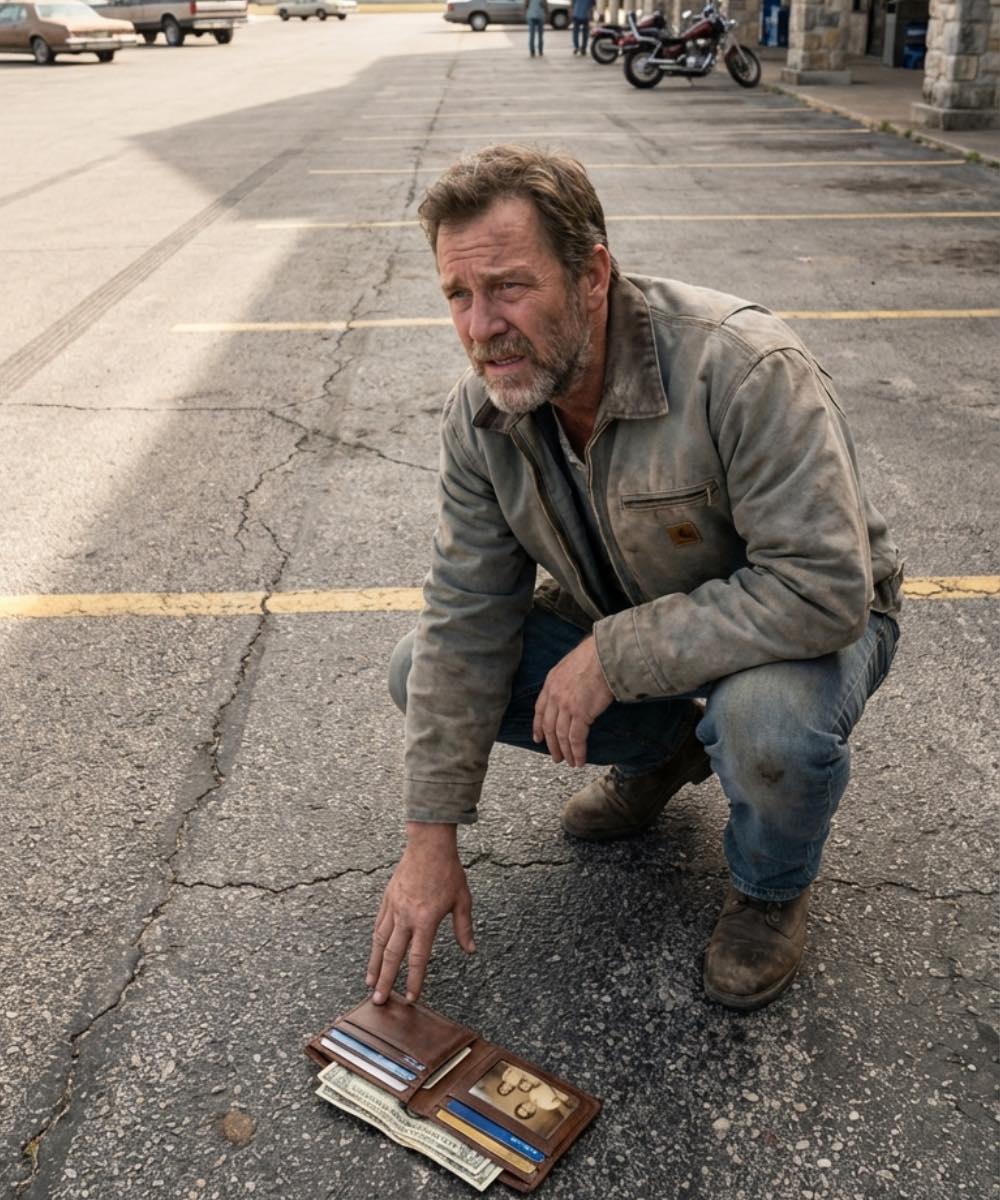
    An elegant handbag , made of brown leather, lying next to a yellow line in the parking lot.

    She lifted it. It was heavy. Not just because of the money, but because of what it represented.

    She opened it carefully. Neatly arranged banknotes , cards, official documents… and a photograph.

    A woman hugging a little girl. Both were smiling with a pure, genuine happiness, the kind that can’t be bought or faked.

    Julian remained still.

    He thought about the back rent . About Lupita’s worn-out shoes . About the registration fee for the next school year . He thought about how easy it would be to put his wallet away and keep walking. No one had seen him.

    But he also thought about the nights he spent explaining to his daughter that doing the right thing doesn’t always bring rewards, but it does bring peace of mind . And there was the proof, looking right at him.

    He firmly closed his wallet and entered the market.

    In the service module, the young woman who received him looked at him with suspicion.

    “Are you sure you want to hand it over?” he asked.

    “Yes,” Julian replied. “I just want it back in its owner’s hands.”
    The girl raised her eyebrows, surprised.

    —Almost nobody does that anymore.

    “I want my daughter to believe that it’s still worth being honest,” Julian said, before turning away.

    That day he worked with a strange feeling in his chest. It wasn’t pride. It was something quieter. Like having fulfilled his own expectations.

    In the afternoon he picked up Lupita. She showed him a drawing of the two of them holding hands in front of a house with flowers.

    “It’s our future, Dad,” she said confidently.

    That night, while the little girl slept, Julián sat on the small balcony. The neighborhood was full of noise: motorcycles, voices, radios playing. He thought that, at least for that day, he had done something right.

    The next morning, a sharp knock on the door startled him.

    A messenger handed him an official envelope.

    SUPERIOR COURT OF JUSTICE OF THE STATE OF PUEBLA

    Julian’s stomach closed up.

    She opened it with trembling hands. It was a court summons . She had to appear the next day.

    Signed:

    Mariana Salgado Ríos, Esq.,
    Family Court Judge

    He immediately remembered the ID card inside his wallet.

    The same woman.

    “Dad…” Lupita said from the room. “Why are you pale?”

    Julian folded the paper and put it away.

    —Nothing, honey. Just… grown-up stuff.

    But he didn’t sleep that night.

    Why did a simple act of honesty end up landing Julián in court?
    What connection did that wallet have with the judge who was now summoning him?

    In the second part, fate will reveal its true face…The Superior Court of Justice of the State of Puebla loomed before Julián like an enormous block of concrete and silence. It was a large, cold, intimidating building, the kind that makes anyone lower their voice without realizing it. As he crossed the threshold, the echo of his own footsteps reminded him how small he felt in that place.

    Julian unconsciously adjusted the collar of his worn shirt , trying to smooth it with his rough hands, marked by years of hard work. His fingers, hardened from carrying boxes and sacks, contrasted sharply with the polished marble floor. Everything there seemed to belong to another world, one where he didn’t fit in.

    A guard asked him to follow. They walked through long corridors with light-colored walls and closed doors. Each step tightened the knot in his stomach. Julián didn’t know if he was there by mistake, by a misunderstanding… or for something worse.
    Finally, the guard stopped in front of a large office. The door opened.

    The room was illuminated by tall windows , through which natural light filtered in, softening the atmosphere without diminishing its solemnity. A tidy desk, some files, a Mexican flag in one corner.

    And then, he saw her.

    There she was.

    Elegant, serious , with the bearing of someone accustomed to making important decisions. She didn’t raise her voice or make an unnecessary gesture, but her mere presence commanded respect. She was the same woman from the photograph Julián had seen inside the purse, although now her expression was different: firmer, more mature, laden with responsibility.

    “Mr. Julián Ramírez ,” she said, standing up. “Thank you for coming.”

    His voice was clear, calm, and not harsh.

    —Yes, ma’am —he replied, lowering his head slightly—. At your service.

    She watched him intently for a few seconds, as if trying to read him beyond his simple clothes and nervous posture.

    “The wallet you returned…” he continued, “was mine.”

    Julian felt the air slowly returning to his lungs. He nodded slowly.

    “I only did what I had to do,” he said. “Anyone would have done the same.”

    She shook her head, almost sadly.

    “No,” he replied. “Not just anyone.”

    He was silent for a moment before continuing.

    “There was more than just money in that wallet. There were important documents… and memories,” she said, lowering her voice slightly. “I thought I’d lost them forever.”

    Julian clenched his hands. He thought of Lupita. Of how easy it would have been to take that money. Of how different everything would be if he had chosen another path.
    They talked.

    They talked about Lupita , about how difficult it was to raise her alone.
    They talked about work, the long shifts, the exhaustion.
    They talked about life, about those small decisions that no one sees, but that define who you are when no one is watching.

    Julian didn’t realize when he stopped feeling so out of place.

    Days later, he received another summons.

    This time, he felt no fear.

    Mariana received him with the same seriousness, but with something different in her gaze.

    “I didn’t call to thank you again,” he said. “I called because I want to offer you an opportunity.”

    Julian looked at her, not understanding.

    “A job within a court-run community program ,” he continued. “Fixed hours. Stable income. Dignified work.”
    He paused and added,
    “Because people like you keep this country going every day… even though hardly anyone sees you.”

    Julian was unable to respond immediately.

    Tears blurred her vision. She wasn’t crying for the money. She was crying for relief. For the possibility of keeping her promises. For her daughter.

    “Thank you,” he managed to say. “Thank you so much.”

    He accepted.

    And a week later, for the first time, he was sitting in the front row at Lupita’s school festival . Folk music filled the courtyard, colors swaying to the rhythm of the dancing. When she saw him in the audience, her eyes lit up and her smile was bigger than ever.

    At that moment, Julian understood something he would never forget:

    Life does give back what you give.
    Not always in money.
    Sometimes, in justice.
    Sometimes, in hope.

  • A Birthday Surprise That Transformed How I See Everyday Kindness

    A Birthday Surprise That Transformed How I See Everyday Kindness

    When Mira woke up on her birthday, she wasn’t expecting anything remarkable.

    The distant sound of cars drifting up from the street and the familiar glow of her phone greeted her, filled with ordinary alerts and messages. There were no big plans, no dramatic celebrations—just another quiet day she planned to move through as usual. On her way to work, she stopped by a small café she had visited countless times. As she reached for her wallet, the barista smiled and said, “Happy birthday—this one’s on the house.” Mira laughed, assuming it was playful banter. But when the receipt never printed, she realized it was real, and that single cup of coffee suddenly felt like a small, unexpected blessing.

    Later that night, curiosity nudged her to look up birthday customs she’d never paid attention to before. She learned that many cafés and restaurants quietly offer complimentary treats to celebrate customers. What intrigued her wasn’t the free food itself, but the idea behind it—that generosity often shows up in subtle, easily overlooked ways. Encouraged by this thought, Mira decided to explore further the following day. She walked into a modest family-run restaurant, its walls decorated with old photographs and handwritten menu boards. Casually mentioning that it was her birthday, she was met with a warm smile from the waiter, who promised something special.

    While waiting, Mira observed the room.

    A couple leaned toward each other, laughing over bowls of soup. A weary mother patiently spoon-fed her child. An elderly man sat alone, slowly enjoying his tea. When Mira’s meal arrived, it felt different—it was carefully plated, and beside it was a small handwritten card that read, “May your days ahead be filled with warmth.” Something inside her softened. She realized birthdays weren’t just about marking another year; they were moments that invited connection, pauses in routine that revealed quiet kindness woven into daily life.

    Over the next few days, Mira continued visiting different places—not to gather free meals, but to gather experiences. Each stop offered something unique: a slice of cake, a heartfelt conversation, a shared laugh, a brief moment of joy. She began to see that the true gift wasn’t what she was given, but how she felt afterward—a gentle sense of belonging in a world that often rushes past without noticing. On the final evening of her birthday week, Mira sat by her window, thinking about how a simple realization had reshaped her outlook. She smiled, understanding that the smallest surprises can spark the deepest gratitude, and that kindness, like a soft, constant tune, is always there—if we slow down enough to hear it.

  • I Left Home to Buy a Toy for My Daughter’s Birthday – I Came Home to Silence and a Note That Changed Everything

    I Left Home to Buy a Toy for My Daughter’s Birthday – I Came Home to Silence and a Note That Changed Everything

    On the morning of his daughter’s third birthday, Callum steps out to buy a present. When he comes back, the house is unnervingly quiet. His wife is gone. A note waits for him. And as the truth begins to surface, Callum is forced to face what love, loss, and staying behind really mean.

    When I walked through the front door, the silence hit me first.

    No radio playing. No soft singing from the kitchen. Just the steady ticking of the clock and the low hum of the refrigerator.

    The birthday cake sat unfinished on the counter. Dark frosting streaked the bowl like someone had stopped mid-motion. A knife rested against the edge, abandoned, and a single balloon drifted near the ceiling, its ribbon twisted around a cabinet handle.

    “Jess?” I called out, my voice sharper than I intended.

    Nothing answered.

    The bedroom door stood open. I stepped inside and froze. Jess’s side of the closet was empty. The floral hangers she loved swayed gently, as if they’d been moved moments ago. Her suitcase was missing. So were most of her shoes.

    I leaned against the wall as I made my way down the hall, my leg dragging slightly. Evie slept in her crib, her lips parted, one small hand resting on the head of her stuffed duck.
    “What the hell is going on, Jess?” I muttered, carefully brushing Evie awake.

    My stomach twisted.

    Folded neatly beside her was a piece of paper—Jess’s handwriting.

    Callum,
    I’m sorry. I can’t stay anymore.
    Please take care of our Evie. I made a promise to your mom, and I had to keep it. Ask her.
    —J.

    When I’d left earlier, the house had been full of sound.

    Jess stood at the counter, hair pinned up, a smear of chocolate frosting on her cheek, humming off-key to the radio while she decorated Evie’s birthday cake. It was dark, uneven, and perfect—exactly what our daughter had asked for.

    “Don’t forget,” she called over her shoulder, “she wants the one with the glittery wings.”

    “I’ve got it,” I replied from the doorway. “One giant, obnoxiously sparkly doll. Mission accomplished.”

    She laughed—but there was something missing in it. Her smile didn’t quite reach her eyes.

    Evie sat at the table, duck tucked under one arm, crayon clutched in the other, humming along with her mom. She looked up at me, tilted her head, and grinned.

    “Daddy, make sure she has real wings!”

    “I’d never let you down, baby girl,” I said, tapping my leg to wake it before heading for the door. “I’ll be back soon.”

    It all felt so ordinary. Familiar. Safe.
    The kind of normal that only exists right before everything breaks.

    **

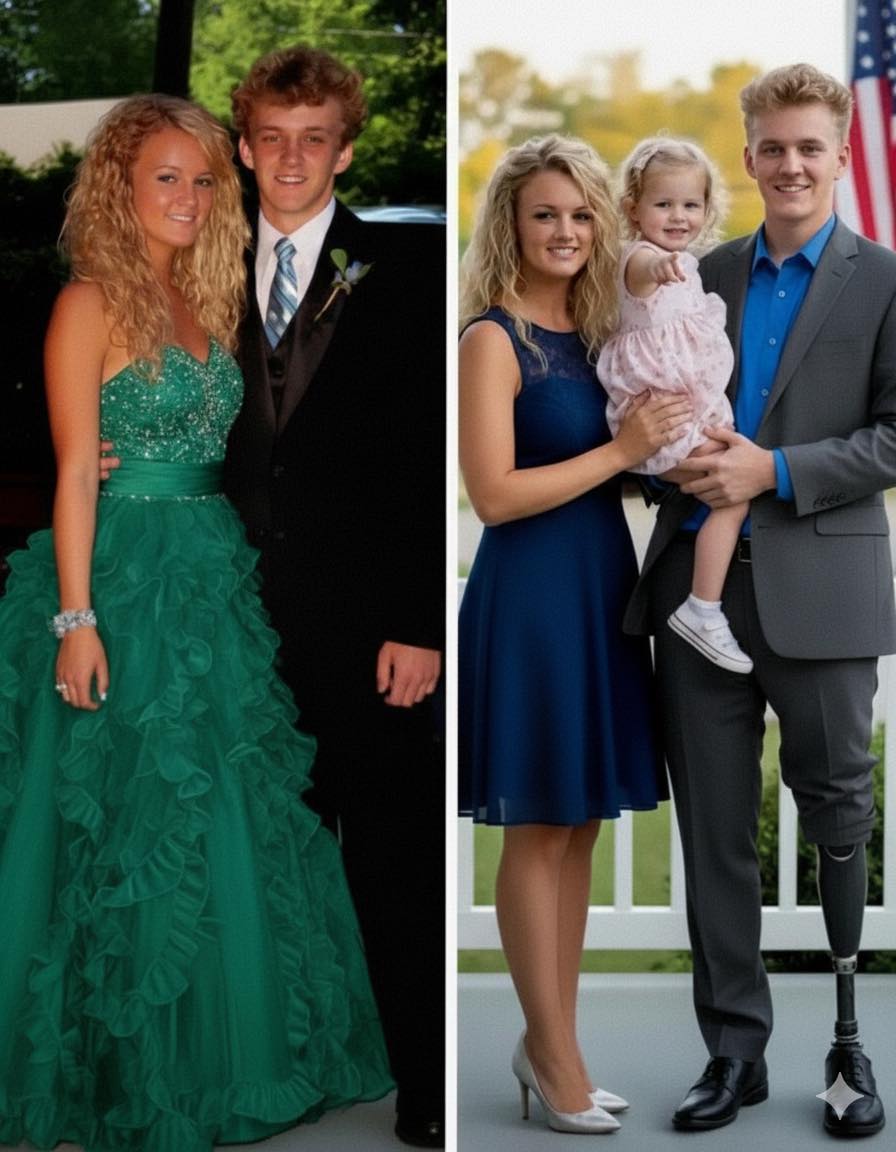
    The mall felt especially noisy, though Saturdays usually were. I ended up parking much farther away than I wanted—the closer spaces were already full. I made my way through the crowd slowly, easing my weight off my prosthetic as I walked.

    The skin behind my knee was raw again, irritated from the constant friction.

    Standing in line with the doll tucked against my side, my eyes drifted to a display of children’s backpacks—bright colors, cartoon animals, shiny zippers. Something about the waiting, the dull ache in what was left of my leg, pulled my thoughts backward.

    I was twenty-five when it happened. My second deployment. One moment I was crossing a dusty road in a small village with my unit, and the next there was an explosion—heat, fire, metal screaming through the air.

    Later, they told me the medic almost lost me in the chaos of dust and blood.

    Recovery was long and brutal. I had to relearn how to stand, how to balance, how to exist in a body that no longer felt like mine. Some days I hated the prosthetic so much I wanted to throw it out the window and disappear.

    Some days, I nearly did.

    But Jess was there when I came home. I still remember how her hands trembled when she first saw me.

    “We’ll figure this out,” she whispered. “We always do.”

    And somehow, we did.

    We married, had Evie not long after, and built a life that felt solid—earned.

    Still, a memory surfaced of Jess catching sight of my leg after a long day and turning away just a little too fast. I told myself it was only hard for her—the swelling, the angry skin, the antiseptic smell. I never let myself doubt her love.

    Not truly.

    “Next!” the cashier called, pulling me back to the present.

    By the time I got home, the sun was sinking behind the trees. As I approached the house, I noticed Gloria from across the street sitting on her porch, absorbed in one of my books.

    “Hey, Callum,” she said without looking up. “Jess stepped out earlier. She asked me to listen for Evie. Said you’d be back soon.”

    My leg throbbed. My stomach tightened.

    “Did she say where she was going?”

    “No. Just seemed urgent. The car was already running when she came to get me.”

    The moment I stepped inside, I knew something wasn’t right. The cake was still on the counter, unfinished. The frosting knife rested against the bowl. No music. No Jess. No Evie.

    Only silence.

    “Jess?” I called out, louder than I meant to.

    I knew Gloria said she wasn’t there—but I had to try anyway.

    Five minutes after reading the note, I buckled my half-asleep daughter into her car seat, slipped the folded letter into my pocket, and drove.

    My mother opened the door before I even knocked. Maybe she’d heard my tires screech into the driveway. Maybe she’d been waiting.
    “What did you do?” I demanded. “What did you do?”

    The color drained from her face as understanding set in.

    “She went through with it?” she whispered. “I never thought she would.”

    “I found the note,” I said, adjusting Evie’s weight against my shoulder. “Jess said you made her promise something. You’re going to explain—right now.”

    The kitchen light glowed behind her.

    Aunt Marlene stood at the counter, drying her hands with a dish towel. She looked up, saw my expression, and froze.

    “Oh, Callum,” my mother said softly. “Come inside. You should sit down for this.”

    “No,” I snapped. “Just tell me. It’s my daughter’s birthday, and her mother walked out. I don’t have time for gentleness.”

    Mom led us into the living room. Aunt Marlene followed, slow and quiet, as if she already sensed something unforgivable was about to surface.

    “Do you remember when you came home from rehab?” Mom asked. “After your second surgery?”

    “Of course.”

    “Jess came to see me not long after that,” she said, wringing her hands. “She was drowning. You were in pain—angry, hurting in ways she didn’t know how to fix.”

    I stayed silent.

    “She told me she’d been with someone else before you returned,” my mother continued, her eyes fixed on the floor. “A one-night mistake. And the day before your wedding… she found out she was pregnant.”

    My chest tightened until it hurt.

    “She wasn’t certain Evie was yours,” my mother said. “Once you came home, you and Jess were together again. But the doubt stayed. And she couldn’t bring herself to tell you after all you’d already endured.”

    The room felt suddenly too bright. Too close.

    Aunt Marlene inhaled sharply. “Addison,” she said. “What did you do?”

    My mother pressed her lips together.

    “I told her the truth would destroy you,” she said quietly. “I told her if she loved you, she should build the life anyway. That Evie could be your second chance.”

    “That wasn’t protection,” Aunt Marlene said firmly. “That was control.”

    “You had no right,” I said, my voice breaking.

    “I was trying to protect what little you had left,” my mother whispered.

    “You didn’t protect anything.”
    My voice came out lower than I intended, rough with something I couldn’t smooth over.

    “And I can understand how Jess might’ve been feeling,” I went on. “Fear. Guilt. Being overwhelmed. I get all of that.”

    I glanced down at Evie—small, warm, trusting against me—and my throat tightened.

    “But she walked away from her child,” I said evenly. “No matter what she felt, that doesn’t justify it.”

    My mother’s eyes filled with tears. “She told me she wouldn’t take Evie. She swore she wouldn’t. She said Evie looked at you like you hung the stars in the sky, and she couldn’t steal that from you.”

    “And you let a promise take the place of the truth.”

    Aunt Marlene moved toward the door, picked up her purse, then stopped. She looked back at my mother, her disappointment unmistakable.

    “I’m deeply ashamed of you, Addison. Truly.”

    My mother exhaled shakily as her sister left the house.

    That night, while Evie slept peacefully beside me, I lay awake in the dark, listening to her steady breathing. The house felt wrong—too empty without Jess’s off-key humming, too quiet without the soft scuff of her slippers across the floor.

    I don’t know why I opened my nightstand drawer. Maybe I needed something familiar. Inside were old receipts and dog-eared paperbacks.

    That’s when I found it.

    Folded inside my copy of The Things They Carried was another note.

    Callum,

    If you’re reading this, it means I couldn’t say it out loud. Maybe I should have. Maybe you deserved that. But I was afraid.

    I don’t remember his name. It was one night. I was lost back then—adrift while you were gone. When you came home, I wanted to believe none of it mattered. That we could still be us.

    Then Evie arrived. She looked like me. And you held her like the world made sense again. I buried the truth because Addison told me you wouldn’t survive it. Your mother is rarely wrong.

    But lies grow. It filled our house, slipped into our bed, followed me everywhere.

    I watched you become the most beautiful father—gentle, patient, full of awe. I couldn’t be that kind of pure.

    You never once looked at her like she wasn’t yours. I couldn’t look at her without wondering.

    Please keep her safe. Let her stay little a bit longer. I left because staying would’ve shattered what was still intact.
    I love her. And I love you. Just not in the same way anymore.

    The next morning, Evie stirred against me, her curls tangled, her stuffed duck tucked under her chin. I hadn’t slept much. I didn’t know what I was supposed to feel. I wanted to be angry at Jess—but I didn’t know how.

    Instead, I felt like I’d failed everyone.

    “Where’s Mommy?” Evie asked sleepily.

    “She had to go somewhere,” I said softly. “But I’m right here.”

    She didn’t reply—just pressed her cheek against my chest.

    Later, I sat on the edge of the bed and removed my prosthetic. My stump throbbed, skin red and tender. I reached for the ointment.

    Evie climbed up beside me.

    “Does it hurt?” she asked, wide-eyed.

    “A little.”

    “Do you want me to blow on it?” she offered. “Mommy does that for me.”

    “Yeah,” I said with a small smile. “That’d help.”

    She placed her stuffed duck next to my leg like it needed comfort too, then curled into me, fitting exactly where she always had.

    We stayed like that for a while.

    That afternoon, Evie sat on the living room rug, brushing her doll’s hair. My hands shook as I braided hers.

    “Mommy might not come back for a bit,” I told her gently. “But we’ll be okay.”

    “I know,” she said simply. “You’re here.”

    Sunlight spilled across her face, warm and soft.

    She was still here. And I wasn’t leaving.

    We were smaller now—but we were still a family. And I would learn how to hold us together, even with one hand missing.

  • Why Many Men Prefer Short Women: Understanding the Complex Mix of Psychological, Cultural, Evolutionary, Social, and Personal Factors That Influence Attraction, Exploring How Height Preferences Can Be Shaped by Deep-Rooted Instincts, Individual Experiences, Societal Expectations, Media Representation, Personality Dynamics, Relationship Goals, Confidence, and Interpersonal Chemistry, While Shedding Light on the Nuances of Human Desire, Compatibility, and Perception, Revealing That Preferences Are Often Multifaceted and Context-Dependent, and Offering Insight Into How These Patterns Affect Dating Behavior, Emotional Connection, and Long-Term Partnership Choices, Ultimately Providing a Thoughtful Perspective on What Truly Drives Romantic Preferences

    Why Many Men Prefer Short Women: Understanding the Complex Mix of Psychological, Cultural, Evolutionary, Social, and Personal Factors That Influence Attraction, Exploring How Height Preferences Can Be Shaped by Deep-Rooted Instincts, Individual Experiences, Societal Expectations, Media Representation, Personality Dynamics, Relationship Goals, Confidence, and Interpersonal Chemistry, While Shedding Light on the Nuances of Human Desire, Compatibility, and Perception, Revealing That Preferences Are Often Multifaceted and Context-Dependent, and Offering Insight Into How These Patterns Affect Dating Behavior, Emotional Connection, and Long-Term Partnership Choices, Ultimately Providing a Thoughtful Perspective on What Truly Drives Romantic Preferences

    A new study published in Frontiers in Psychology explores the role of height in romantic attraction across different cultures. The research indicates that height plays a meaningful role in shaping who people find appealing, revealing consistent patterns while also highlighting the influence of context and individual differences. By examining both male and female preferences, the study provides insights into how height functions as a factor in romantic decision-making.

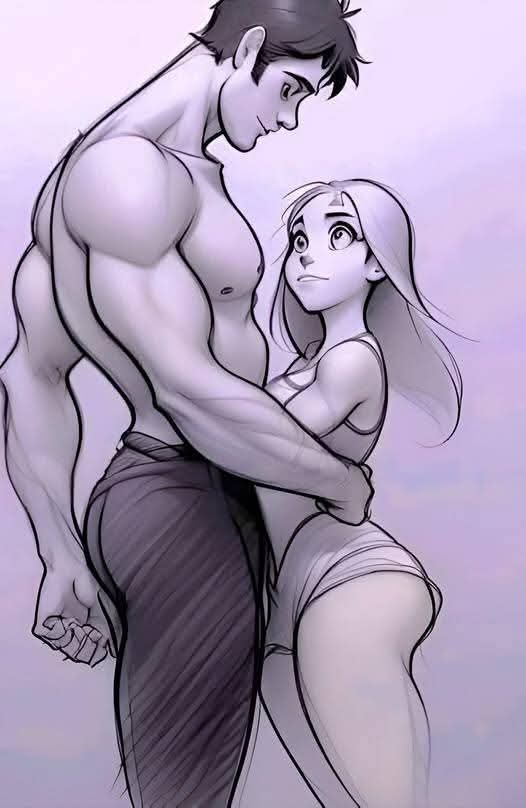
    The study found that men generally prefer shorter women. This preference may stem from social or evolutionary cues that link shorter stature with approachability, youthfulness, and nurturing qualities. These characteristics are often subconsciously associated with attractiveness and compatibility, particularly in long-term relationship contexts. The research suggests that such tendencies are widespread across cultural settings, although cultural norms can influence the degree of preference.

    Conversely, women tend to prefer taller men, associating height with traits such as protection, strength, and reliability. These attributes are valued in long-term relationships, where stability and security are often prioritized. Height may signal the ability to provide support, both emotionally and physically, reinforcing its role as a factor in partner selection. The study highlights that these preferences are nuanced, reflecting the complex ways in which physical characteristics intersect with perceived personality and capability.

    Importantly, preferences are context-dependent. Individuals may prioritize different traits for short-term versus long-term relationships. In some cases, height serves as a cue for emotional security or social stability rather than purely physical dominance. This context sensitivity underscores that attraction is not driven solely by biological or evolutionary imperatives but also by relational goals and social factors.

    Despite these trends, individual differences remain significant. Personality traits, cultural background, and life experiences all influence how height is perceived and valued in a partner. No single characteristic fully predicts attraction, and personal preferences can diverge sharply from generalized patterns observed across populations. This complexity emphasizes that attraction is a multifaceted process influenced by a network of psychological, social, and cultural factors.

    In conclusion, the study demonstrates that height matters in romantic attraction, but it is only one piece of a larger puzzle. While men often prefer shorter women and women favor taller men, these preferences interact with context, relationship goals, and individual differences. By considering both universal patterns and personal variability, the research offers a nuanced understanding of how physical traits contribute to romantic choice within a culturally and psychologically rich framework.

  • What began as a joyful celebration quietly transformed into a lesson—revealing truths about gratitude, boundaries, and the people we choose to honor. In that unexpected moment, I learned that meaning often arrives disguised as joy.

    What began as a joyful celebration quietly transformed into a lesson—revealing truths about gratitude, boundaries, and the people we choose to honor. In that unexpected moment, I learned that meaning often arrives disguised as joy.

    That evening was supposed to be special—the kind of night you plan carefully, hoping it will linger in memory long after it ends. I had saved for weeks, replayed conversations in my head, and chosen a restaurant known for its quiet elegance. Soft lighting, crisp linens, polished glasses—everything about the place promised intimacy and care. When my girlfriend arrived, smiling and radiant, I felt certain the night would unfold exactly as I’d imagined. There was something affirming about watching her walk toward me, about knowing I’d created a moment meant to honor us and how far we’d come together. For a while, it worked. We talked easily, settled into our chairs, and let the world fade into the background. I remember thinking how rare it is, in adult life, to pause long enough to celebrate something simply because it matters. That expectation—that the night would be gentle, unhurried, and meaningful—sat quietly between us like a promise. I didn’t need extravagance or spectacle; I just wanted the sense that we were welcome, that the space we’d chosen would hold the care we brought with us. At the start, it seemed like it would.

    We shared appetizers and stories, laughing about old struggles that no longer carried the same weight. We toasted to progress, to endurance, to the small victories that don’t often get celebrated. For a moment, the world narrowed to just the two of us across the table, the soft clink of glasses and the low murmur of other diners forming a comforting backdrop. Then, slowly—almost imperceptibly—the atmosphere began to shift. The waiter was abrupt from the beginning, answering questions with impatience and meeting simple requests with visible irritation. At first, I brushed it off. Everyone has off days. But halfway through the meal, we were asked to move tables due to a “mistake,” with no explanation and no apology. The interruption broke the rhythm of the evening in a way that was hard to recover from. What had felt romantic now felt awkward, as if we were being shuffled out of the way rather than hosted. Each interaction chipped away at the joy: an exaggerated sigh, a dismissive look, a tone that suggested we were inconveniencing someone simply by being there. My girlfriend noticed too. She squeezed my hand beneath the table, a quiet reassurance that the night was still ours—that we could choose to stay present with each other even if the setting failed us.

    I told myself it wasn’t worth dwelling on. No night is flawless, and I didn’t want to let someone else’s attitude dictate how we felt. Still, I couldn’t ignore the growing sense that our presence was being tolerated rather than welcomed. When the bill arrived—$180—I paid it without hesitation. At that point, I just wanted the evening to end gracefully, without further friction. We gathered our things and stood to leave, both of us ready to step back into the night air and leave the awkwardness behind. That’s when the waiter returned and placed the receipt back in front of me. His words were flat, almost rehearsed. “You forgot the service fee.” It wasn’t the amount that unsettled me. It was the implication—the assumption that respect was owed automatically, regardless of how we’d been treated. In that moment, everything about the evening crystallized. I didn’t raise my voice. I didn’t argue. I simply said the service hadn’t earned one. Then I stood up and walked out. It wasn’t a dramatic exit. It was quiet and deliberate, a decision made with clarity rather than anger.

    On the drive home, the silence felt different from the comfortable quiet we’d shared earlier. I wasn’t entirely sure how I felt. Part of me wondered if I’d overreacted, if I’d allowed a small slight to overshadow an otherwise meaningful night. Another part of me knew I hadn’t. My girlfriend didn’t criticize or second-guess me. Instead, we talked about respect—how easily it’s overlooked and how quietly it matters. We talked about how moments like that reveal who we are, not because they’re dramatic, but because they test our boundaries. It would have been easier to say nothing, to pay and leave and dismiss the discomfort as insignificant. But doing so would have meant accepting a version of the night that didn’t honor how we’d been made to feel. That realization stayed with me. Boundaries aren’t always loud declarations; sometimes they’re calm refusals to participate in something that feels wrong. By the time we pulled into the driveway, the restaurant had already begun to fade from our conversation. What lingered instead was a sense of alignment—of having acted in a way that matched our values, even in a small, unremarkable moment.

    The next afternoon, my phone rang. It was the restaurant’s manager. He explained that they had reviewed the situation and wanted to hear my side. I told him calmly what had happened, without anger or accusation. I described the interruptions, the tone, the final comment that tipped the evening from awkward to uncomfortable. To my surprise, he apologized sincerely. There was no defensiveness in his voice, no attempt to minimize my experience. He acknowledged that the waiter’s behavior had been inappropriate and thanked me for speaking up. The call didn’t feel like a victory. There was no satisfaction in being “right.” Instead, it felt like closure—an acknowledgment that what we’d felt was valid. That mattered more than any refund or explanation. It reminded me that accountability doesn’t always come with confrontation; sometimes it arrives through quiet conversations where honesty is met with respect. When the call ended, I didn’t feel the need to revisit the incident again. It had already served its purpose.

    That dinner didn’t turn out the way I planned. It wasn’t the seamless, romantic memory I’d hoped to create. But it left me with something more valuable than a perfect night. It reinforced the idea that dignity doesn’t require raised voices or dramatic scenes—it requires honesty and the willingness to walk away when respect is absent. It also reminded me that celebration isn’t only about setting or cost; it’s about how people are treated within the moment. The lesson stayed with me long after the details of the meal faded. Respect, once lost, costs far more than any bill, and choosing not to pay that cost is sometimes the most meaningful choice you can make. In the end, the night became memorable not for what it promised, but for what it revealed—and that quiet clarity turned out to be worth more than anything I’d planned.

  • A Simple Trick to Tell Real Honey by Flipping the Bottle Upside Down, Why This Viral Method Persists, What It Gets Wrong, and How to Actually Identify Pure Honey Using Science, Labels, and Smarter At-Home Tests

    A Simple Trick to Tell Real Honey by Flipping the Bottle Upside Down, Why This Viral Method Persists, What It Gets Wrong, and How to Actually Identify Pure Honey Using Science, Labels, and Smarter At-Home Tests

    When shopping for natural foods, knowing what you are truly putting into your body matters more than ever. Honey is a prime example of this principle. Often called “liquid gold,” honey has been treasured for centuries for its flavor, natural enzymes, antioxidants, and traditional medicinal properties. Across cultures, honey has appeared in remedies, rituals, and cuisine—from ancient Egyptian wound dressings to Ayurvedic tonics in India. It is celebrated for its long shelf life, high nutritional density, and the simple elegance of a product created entirely by bees. Yet the very qualities that make honey desirable also make it a frequent target for adulteration. Grocery shelves are filled with products labeled as “honey,” but the range of authenticity is vast—from pure, single-origin honey to heavily diluted blends designed to look convincing at first glance. For consumers seeking natural foods, the difference matters, not just for taste but for health, ethics, and environmental responsibility.

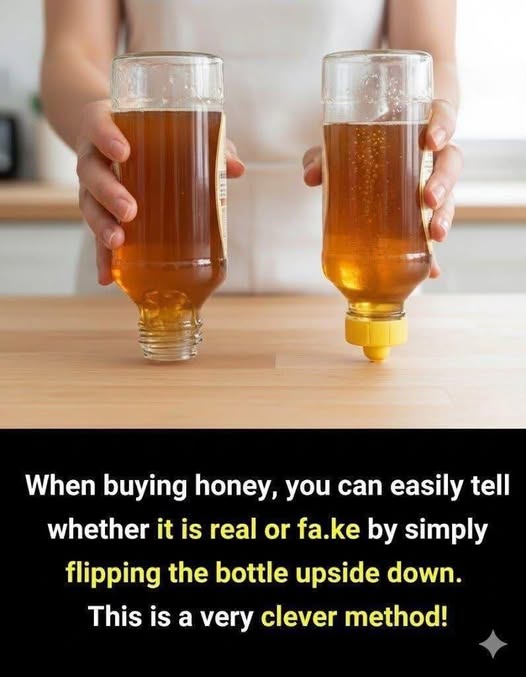
    In response, the internet has offered a variety of visual tricks promising to reveal fake honey instantly. One of the most popular is the upside-down bottle test. It is simple: flip a bottle of honey and watch how it behaves. According to proponents, if honey moves slowly and a single bubble rises gradually, it is pure. If it flows quickly like water, it is fake. On the surface, this seems logical—after all, honey is thick and sticky. Yet this oversimplification ignores the biological and chemical complexity of honey. Honey is not a standardized solution; it is a living product, shaped by flower types, climate, bee behavior, and subtle variations in harvest and processing. A single visual cue cannot account for this complexity, which is why the bottle flip test is so misleading.

    Supporters of the test rely on the idea of viscosity, or a liquid’s resistance to flow. Real honey, they say, is dense and sticky, so it should resist movement when inverted. Adulterated honey, diluted with sugar syrup or water, is assumed to be thinner, moving faster and forming numerous bubbles. While viscosity does carry information, it is far from a reliable indicator. Honey’s thickness is highly sensitive to temperature, processing, floral source, and even storage methods. Warm honey can appear almost liquid, while cold honey thickens dramatically. A pure honey stored on a warm kitchen counter can fail the flip test, while a thin, blended honey in a cool pantry may appear thick and convincing. The environmental context alone can render the bottle test meaningless.

    Processing adds another layer of complexity. Not all real honey is raw or unheated. Commercial honey is often pasteurized and filtered to extend shelf life, delay crystallization, and improve clarity. These steps remove pollen, air bubbles, and microscopic solids, making honey smoother and less viscous. Pasteurized honey can flow faster than raw honey, yet it remains completely authentic. Conversely, sophisticated adulterators have learned to replicate viscosity in fake honey, adding corn syrup, rice syrup, or other thickeners to mimic the natural thickness. Such products can “pass” the bottle flip test perfectly, producing slow-moving bubbles and the appearance of authenticity. Packaging design also influences results—narrow bottle necks slow the flow, while wide-mouth jars accelerate it. Even the amount of honey left in the container affects how air bubbles behave. Two identical honeys in different jars could give opposite results. The bottle flip, simple as it seems, cannot capture these variables.

    If consumers want a more reliable assessment of honey at home, several simple tests offer better guidance, though none are foolproof alone. The thumb test, for instance, evaluates water content. Place a small drop of honey on your thumb: pure honey will remain compact, holding its shape, while watered-down or adulterated honey spreads and runs. The water test observes how honey interacts with moisture. Drop a spoonful of honey into a glass of water: real honey sinks, settling at the bottom and dissolving slowly; fake honey disperses quickly, clouding the water. The paper test, using a tissue or paper towel, highlights excess water content—real honey stays largely on the surface, while diluted honey seeps through, leaving a wet mark. While each method is imperfect on its own, combining multiple approaches offers a clearer picture and reduces the risk of false conclusions.

    Even better than testing after purchase is buying wisely from the start. Reading ingredient labels carefully is essential. Pure honey should list only honey. Labels claiming “honey blend,” “honey-flavored,” or including glucose, syrup, or additives are warning signs. Certifications can provide additional assurance—True Source Honey, organic designations, or local quality seals indicate accountability and traceability. Whenever possible, buying local honey from trusted beekeepers gives the most transparency. Consumers can ask about floral sources, harvesting techniques, filtration, and storage. Knowing the origin and production process ensures not only authenticity but also supports environmentally sustainable beekeeping practices.

    The upside-down bottle trick survives in popular culture because it is satisfying, simple, and visually striking. But simplicity does not equate to accuracy. Honey varies naturally in texture and appearance depending on temperature, processing, and floral source. Sophisticated adulteration techniques exploit these variations, deliberately creating honey that can mimic pure viscosity. True authenticity cannot be reduced to a single visual trick; it requires curiosity, observation, and informed purchasing decisions. Honey is not just sugar; it is the labor of countless bees collecting nectar, shaped by flowers, seasons, and human stewardship. Understanding and appreciating honey’s complexity protects both consumer health and the integrity of one of nature’s most remarkable foods.

    Ultimately, honey deserves respect. The tiny chemical and biological differences in texture, color, and taste reflect the diversity of the environment and the skill of the beekeeper. Quick shortcuts, while tempting, fail to capture this richness and risk misleading consumers. By learning more about honey, using multiple at-home checks, reading labels carefully, and supporting trusted sources, buyers can enjoy honey that is truly natural, nourishing, and ethically produced. The next time someone flips a bottle of honey hoping for instant truth, they’ll understand that authenticity is far more nuanced than a slow-moving bubble. It is in the origin, the process, and the careful stewardship of bees and flowers—an intricate story far richer than any viral internet tip can reveal.

  • Breast size can be influenced by hormonal health, particularly levels of estrogen, progesterone, and prolactin, which play key roles in breast tissue development and changes over time. Genetics, body fat distribution, age, pregnancy, and menstrual cycles also affect size. While hormones matter, breast size alone is not a reliable indicator of overall hormonal balance or health.

    Breast size can be influenced by hormonal health, particularly levels of estrogen, progesterone, and prolactin, which play key roles in breast tissue development and changes over time. Genetics, body fat distribution, age, pregnancy, and menstrual cycles also affect size. While hormones matter, breast size alone is not a reliable indicator of overall hormonal balance or health.

    Few physical traits generate as much curiosity, commentary, and misunderstanding as breast size. Across cultures and throughout history, breasts have been wrapped in layers of symbolism, often linked to ideas about beauty, fertility, femininity, and even health. Because of this, assumptions have grown around what breast size is “supposed” to indicate about a person’s body. One of the most persistent myths is the belief that small breasts reflect weak hormones, poor vitality, or some form of imbalance. In reality, breast size is a highly variable physical characteristic that offers no reliable insight into hormonal health or overall well-being. The human body does not follow a single visual template, and outward appearance is a poor substitute for biological understanding. Just as height, shoe size, or facial features vary widely, breast size exists along a broad and completely normal spectrum.

    The size and shape of breasts are influenced by several interacting factors, with genetics playing the most dominant role. From birth, genetic inheritance determines the underlying structure of breast tissue, including the proportion of fatty tissue, glandular tissue, and connective support. Hormones such as estrogen and progesterone do influence breast development and changes over time, particularly during puberty, pregnancy, breastfeeding, and menopause. However, these hormones do not operate in isolation, nor do they produce identical results in every body. Two people with nearly identical hormone levels can have dramatically different breast sizes because their genetic blueprints respond differently to the same hormonal signals. Additionally, body weight plays a role, since breasts contain fat tissue that can increase or decrease with changes in overall body composition. None of these elements, on their own or combined, function as a marker of hormonal strength, balance, or health.

    Hormonal health itself is far more complex than appearance-based assumptions suggest. Hormones fluctuate naturally throughout the day and across the lifespan, responding to sleep quality, stress levels, physical activity, nutrition, illness, and emotional state. These fluctuations are largely invisible from the outside. A person can have stable, well-regulated hormones and small breasts, just as someone else can have larger breasts while experiencing hormonal disruption. The body does not advertise its internal chemistry through surface-level traits. Medical professionals assess hormonal health through symptoms, patterns, and sometimes blood tests—not visual inspection. Energy levels, menstrual regularity, mood stability, sleep quality, and metabolic function offer far more meaningful information about hormonal balance than any physical measurement ever could.

    Despite this, cultural pressure continues to place exaggerated importance on breast size, often framing it as a standard of femininity or desirability. These standards shift across time and societies, underscoring how arbitrary they truly are. There is no “ideal” size associated with health, youth, or womanhood. Studies that appear to link breast size to certain conditions—such as back pain or metabolic disorders—do not suggest that breast tissue itself causes these issues. Instead, such patterns usually reflect factors like weight distribution, posture, or overall body mass. Breast size becomes correlated, not causal. Misinterpreting these associations reinforces fear and misinformation rather than promoting understanding. True physical health is holistic, shaped by how the body functions as a system rather than how any single part appears.

    Maintaining hormonal balance and overall wellness depends on consistent, supportive habits rather than attempts to alter appearance. Nutrient-rich food provides the building blocks for hormone production and regulation. Regular movement supports circulation, metabolism, and stress reduction. Adequate sleep allows the body to repair and recalibrate, while effective stress management protects hormonal systems from chronic disruption. Prolonged stress, in particular, can significantly affect hormones such as cortisol, insulin, and reproductive hormones—far more powerfully than genetics or body shape ever could. Supplements and herbal remedies may play a role for some people, but they should be approached thoughtfully and ideally under professional guidance, as hormones operate within delicate feedback systems that require balance rather than extremes.

    Perhaps the most meaningful shift comes not from lifestyle changes alone, but from releasing appearance-based judgments altogether. Breast size diversity is not a flaw or a signal of dysfunction; it is a natural feature of human biology. Variation reflects adaptability, not imbalance. No number on a measuring tape can define vitality, femininity, or worth. Health is not synonymous with symmetry, curves, or proportions—it is reflected in how well your body supports daily life and how attentively you care for it. Confidence grows when comparison fades, replaced by respect for the body’s individuality. When people stop assigning meaning to size and start honoring function, resilience, and well-being, they move closer to a healthier relationship with both their bodies and themselves.

  • Gold star license plates carry a quiet, powerful meaning—they honor families who have lost a loved one in military service, serving as a visible reminder of sacrifice, courage, and the enduring gratitude of a nation that remembers their loss.

    Gold star license plates carry a quiet, powerful meaning—they honor families who have lost a loved one in military service, serving as a visible reminder of sacrifice, courage, and the enduring gratitude of a nation that remembers their loss.

    Most license plates exist simply to identify a vehicle, blending into traffic without a second thought. They are functional, designed to provide registration information, state identification, and a bit of color or design flair. Yet, amid the millions of ordinary plates on the road, some carry profound meaning. One of the most significant is the gold star license plate. Unlike decorative or commemorative plates that celebrate hobbies, sports teams, or local landmarks, the gold star is a solemn emblem. It signals not vanity, but sacrifice. A gold star license plate identifies the driver as an immediate family member of a U.S. service member who died while serving in the military. The plate silently communicates grief, honor, and remembrance, turning a common roadway object into a moving acknowledgment of a personal, enduring loss.

    The origins of the gold star tradition date back more than a century. During World War I, families struggled to find ways to publicly recognize loved ones serving overseas. In 1917, Army Captain Robert L. Queisser created what became known as the Blue Star Service Banner to honor his sons actively serving in combat. The banners featured a simple blue star for each family member in service and were displayed proudly in homes across the country. When a service member died in the line of duty, the blue star was replaced with a gold one, transforming the banner into a symbol of profound loss and honor. In this way, the gold star became more than a mark; it became a visual narrative of sacrifice, a quiet acknowledgment to the community that a family had endured the ultimate cost for their country.

    The significance of the gold star was further formalized that same year. President Woodrow Wilson authorized mothers who had lost sons in combat to wear black armbands adorned with gold stars, recognizing their personal grief and sacrifice on behalf of the nation. This public acknowledgment was revolutionary at the time, giving grieving families a visible way to share their loss while honoring their loved ones’ service. Over the years, this symbol of grief grew into a broader community of support. In 1928, American Gold Star Mothers, Inc. was founded, uniting women who had experienced similar losses. The organization continues to offer advocacy, emotional support, and a sense of solidarity, reminding families that they are not alone in their grief. The gold star became a symbol that intertwined remembrance with resilience, a quiet reminder of the enduring human cost of military service.

    Congress later codified this commemoration in 1936, designating the last Sunday of September as Gold Star Mother’s Day, later expanded to honor all Gold Star families. The day is marked by ceremonies, moments of reflection, and the acknowledgment of families whose loved ones have given everything in service to the country. Beyond formal observances, the concept evolved into something tangible in everyday life. Many states now issue gold star license plates to eligible family members, allowing them to carry a symbol of remembrance wherever they go. These plates are subtle yet powerful—a visual testament to loss and love, reminding other drivers of the sacrifices that remain largely unseen in ordinary society.

    Each gold star on a license plate represents a life given in service and a family forever changed. It carries the weight of absence, the stories untold, and the quiet strength of those left behind. For those who display the plate, it is more than recognition; it is a daily connection to the person who served and a reminder that their contribution is never forgotten. For strangers, it is a symbol that invites respect, reflection, and empathy. The presence of the plate encourages recognition of the unseen burdens carried by families of fallen service members, often sparking conversations, gratitude, or simply a pause to acknowledge the cost of freedom.

    In a society that often celebrates visible achievement, the gold star license plate stands apart as a reminder that some of the greatest sacrifices are silent. It transforms a routine object into a lasting tribute, honoring lives given and families changed forever. Beyond its symbolism, it fosters awareness, respect, and collective memory, quietly bridging the gap between personal grief and national gratitude. While most license plates are overlooked, a gold star plate speaks volumes. It tells a story of courage, loss, and enduring love, carrying the memory of a fallen service member into everyday life and reminding all who see it that the cost of freedom is both personal and profound, deserving of recognition in every form, however quiet.

  • Your favorite colors often reflect your emotions, personality, and inner world in subtle but powerful ways. The hues you’re drawn to can reveal how you feel, what you value, and how you express yourself emotionally. Whether you love calm blues, energetic reds, or gentle pastels, each shade mirrors a part of your emotional landscape and personal identity.

    Your favorite colors often reflect your emotions, personality, and inner world in subtle but powerful ways. The hues you’re drawn to can reveal how you feel, what you value, and how you express yourself emotionally. Whether you love calm blues, energetic reds, or gentle pastels, each shade mirrors a part of your emotional landscape and personal identity.

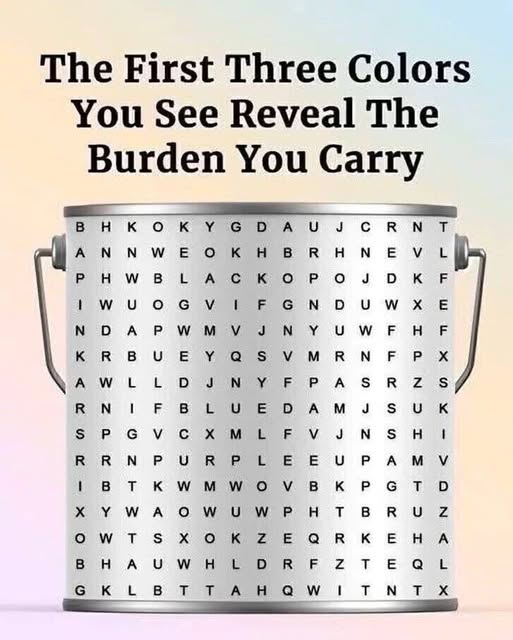
    Color communicates in a way that language rarely can, moving past rational thought and speaking directly to the emotional and subconscious layers of the mind. Long before words are processed, color is felt. It triggers sensations, moods, and memories that often surface without explanation, forming immediate impressions that logic never gets the chance to filter. This is why color can feel so personal and intimate, even when we are not actively thinking about it. The shades we gravitate toward are rarely random; they tend to align with what is happening beneath the surface of our awareness. Whether soothing, energizing, or unsettling, color becomes a quiet emotional signal, reflecting inner states that may be difficult to name or express. In this sense, color functions as a kind of emotional shorthand, capturing complex feelings in a single visual experience.

    very color carries a wide emotional range rather than a single fixed meaning. Red, for instance, is often associated with intensity in all its forms. It can symbolize passion, vitality, confidence, and physical energy, expressing movement and desire. At the same time, red can also suggest agitation, anger, or inner tension, especially when someone is feeling overwhelmed or restless. Blue occupies a similarly complex emotional space. It is commonly linked to calmness, clarity, and trust, evoking a sense of openness and mental ease. Yet blue can also reveal emotional withdrawal, melancholy, or a longing for peace that has not yet been achieved. Purple often appears during moments of inner change, connected to transformation, introspection, and spiritual growth. It can signal healing, emotional integration, or the search for meaning, particularly during periods of transition when identity and direction are being reshaped.

    he colors people favor often act as subtle emotional mirrors. These preferences, whether consciously chosen or instinctively felt, can reflect emotional truths that remain unspoken. Someone drawn repeatedly to grounding, muted tones may be seeking stability or safety, while another who prefers bright, vivid colors may be craving stimulation, expression, or renewal. These choices are rarely deliberate psychological statements, yet they quietly reveal inner needs, fears, and desires. Color becomes a way the psyche communicates with itself, offering clues about emotional states that have not yet reached conscious awareness. In this way, color preferences can reveal internal conflicts, emotional longings, or unresolved experiences, functioning as gentle indicators of what is happening beneath outward behavior.

    This powerful relationship between color and emotion is rooted partly in biology. On a neurological level, color perception is directly linked to areas of the brain responsible for mood regulation, memory, and emotional response. Certain colors can stimulate the nervous system, increasing alertness or excitement, while others encourage relaxation and calm. These reactions often occur automatically, without conscious thought, because they are tied to how the brain processes sensory information. Over time, repeated emotional experiences associated with certain colors become embedded in memory, strengthening their emotional impact. As a result, color does not simply decorate the world; it actively shapes how the world is experienced, influencing emotional reactions before rational interpretation has a chance to intervene.

    Culture adds another layer of meaning, shaping how colors are interpreted and emotionally understood. Across societies, colors carry symbolic associations that are passed down through tradition, art, and shared experience. Red may symbolize love, passion, or celebration in one culture, while representing danger, warning, or aggression in another. White can convey purity, innocence, and new beginnings in some traditions, yet symbolize mourning, loss, or spiritual transition in others. These cultural meanings do not replace biological responses but interact with them, creating layered emotional reactions. What a color evokes is therefore shaped not only by individual psychology but also by collective history, belief systems, and social context.

    When biology and culture intersect, color becomes more than a visual sensation; it becomes a psychological language. This language operates quietly, influencing emotions, decisions, and self-perception without requiring conscious awareness. Color can comfort, provoke, inspire, or unsettle, often guiding behavior and emotional responses in subtle ways. It reveals hidden aspects of identity, emotional needs, and inner transformation, offering insight into the parts of ourselves that words struggle to reach. By paying attention to the colors we are drawn to, we can gain a deeper understanding of our emotional landscape. In this silent dialogue between perception and feeling, color continues to shape experience, communicating truths that exist beyond spoken language.