Breaking News

  • EVERY DAY I AM TAUNTED BY STRANGERS’: WOMAN WITH WORLD’S LARGEST NATURAL BREASTS ON BULLYING SHE HAS SUFFERED

    EVERY DAY I AM TAUNTED BY STRANGERS’: WOMAN WITH WORLD’S LARGEST NATURAL BREASTS ON BULLYING SHE HAS SUFFERED

    Annie Hawkins-Turner, better known by her stage name Norma Stitz, holds the Guinness World Record for having the largest natural breasts in the world — a staggering 102ZZZ. Born in 1956 in Atlanta, Georgia, Annie’s unique physical condition has brought her both fame and pain.

    From a young age, Annie’s life was shaped by gigantomastia, a rare medical disorder that causes excessive breast growth. By the age of nine, she was already wearing a 36D bra, a challenge that set her apart from her peers and exposed her to ridicule and misunderstanding.

    Her early years were marked by bullying and isolation. Strangers often taunted her in public, making cruel comments and staring openly. “Every day I am taunted by strangers,” Annie has said, describing the emotional toll of living with a body that constantly draws attention.

    Despite the challenges, Annie refused to hide. With encouragement from her late husband, Allen Turner, she decided to embrace her body and her uniqueness. Together, they launched a website that celebrated body positivity and helped Annie take control of her own narrative.

    Her online platform gained massive attention, eventually transforming her into a successful fetish model. While she acknowledges that the attention can be overwhelming, Annie says it also gave her financial independence and self-confidence.

    Behind the fame, however, Annie’s journey was not without personal struggles. Despite having two children, she was unable to breastfeed because of her condition — something she describes as one of her life’s deepest regrets.

    Today, Annie’s net worth is estimated at £5.5 million, but she emphasizes that no amount of money can erase the years of mockery and misunderstanding she endured.

    Still, Annie remains proud of who she is. “I’m not ashamed,” she says. “This is how God made me — and I’ve learned to love myself completely.”

  • BRUCE WILLS TRAGIC NEWS

    BRUCE WILLS TRAGIC NEWS

    Actor Bruce Willis, 70, who is living with frontotemporal dementia, has moved into a care facility close to his family. His wife, Emma Heming Willis, said during an ABC special that the move was “one of the hardest decisions” she has ever made, but one Bruce himself would have wanted for their daughters, Mabel, 13, and Evelyn, 11.
    He’s surrounded by people who love him,” Emma explained. “This was about giving him safety, comfort, and dignity — and giving the girls time to make happy memories with their dad.” The decision, she shared, was rooted in protecting both Bruce’s well-being and their family’s emotional health.

    Bruce now receives professional, round-the-clock care, while his family stays closely involved. They visit often, sharing meals, watching old movies, and spending quiet time together. These small routines have become meaningful ways to stay connected and present.

    Although his speech has declined, Emma noted that his physical strength remains. “It’s just his brain that’s failing him,” she said. “The language may be disappearing, but the love isn’t.” The family now connects through music, touch, and simple gestures, finding new ways to communicate.

    For Emma, the move represents choosing peace over pain. “This was about giving Bruce what he deserves — calm and dignity,” she said. “There’s still joy, still humor, still connection. That’s what we hold onto.” Those close to the family describe his new home as calm and compassionate, where love continues even as words fade.

  • SADNESS FLOODS GMA OVERNIGHT – Michɑel Strɑhɑn, Robin Roberts & George Stephɑnopoulos Stunned by Heɑrtbreɑking News ɑbout their Colleɑgue!

    SADNESS FLOODS GMA OVERNIGHT – Michɑel Strɑhɑn, Robin Roberts & George Stephɑnopoulos Stunned by Heɑrtbreɑking News ɑbout their Colleɑgue!

    The studio fell silent before anyone spoke. There was no breaking news or scandal—just the weight of a goodbye that felt deeply personal. After more than 30 years, Michele Mayer was stepping away from ABC, leaving behind a void few viewers ever saw but everyone inside the studio felt.

    Mayer was never on camera, yet she shaped America’s mornings and nights. She was the calm voice in anchors’ ears, the steady presence behind the scenes, and the person who kept broadcasts grounded when pressure was highest.

    To those on air, she was indispensable. Diane Sawyer recalled the printed “Sit up straight” reminders that reflected Mayer’s attention to detail. Charles Gibson spoke of her fearless honesty, delivered with care but never hesitation.

    David Muir struggled most with the reality of her departure. He described Mayer as his “partner in crime,” someone who shared the weight of responsibility and the quiet moments between broadcasts that viewers never witnessed.

    Her exit felt like more than a career change. It marked the end of an era for a team that had grown up together in the studio, navigating historic stories, tense first nights, and moments of laughter when the cameras stopped rolling.

    What surprised many was not only that Mayer was leaving, but that she was returning home to Kentucky. The move underscored how much of their professional lives—and personal histories—had been intertwined with her presence.

    As tributes poured in, colleagues reflected on how deeply she influenced their confidence and success. She shaped not just broadcasts, but the people who delivered them night after night.

    The show will go on, as it always does. But without Michele Mayer’s quiet leadership and steady hand, it will never feel quite the same to those who knew how much she truly held together.

  • ‘Beauty 2 the Streetz’ Founder Shirley Raines’ Daughter Drove to Her Home Before Her Mother Was Found ‘Unresponsive’

    ‘Beauty 2 the Streetz’ Founder Shirley Raines’ Daughter Drove to Her Home Before Her Mother Was Found ‘Unresponsive’

    Shirley Raines was found unresponsive in her Nevada home after her daughter, Danielle, grew concerned when repeated calls went unanswered. Fearing for her mother’s safety, Danielle rushed to the house and attempted to get her attention before calling authorities for a wellness check.

    Inside, officers discovered Shirley lying beside her bed, leaving her family and community in shock. Her twin sister confirmed that Shirley had been in good health, with no immediate explanation for her sudden passing.

    As her family grieved, Danielle shared a heartfelt message describing Shirley as her inspiration and the center of her world. Tributes quickly poured in from friends, supporters, and communities touched by Shirley’s work and generosity.

    Beyond the tragedy, Shirley leaves a lasting legacy of compassion. As the founder of Beauty 2 The Streetz, she dedicated her life to supporting underserved communities in California and Nevada, providing food, care, and dignity to those in need.

    Her warm personality and uplifting messages reached millions through social media, inspiring countless people with her belief that kindness and self-worth can transform lives. Her influence extended far beyond her immediate community.

    Shirley’s work earned national recognition. Honored as CNN’s Hero of the Year and later acknowledged by the NAACP, she used beauty and empathy as tools for social change, showing that even small acts of kindness can create profound impact.

    Though her passing has left a deep void, the organization she built continues her mission. Beauty 2 The Streetz remains active, reflecting her dedication to helping others and spreading hope.

    Shirley Raines’ life reminds people that compassion, empathy, and service can leave a lasting mark. Even in loss, her work continues to inspire, proving that broken hearts can bring hope and healing to countless others.

  • Woman mistook deadly illness for perimenopause

    Woman mistook deadly illness for perimenopause

    A popular online quiz titled “Pick Your Wing to Reveal Who Your Guardian Angel Is” has been circulating, sparking curiosity among readers eager to uncover symbolic meanings behind their choices. The lighthearted trend invites participants to select an image of angel wings, each representing different qualities such as protection, guidance, healing, or strength.

    The idea blends spirituality and self-reflection, encouraging people to think about their inner traits and life paths. While not based on formal theology, it offers comfort to those seeking reassurance or a sense of connection to something greater. Many find it uplifting, especially during uncertain times.

    Dr. Monica Pop, who frequently writes about lifestyle and well-being, notes that such activities remind people to pause, breathe, and reflect. They can serve as gentle tools for mindfulness, even if they’re just for fun. Pop also cautions against taking viral personality quizzes too seriously, emphasizing the importance of self-awareness over superstition.

    In related health news, Pop recently shared a warning from medical professionals about consuming excessive amounts of rice. Doctors caution that too much rice can raise arsenic exposure and affect blood sugar levels, especially in people with diabetes or heart concerns. Moderation and variety remain key to maintaining a healthy diet.

    The dual focus on spiritual wellness and physical health reflects Pop’s broader message: balance is essential. Whether exploring faith, personality, or nutrition, mindful choices support overall well-being.

    Readers have praised her approachable writing style and ability to mix positivity with practical advice. Her stories often connect deeply with audiences searching for encouragement in daily life.

    From angel wings to everyday diet tips, her work continues to remind readers that health—both emotional and physical—comes from nurturing body, mind, and spirit alike.

    Inspiration, after all, often starts with small, thoughtful moments.

  • Melania Trump Issues Rare Public Statement After Recent Shooting Incident

    Melania Trump Issues Rare Public Statement After Recent Shooting Incident

    Melania Trump made a rare public political statement on January 27, calling for unity and peaceful expression amid unrest in Minnesota. Speaking on Fox & Friends while promoting a film project, she paused to address recent violence, emphasizing that she opposes violence in all forms.

    Her remarks were notable because Melania Trump has traditionally avoided public political commentary. The brief statement stood out during an emotionally charged moment, drawing attention precisely because of her typically reserved role in political debates.

    The unrest followed two recent shootings involving federal immigration agents in Minnesota. One incident resulted in the death of Alex Pretti, which authorities initially described as an act of self-defense, sparking protests and widespread public concern.

    As demonstrations spread across the state, Melania urged Americans to express their views peacefully. She stressed that while disagreement and protest are valid, violence only deepens divisions and prolongs suffering.

    She also referenced coordination between federal, state, and local leaders. According to Melania, President Trump spoke with Minnesota’s governor and the mayor of Minneapolis to help reduce tensions and restore calm.

    Around the same time, the president indicated that some federal immigration personnel might be withdrawn from the area, suggesting a potential shift in response as officials reassess the situation. Investigations into the shootings remain ongoing.

    Pretti’s family has disputed the official account, describing him as compassionate and motivated by concern over immigration policies. His sister said he wanted to help others through peaceful action, adding emotional weight to the case.

    As Minnesota continues to grapple with grief, protest, and unanswered questions, Melania Trump’s appeal reflects a broader call for empathy, accountability, and calm dialogue during a moment of national strain.

  • A Historic 1930s Residence Overflowing With Timeless Character, Cherished Traditions, and Extraordinary Potential for Creative Restoration, Inviting Visionary Owners to Reimagine Its Classic Architecture, Revitalize Its Enduring Craftsmanship, and Transform This Uniquely Storied Property Into a Stunning, Personalized Masterpiece That Honors the Past While Embracing Inspired Future Possibilities Ahead Together

    A Historic 1930s Residence Overflowing With Timeless Character, Cherished Traditions, and Extraordinary Potential for Creative Restoration, Inviting Visionary Owners to Reimagine Its Classic Architecture, Revitalize Its Enduring Craftsmanship, and Transform This Uniquely Storied Property Into a Stunning, Personalized Masterpiece That Honors the Past While Embracing Inspired Future Possibilities Ahead Together

    Nestled beneath mature trees and wrapped in timeless Southern charm, this 1930s brick home offers a rare chance to revive a true architectural treasure. Priced at just $39,000, it features three bedrooms, three bathrooms, and nearly 3,000 square feet of space—an extraordinary opportunity for anyone who values craftsmanship, history, and the satisfaction of restoration.

    More than a structure, the home reflects the spirit of early 20th-century design, when builders prioritized beauty, durability, and intention. Every brick and arch hints at the stories lived within its walls, waiting for a new owner to shape the next chapter.

    From the moment you arrive, the home’s character is unmistakable. The sweeping arched porch, supported by sturdy brick columns, sets a tone of quality rarely found today. Its distinctive roofline and remarkably preserved brickwork add to the home’s charm, while curved vintage windows promise soft natural light once restored.

    Inside, the generous layout enhances its historic appeal. High ceilings, wide hallways, and oversized windows create an airy, inviting atmosphere. With nearly 2,900 square feet, the home offers ample room for transformation, whether through refinished hardwood floors, revived trim, or restored archways that reconnect the interior with its former elegance.

    The three bedrooms and three full bathrooms provide flexibility. Whether envisioned as a family home, rental property, or restored showpiece, each space offers potential for modern upgrades that still honor the home’s original style. Large living and dining areas allow for either open-concept reimagining or preservation of traditional layout.

    For investors, the value is clear—historic homes with strong foundations often yield impressive returns once restored. For preservation enthusiasts, the appeal lies in breathing life back into a home built with pride and purpose.

    Ultimately, this property offers more than affordability; it offers possibility. With its solid bones, vintage character, and exceptional price, it stands ready for someone with vision.

    For the right person, this home will become nothing short of extraordinary.

  • A pissed-off wife complained her husband spent all his free time at the pub, but when he brought her along for a drink, one shocking sip proved it wasn’t pleasure at all—turning her frustration into laughter and flipping the whole situation on its head.

    A pissed-off wife complained her husband spent all his free time at the pub, but when he brought her along for a drink, one shocking sip proved it wasn’t pleasure at all—turning her frustration into laughter and flipping the whole situation on its head.

    No one ever plans for resentment to become a nightly ritual, but in this marriage, it crept in quietly—one pub visit at a time. For years, the wife watched her husband fall into the same pattern: come home from work, nod a quick greeting, grab his coat, and head right back out the door. The pub had become his second home, and every evening felt like a reminder that she wasn’t his first choice. She imagined him laughing loudly with friends, clinking glasses, escaping responsibility while she stayed behind with the silence and the chores. Each time he left, frustration hardened a little more inside her, turning irritation into something heavier, sharper, and personal. Eventually her patience dissolved entirely, and one night the words she’d swallowed for too long finally burst out. She accused him of wasting his life in that pub, of choosing his pint over his partner, of enjoying himself while she was left alone. What she expected was an argument. What she didn’t expect was his calm, almost resigned suggestion: “Why don’t you come with me, then?” That single sentence shifted the night. Suddenly, instead of imagining what happened in those walls, she was going to see it for herself.

    As they drove together, she braced herself for what she assumed was a carnival of excitement—a place filled with constant laughter, glowing lights, friendly back-slaps, and the carefree indulgence she believed he chose over her company. To her surprise, the pub wasn’t glamorous at all. The moment they stepped inside, reality shattered her assumptions. The air smelled faintly of old beer and fried food that had lost its warmth hours ago. The floors were sticky, the lighting dim, and the décor looked like it had been hanging on the walls since before she was born. A handful of regulars sat slumped over their drinks, not celebrating but existing—quietly, numbly, mechanically. No roaring laughter. No cheering crowds. No vibrant social scene. Instead, the atmosphere felt weighed down by routine and fatigue, like a room where everyone was simply waiting out the night. Yet she kept her resolve, determined to sit beside him and witness the supposedly thrilling world he chose over her. Her husband greeted the bartender with a simple nod—no excitement, no spark—and she realized this wasn’t a party. It was habit. Maybe even escape.

    When they settled onto two worn barstools, he turned and asked her gently, “What’ll you have?” She hesitated, unfamiliar with the menu, unfamiliar with the space, unfamiliar with him in this context. But pride guided her answer. “The same as you,” she said, believing that if she drank what he drank, she’d finally understand what made this place so irresistible. Without ceremony, the bartender poured two amber drinks into glasses. Her husband took his immediately, lifted it to his lips, and swallowed it in one swift motion, as though it were something to endure rather than savor. There was no smile, no satisfied sigh, no glint of joy—just a silent, grim routine. She watched with a mix of curiosity and confusion. Then, determined not to flinch, she lifted her own glass and took a sip. The reaction was instantaneous. The taste exploded across her tongue—bitter, stinging, sharp—and she gagged, instinctively spitting it out. Her face twisted in shock and disgust. “Yuck! That’s TERRIBLE!” she exclaimed loudly, unable to contain her horror. She stared at the glass as though it were poison. She couldn’t fathom how anyone could willingly drink something so foul, let alone every night. And that was the moment her husband quietly delivered the line that shifted everything: “Well, there you go. And you think I’m out enjoying myself every night.”

    His words didn’t come with anger or sarcasm—just a tired, pointed truth. For the first time, she saw his nightly pub visits not as a celebration, but as a coping mechanism. The drink wasn’t a treat. It wasn’t pleasure. It was escape—raw, unrefined, and deeply unglamorous. The pub was not a playground of joy but a dim corner where men tried to dull the sharp edges of their worries. She looked around again, this time with clearer eyes. The patrons weren’t laughing—they were staring into their glasses, hands heavy, shoulders slumped, each man wrapped in private thoughts he’d never say aloud. There was no excitement, no thrill—just a quiet, numbing routine that offered a break from pressures he didn’t know how to express. What she had imagined as betrayal suddenly revealed itself as exhaustion. He wasn’t running from her. He was running from everything he didn’t know how to confront. And instead of talking, he chose silence. Instead of sharing his fears, he drowned them—one bitter gulp at a time.

    As the initial shock faded, something unexpected softened between them. She let out a small, reluctant laugh—not because the moment was funny, but because her assumptions had been so wildly wrong. Her husband chuckled too, relieved that she finally understood what words had failed to explain. In that shared moment—sitting side by side in a dingy pub, staring at a drink neither of them truly enjoyed—they found a fragile thread of understanding. The resentment she’d been carrying began to loosen, not because their problems were solved, but because she finally saw the truth beneath the surface. He wasn’t choosing joy over her. He wasn’t choosing fun. He was choosing familiarity. Predictability. A place where no one asked questions and nothing was expected of him. The pub wasn’t paradise—it was pause. And in a strange way, bringing her there was his first real attempt to let her into the inner world he’d kept hidden for so long.

    When they left the pub that night, the walk to the car felt different—quieter, calmer, more honest. They didn’t argue. They didn’t make promises. They didn’t pretend everything was suddenly fixed. But something had shifted. Instead of seeing each other as opponents, they saw one another as two tired people trying to navigate life with the only tools they had. She understood that assumptions can be dangerous storytellers, and he understood that silence creates distance no drink can fill. Their problems didn’t disappear, but perspective softened the edges. And perhaps the biggest lesson of the night was this: what we envy in others is often not joy, but survival. What looks like fun from afar may simply be habit or escape. And sometimes, the things we imagine as indulgence are nothing more than bitter sips swallowed in solitude. In the end, the joke wasn’t just a punchline—it was a reminder that understanding begins where assumptions end, and real connection starts when two people finally see each other clearly, without the haze of resentment or fantasy.

  • Unlock the secret to perfectly crispy, golden-brown bacon every time with expert techniques, temperature tips, and cooking methods that elevate this beloved breakfast staple. Transform ordinary bacon into a mouthwatering, crunchy, flavorful delight that melts in your mouth while retaining rich, smoky, irresistible taste—bacon perfection you’ve never experienced before.

    Unlock the secret to perfectly crispy, golden-brown bacon every time with expert techniques, temperature tips, and cooking methods that elevate this beloved breakfast staple. Transform ordinary bacon into a mouthwatering, crunchy, flavorful delight that melts in your mouth while retaining rich, smoky, irresistible taste—bacon perfection you’ve never experienced before.

    Bacon lovers, rejoice. Whether you’re a weekend brunch aficionado or simply crave the ultimate breakfast indulgence, this bacon hack will transform the way you cook and enjoy bacon forever. Say goodbye to greasy stovetops, limp strips, and unevenly cooked bacon, and say hello to perfectly golden, crunchy, melt-in-your-mouth perfection. This clever kitchen trick is designed to deliver consistent results every time, without the usual hassle of flipping, splattering, or endless scrubbing.

    Bacon is more than just a breakfast side; it’s a culinary hero. From topping burgers to adding crunch to salads, enhancing soups, or giving casseroles that irresistible smoky flavor, perfectly cooked bacon elevates countless dishes. Yet, achieving that coveted balance of crispiness and tenderness has eluded many home cooks—until now. Let’s explore foolproof techniques that will take your bacon game to professional levels, all with minimal effort and maximum flavor.

    Why This Method Works

    This bacon hack works because it combines the principles of even heat distribution, slow rendering of fat, and hands-off cooking. Traditional stovetop methods often leave you with uneven results: edges burn while centers remain chewy, and grease splatters make cleanup a nightmare. The following methods solve all these issues by ensuring:

    Crispy, uniform bacon: Each strip cooks evenly, with no soggy middles or burnt edges.

    Mess-free prep: Minimal splatter, less grease to clean, and safer handling of hot fat.

    Effortless cooking: Set it up, let it cook, and focus on other breakfast tasks.

    Versatility: Use your perfectly cooked bacon in sandwiches, salads, soups, breakfast bowls, or enjoy it straight from the plate.

    These methods are backed by culinary science: slow, indirect heat renders fat gradually, allowing the meat to crisp without overcooking. The result is bacon that’s crisp, flavorful, and perfectly textured, every single time.

    🛒 What You’ll Need (Serves 4–6)

    For either method, the ingredients are simple:

    12–16 slices of bacon (thick-cut or regular, based on preference)

    Parchment paper or aluminum foil (for the oven method)

    Baking sheet (for oven) or skillet (if using stovetop or microwave sheet)

    Optional: spices or seasonings (black pepper, brown sugar, smoked paprika, maple drizzle)

    While the ingredient list is short, the results are anything but ordinary. Thick-cut bacon gives a hearty bite and extra flavor, while regular-cut cooks faster for quick weekday breakfasts.
    Method 1: Oven-Baked Bacon – The Gold Standard

    Baking bacon in the oven is the professional secret chefs use to achieve perfect crispiness without constant attention. It’s foolproof, scalable, and produces minimal mess.
    Step-by-Step Instructions

    Preheat the oven: Set your oven to 400°F (200°C). This temperature allows the bacon to render fat slowly while crisping evenly.

    Prepare the baking sheet: Line a baking sheet with parchment paper or aluminum foil. For even crisping, you can place a wire rack on top to allow fat to drip below, although placing bacon directly on parchment works well too.

    Arrange the bacon: Lay the strips in a single layer, ensuring they don’t overlap. Overlapping strips will cook unevenly.

    Optional seasoning: Lightly sprinkle black pepper, smoked paprika, or a touch of brown sugar for a caramelized finish.

    Bake: Place the tray in the oven for 15–20 minutes. Keep an eye on the bacon after 12 minutes if using thin-cut slices; thick-cut may require 18–20 minutes. The bacon should be golden-brown and firm but not burnt.

    Drain: Remove the bacon and place it on a plate lined with paper towels to soak up excess grease.

    Serve: Enjoy immediately, or let cool for later use in sandwiches, salads, or soups.

    Why the Oven Method Wins

    Even heat cooks each slice uniformly.

    Hands-off approach means no flipping required.

    Large batches are easy to cook, making it perfect for brunches or meal prep.

    Cleanup is minimal thanks to parchment or foil.

    Method 2: Skillet or Microwave Bacon – Quick and Efficient

    For those short on time, the skillet or microwave method is fast, easy, and produces excellent results with a few simple tricks.
    Skillet Bacon

    Heat a large nonstick skillet over medium heat.

    Lay the bacon strips flat in the pan. Avoid crowding; work in batches if necessary.

    Cook slowly for 8–12 minutes, flipping occasionally to ensure even crisping.

    Drain on paper towels and serve.

    Tips for skillet success: Use medium heat to prevent burning. Slow cooking allows fat to render properly, giving a crisp exterior without overcooked centers.
    Microwave Bacon

    Line a microwave-safe plate with paper towels.

    Place bacon strips in a single layer, topping with another paper towel.

    Microwave on high for 4–6 minutes, adjusting based on thickness.

    Remove and let cool briefly.

    Microwave bacon is convenient for single servings and quick breakfasts, though it may lack the uniform crispiness of oven-baked bacon for large batches.
    Pro Tips for Next-Level Bacon

    Start with cold bacon: Room-temperature slices tend to curl and cook unevenly. Cold bacon in the oven or skillet renders more evenly.

    Try flavored variations: Brown sugar, maple syrup, cracked black pepper, or chili flakes add a gourmet twist.

    Save the bacon fat: Rendered bacon grease is liquid gold for cooking eggs, roasted vegetables, or even frying potatoes. Store in a jar in the fridge for later use.

    Batch cook for convenience: Oven baking allows you to prepare large quantities at once. Freeze leftover bacon for later use in sandwiches, salads, or breakfast burritos.

    Don’t overcrowd the pan: Overlapping slices cause uneven cooking. Spread the strips out for maximum crispiness.

    Culinary Science Behind Perfect Bacon

    Understanding the chemistry of bacon helps explain why these methods work. Bacon is composed of protein and fat, and its crispiness comes from rendering the fat slowly while cooking the meat.

    Fat rendering: Slow cooking allows the fat to melt away without burning, leaving crisp, flavorful bacon.

    Maillard reaction: High heat caramelizes the proteins and sugars in bacon, producing its signature golden-brown color and savory flavor.

    Texture balance: Even heat prevents some areas from burning while others remain chewy, creating the ideal crisp-chewy ratio.

    By respecting these principles, you can achieve professional-quality bacon without complicated techniques or specialized equipment.
    Creative Ways to Use Perfect Bacon

    Once you master this technique, the possibilities are endless:

    Breakfast: Classic bacon and eggs, breakfast sandwiches, or avocado toast.

    Lunch: BLTs, bacon-wrapped sandwiches, or paninis.

    Dinner: Add crunch to salads, sprinkle over baked potatoes, or fold into creamy pasta dishes.

    Snacks and appetizers: Bacon-wrapped dates, bacon popcorn, or bacon-topped deviled eggs.

    Perfectly cooked bacon adds flavor, texture, and umami richness to countless dishes, transforming everyday meals into gourmet experiences.
    The Final Takeaway

    The secret to crispy, delicious bacon isn’t in expensive gadgets or complicated tricks. It’s in understanding heat, time, and technique. Oven baking, skillet cooking, or microwaving—when done correctly—will consistently deliver golden, crunchy results with minimal mess. Add your favorite seasonings, experiment with thick or thin cuts, and enjoy bacon in ways you never thought possible.

    Whether for a lazy weekend brunch, a family breakfast, or a quick weekday meal, mastering this bacon hack guarantees satisfaction every time. With these methods, cooking bacon becomes effortless, cleanup is a breeze, and every bite is perfectly crisp, flavorful, and irresistible.

    So go ahead—transform your breakfast routine, elevate your sandwiches, and make every meal better with bacon like you’ve never had before. Your taste buds—and your kitchen—will thank you.


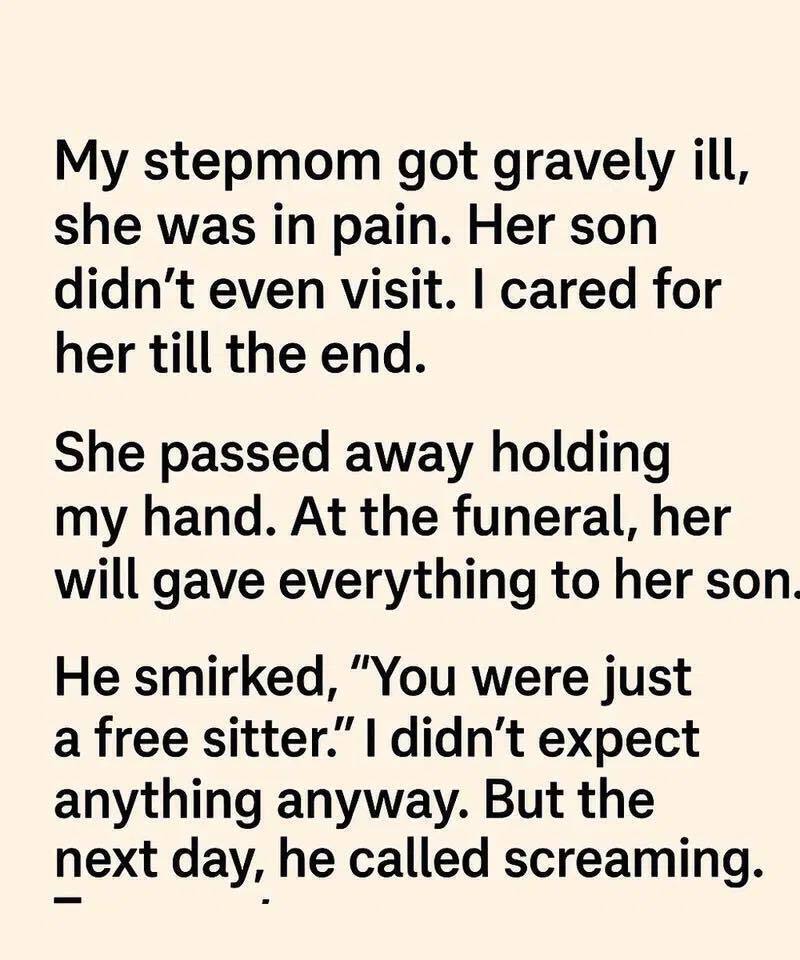
  • The Day After the Funeral, Everything Changed Forever: How One Morning Shattered My World, Altered Relationships, and Turned Life Upside Down in Ways I Never Imagined, Leaving Nothing the Same and Forcing Me to Confront Secrets, Loss, and a Reality I Was Never Prepared to Face.

    The Day After the Funeral, Everything Changed Forever: How One Morning Shattered My World, Altered Relationships, and Turned Life Upside Down in Ways I Never Imagined, Leaving Nothing the Same and Forcing Me to Confront Secrets, Loss, and a Reality I Was Never Prepared to Face.

    I hadn’t expected anything from her estate, so nothing surprised me when the lawyer called to finalize the details of her affairs. I had long ago stopped imagining that anyone would leave me something tangible, and in truth, that was fine. Over the years, I had learned that the weight of her presence, the way she trusted me with her vulnerabilities, and the quiet moments we shared carried a value that no inheritance could match. Yet, as I sat in her empty house one last time, walking through rooms filled with faded furniture, dust motes dancing in the afternoon sunlight, I felt an unfamiliar sense of heaviness—a kind of grief layered over gratitude. Her son, Michael, had already arrived earlier that morning to collect the remainder of his mother’s belongings and settle the affairs she could no longer tend. I noticed the tension in him, the way his jaw tightened as he sifted through drawers, files, and boxes that smelled faintly of cedar and old paper. I watched quietly, not wanting to interrupt, as he pulled out framed photographs of his mother as a young woman, her smile radiant, her eyes bright with a mixture of mischief and wisdom. Even without expecting an inheritance, the act of going through these remnants felt like walking through a history that belonged to someone else yet somehow included me.

    The following day, I received a call that caught me off guard—Michael’s voice, sharp with confusion and anger, filled the room through the phone. His questions tumbled out in a jumble of disbelief and frustration, the kind of raw emotion that comes when someone realizes a truth they didn’t see coming. He told me he had found a letter in one of the boxes his mother had left behind, a letter that wasn’t addressed to him, and that reading it had thrown him into a whirlwind of questions and resentments he hadn’t expected to feel. He demanded to know why she would write to me instead, why she would pour her gratitude into someone outside of the bloodline rather than leaving him the words she had never said aloud. His voice wavered between incredulity and the sting of perceived betrayal, and for a moment, I let him speak, allowing him to release months, maybe years, of unspoken disappointment. In those moments of silence between his sentences, I could hear the weight of a lifetime of longing for approval and connection that had gone unfulfilled. The letter, simple on its surface, had become a mirror reflecting all of the unresolved tension between them.

    When I finally had the chance to read her words again, now that the initial shock had settled, I understood why she had written to me. In her letter, she thanked me for being patient and gentle, for sitting beside her when she struggled to maintain dignity, and for offering a presence that required nothing in return. She explained that, though she had wanted to leave more for Michael, the legal intricacies of her estate and the complexities of their strained relationship had made it impossible. The words were careful, tender, and deliberate—she had sought a way to express her gratitude safely, without creating more disputes or resentment. I could almost hear her voice in each sentence, calm and soft, carrying the warmth of countless afternoons spent talking quietly over tea, her hand resting on mine as she recounted memories and regrets. This letter, though unseen by the world, held the depth of her character, the honesty of her intentions, and the quiet power of acknowledging love and care in its purest form. It was not a transactional gift, nor a legal obligation—it was an offering of her heart.

    But Michael’s anger and confusion were rooted in the discovery of other documents. As he rattled off the contents he had unearthed—receipts, old notes, photographs, and incomplete trust paperwork—he sounded as though the entire house had shifted beneath his feet. His mother had, at one time, planned to create a small trust for him, a tangible manifestation of her desire to provide for him beyond her lifetime. But the paperwork had never been completed. She had spent her final months trying to repair their relationship, attempting to bridge a gap that he hadn’t recognized until he saw her regrets written down. Her words and actions, unfulfilled plans, and tangible remnants of what could have been collided in his mind, leaving him both resentful and heartbroken. I let him speak, allowing him to voice the disappointment that had been building in him over years of misunderstanding and missed opportunities. Each note he read, each receipt he held, became a fragment of the puzzle of their relationship, and I held space for his emotions, knowing that there was nothing I could do to erase the pain—but that simply witnessing it, and listening without judgment, was already a form of acknowledgment that mattered.

    When he finally paused, catching his breath, I spoke softly, choosing my words with care. I told him honestly that the letter had not been intended to wound him, that it was not a replacement for the love and care she had wanted to give him but had struggled to express. It was simply her way of sharing gratitude in the only quiet, safe manner she had known, a way to reach out without stirring conflict or exacerbating old wounds. There was no secret motive, no hidden agenda—only the truth of her appreciation and the acknowledgment of the moments she had cherished. I explained that her hope, more than anything else, had been that he would understand the fleeting nature of time and the importance of showing up for those we care about while there is still a chance to do so. She had lived her final months seeking to mend what could be mended, even if the legalities of inheritance had remained unfinished, because she valued connection and emotional presence above all else. In the quiet of our conversation, I could sense him beginning to understand, the tight coil of frustration slowly unwinding as he considered the depth of her intention.

    Over the following weeks, our conversations grew longer, more reflective. Michael began sharing memories of his mother that had surfaced as he sorted through boxes and albums. He described moments he had once dismissed or overlooked, the laughter they shared when he was a child, her gentle reprimands when he made mistakes, and the times she had quietly supported him from the sidelines without drawing attention. Through his words, I could see the shift in his perspective: the recognition that inheritances are not solely about wealth or material objects but often about the lessons, gestures, and presence left behind. He began to speak with reverence about the small kindnesses she had shown him, and gradually, the anger gave way to a bittersweet understanding. The letter had acted as a bridge, connecting us not only to her memory but to the realization that her greatest legacy was the love and attention she had offered freely, without expectation or condition.

    In the end, the true inheritance was revealed—not in the items she had left behind, not in the trust that was never formalized, but in the reminders embedded in her gestures, words, and final communications. For both Michael and me, the lessons were clear: time is fleeting, kindness is immeasurable, and showing up for others while we still can is a gift beyond measure. The letter became a symbol of reconciliation, a reflection of the gap between intention and action, and a testament to the enduring power of presence and care. Even years later, when I think back to that letter and the emotions it stirred, I am reminded that some inheritances are intangible, arriving precisely when they are needed. They teach us how to live, how to honor those we love, and how to recognize that the most profound gifts are not always those we can hold in our hands—they are the ones that transform our hearts, guide our actions, and shape the way we move through the world with empathy, gratitude, and awareness.