Breaking News

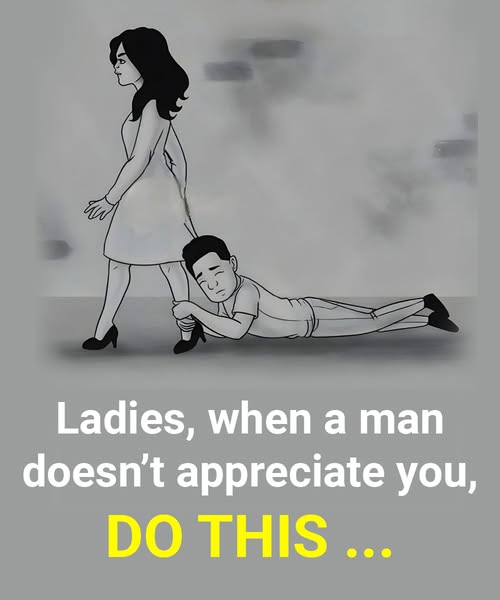
  • If a man doesn’t appreciate you, the most important thing to remember is that your worth is not defined by his behavior. Lack of appreciation often reflects his limitations, not your value. You deserve respect, effort, and emotional support, and it’s okay to set boundaries or walk away to protect your self-worth and happiness.

    If a man doesn’t appreciate you, the most important thing to remember is that your worth is not defined by his behavior. Lack of appreciation often reflects his limitations, not your value. You deserve respect, effort, and emotional support, and it’s okay to set boundaries or walk away to protect your self-worth and happiness.

    Being in a relationship with a man who does not truly appreciate you can slowly erode your sense of self in ways that are difficult to recognize at first. It rarely begins with something obvious or dramatic. More often, it starts with small moments of dismissal, lack of effort, or emotional distance that you excuse because you care, because you remember who he was in the beginning, or because you hope things will improve. Over time, those small moments accumulate. You begin to feel unseen, taken for granted, and emotionally depleted. Confusion creeps in, followed by self-doubt. You may start questioning whether you are too demanding, too sensitive, or somehow not enough. This internal conflict is one of the most damaging aspects of an unappreciative relationship. The truth, however, is simple and uncomfortable: feeling unvalued is not a reflection of your worth, but of the other person’s inability or unwillingness to show up with respect, consistency, and care. Recognizing this truth can feel painful, but it is also the beginning of clarity. Once you stop internalizing his neglect, you begin to reclaim your emotional footing and see the relationship for what it truly is, rather than what you hope it could become.

    The first and most important step toward change is honesty with yourself. This requires setting aside excuses, justifications, and fantasies about potential. Instead, focus on how you actually feel when you are with him. Do you feel emotionally safe, supported, and valued, or do you feel drained, anxious, and invisible? Notice your body’s responses as well as your emotions. Tension, fatigue, or a sense of heaviness after interactions are often signals that something is wrong. Many people stay stuck because they minimize their pain, convincing themselves that it is not “bad enough” to warrant action. Yet pain does not need to be dramatic to be valid. If you consistently feel overlooked or unimportant, that feeling deserves attention. Honesty also means acknowledging patterns rather than isolated incidents. Occasional mistakes are human; consistent disregard is a choice. Seeing the relationship clearly may be uncomfortable, but clarity is far kinder than living in denial. When you allow yourself to fully acknowledge your experience, you stop gaslighting yourself and start honoring your emotional reality.

    Once you are grounded in self-honesty, communication becomes essential. Expressing that you feel unappreciated is not an accusation; it is an act of vulnerability and self-respect. Clear communication means calmly stating how his behavior affects you and what you need in order to feel valued. This does not require emotional pleading, overexplaining, or repeated reminders. You are not responsible for convincing someone to care. Healthy partners listen, reflect, and make genuine efforts to change. What matters most after you speak is not the reassurance you receive in the moment, but what happens afterward. Appreciation is not measured by apologies or promises; it is measured by consistent action over time. If you clearly communicate your needs and nothing changes, that silence is an answer. It tells you where you stand. Continuing to explain yourself endlessly in the hope of being understood only drains you further and reinforces an unhealthy dynamic where your needs are negotiable but his comfort is not.

    In many relationships where appreciation is lacking, one person carries a disproportionate amount of emotional labor. You may find yourself always initiating contact, planning time together, fixing misunderstandings, offering reassurance, and adjusting your expectations to keep the peace. Over time, this imbalance becomes normalized, and you begin to feel responsible for the relationship’s survival. Stepping back can feel frightening, especially if you fear abandonment or conflict, but it is often necessary. Allowing the imbalance to become visible is not manipulation; it is honesty. When you stop over-giving, you create space to see whether he values you or simply benefits from your effort. Protecting your emotional energy is an act of self-respect, not punishment. If your absence is met with indifference rather than concern, that information is invaluable. A relationship that only functions when you exhaust yourself to sustain it is not a partnership; it is a drain.

    Boundaries are the natural next step when appreciation is absent or inconsistent. Boundaries are not ultimatums or threats; they are clear limits that protect your emotional well-being. This may mean disengaging from conversations that become dismissive or blaming, pausing emotional or physical intimacy when respect is lacking, or being honest about your willingness to walk away if nothing changes. Boundaries only work when they are enforced. Setting boundaries without follow-through teaches others that your limits are flexible and your needs optional. Walking away from a one-sided dynamic is not failure; it is self-preservation. You cannot force someone to value you through patience, sacrifice, or endurance. Love does not grow through self-abandonment. When you choose to honor your boundaries, you shift the power dynamic back to where it belongs: within yourself.

    Remembering your worth is the foundation that holds all of this together. A man’s inability to appreciate you is rooted in his own limitations—emotional unavailability, immaturity, selfishness, or unresolved wounds—not in your value as a partner. You cannot fix someone who is unwilling to grow, no matter how loving, loyal, or patient you are. Often, it is only when you are truly prepared to leave, and mean it, that your value becomes clear to him. Even then, the most important realization is not whether he changes, but whether you are willing to accept anything less than mutual respect and care. You deserve a relationship where appreciation is freely given, not negotiated or earned through suffering. Letting go of the belief that you must fight for love is liberating. When you protect your heart, honor your needs, and invest your energy where it is reciprocated, you are not asking for too much. You are finally asking the right person—or choosing to become that person for yourself.

  • Experts Reveal The Exact Number Of Times Men Should Ejaculate Each Month To Help Lower Prostate Cancer Risk

    Experts Reveal The Exact Number Of Times Men Should Ejaculate Each Month To Help Lower Prostate Cancer Risk

    A large long-term study published in 2016 examined a possible connection between ejaculation frequency and prostate cancer risk, adding nuance to ongoing discussions about men’s prostate health.

    Prostate cancer remains one of the most common cancers among men. According to the American Cancer Society, about one in eight men will be diagnosed with prostate cancer during their lifetime, and tens of thousands die from the disease each year in the United States. Risk increases with age, with roughly 60 percent of diagnoses occurring in men over 65. Rates are also higher among African American men and Caribbean men of African ancestry.

    Researchers have long explored lifestyle factors that might influence prostate cancer risk, including diet, physical activity, and hormonal influences. One area of interest has been ejaculation frequency.

    A study published in European Urology followed nearly 32,000 men over an 18-year period, from 1992 to 2010. Participants periodically reported their ejaculation frequency across different stages of adulthood.

    The researchers observed that men who reported higher ejaculation frequency—defined in the study as 21 or more times per month—had a lower likelihood of being diagnosed with prostate cancer compared with men who reported lower frequency (four to seven times per month). The difference amounted to roughly a 20 percent reduction in relative risk, particularly for low-risk forms of the disease.

    The authors emphasized that the study identified an association, not a guarantee of protection. They noted that men with higher ejaculation frequency were less likely to be diagnosed later in life, but the findings do not establish a direct cause-and-effect relationship.

    Dr. Anne Calvaresi, chair of the Prostate Health Committee at the Urology Care Foundation, described the research as some of the strongest evidence to date suggesting a potential protective role, while still acknowledging that the biological mechanisms are not fully understood.

    One hypothesis is that ejaculation may help clear substances from the prostate and seminal fluid that could otherwise accumulate over time. However, researchers stress that prostate cancer is influenced by many factors, including genetics, age, race, and overall health.
    Symptoms to be aware of

    Early prostate cancer often causes no symptoms, but when signs do appear, they may include:

    Blood in urine or semen

    Increased frequency of urination

    Difficulty starting or stopping urination

    Waking frequently at night to urinate

    More advanced disease may present with:

    Urinary leakage

    Back or bone pain

    Erectile difficulties

    Persistent fatigue

    Unintended weight loss

    Weakness in the arms or legs

    Health experts emphasize that no single behavior can eliminate prostate cancer risk. Regular medical checkups, awareness of symptoms, and discussions with a healthcare professional—especially for men in higher-risk groups—remain the most reliable approach to early detection and prevention.

    The study adds an important piece to the broader picture of prostate health, but it does not replace medical guidance or screening decisions made with a doctor.

  • BREAKING NEWS!! Sad news just confirmed the passing of…See more.

    BREAKING NEWS!! Sad news just confirmed the passing of…See more.

    Emirates Flight Crash-Lands in Dubai: All 300 On Board Survive, Firefighter Killed in Rescue

    A major aviation incident unfolded on Wednesday when an Emirates flight from Thiruvananthapuram, India, crash-landed at Dubai International Airport, sending shockwaves through the aviation community.

    The aircraft, carrying 300 people — 282 passengers and 18 crew members — made an emergency landing at approximately 12:45 p.m. local time after the pilot reportedly warned of landing gear issues. Despite the dramatic scene, all passengers and crew survived, though ten were hospitalized for treatment of minor injuries and smoke inhalation.

    Tragically, one firefighter lost his life while responding to the blaze that erupted after the plane came to rest on the runway. Officials hailed his sacrifice as a heroic act that prevented a far greater tragedy.

    Preliminary reports suggest that wind shear — a sudden change in wind speed and direction — may have played a role in the failed landing attempt. Eyewitnesses described a tense few moments before the aircraft touched down, followed by sparks and thick smoke as flames engulfed part of the fuselage.

    Emergency teams acted within minutes, safely evacuating all passengers via emergency slides before the fire spread. Authorities have since launched a full investigation into the cause of the incident.

    Emirates issued a statement expressing “deep gratitude to the first responders whose swift and courageous actions saved lives,” adding condolences to the family of the firefighter who died in the line of duty.

    Videos shared online show passengers fleeing the aircraft as plumes of black smoke rise from the runway — a chilling reminder of how quickly routine travel can turn into a fight for survival.

    While the investigation continues, aviation experts are calling the outcome “a miracle of training and composure,” crediting the crew’s professionalism and the rapid response of emergency teams for ensuring that a near-catastrophe ended in survival.

  • What Is the White Strand in Eggs? A Simple Explanation

    What Is the White Strand in Eggs? A Simple Explanation

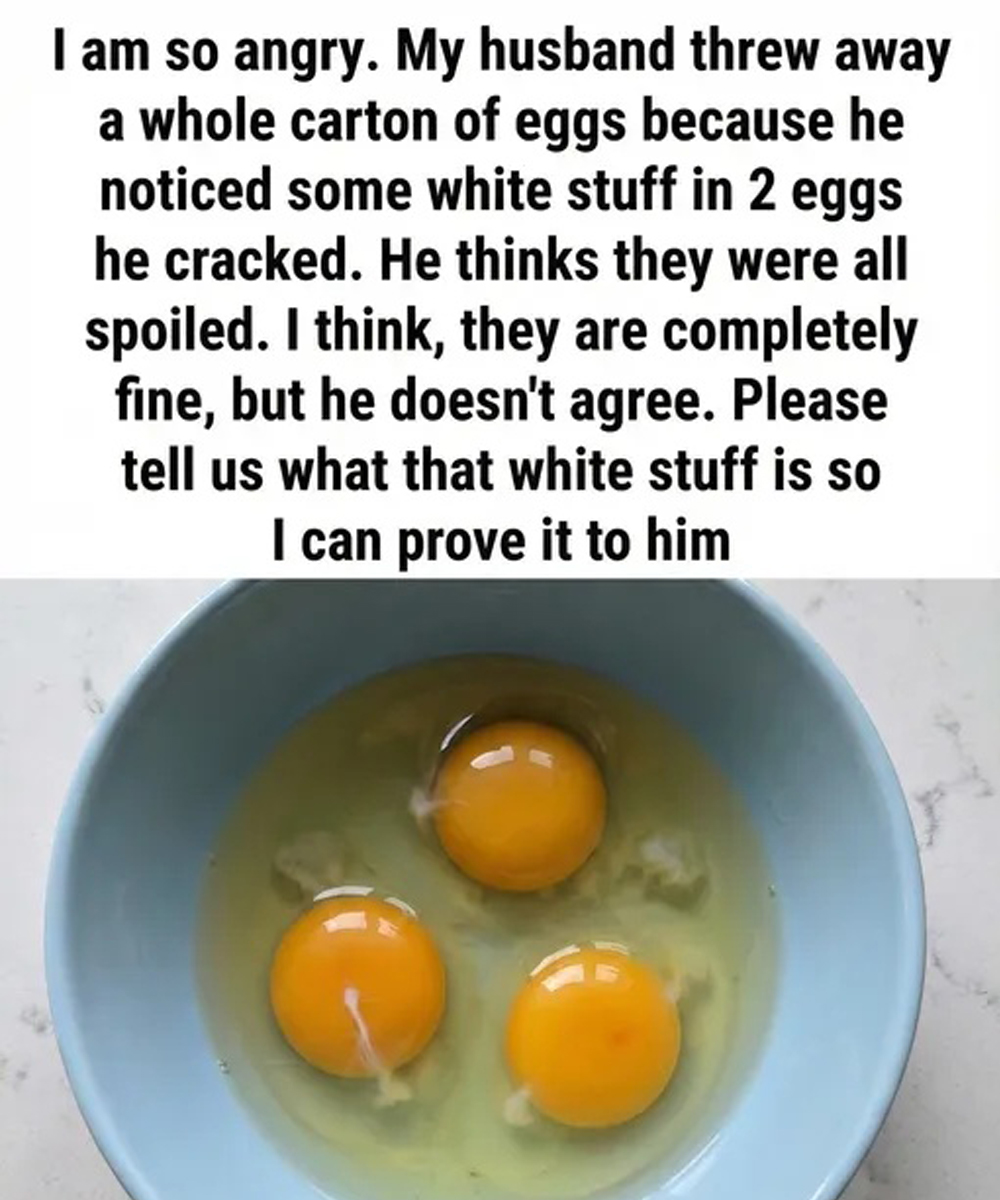
    When you crack an egg, you might notice a thin, white, stringy strand attached to the yolk.

    At first glance, it can look odd or even a little alarming. Many people assume it’s a sign the egg has gone bad or is somehow defective and choose to remove it before cooking.

    In truth, this strand is completely normal and harmless—and it often signals that the egg is fresh and properly stored.

    This white string is known as the chalaza, a naturally occurring protein structure inside the egg. Its role is to hold the yolk in place, keeping it centered within the egg white.

    Acting like a stabilizer, the chalaza prevents the yolk from hitting the shell as the egg moves. Most eggs contain two chalazae, one on either side of the yolk, although only one may be clearly visible once the shell is cracked.

    In fresher eggs, it appears thicker and more defined, while in older eggs it becomes faint and less noticeable. So spotting a firm, rope-like strand is usually a good sign. Nutritionally, the chalaza is made of the same proteins found in egg whites, meaning it is perfectly safe to eat.

    During cooking—whether frying, scrambling, or baking—it blends right in and essentially disappears.

    There’s no need to remove the chalaza unless you’re making dishes that require an exceptionally smooth consistency, such as custards or delicate sauces.

    Otherwise, leaving it in won’t affect the flavor or quality of your food.

    Knowing what the chalaza is can make cooking feel easier and more reassuring, turning something that looks unusual into a reminder of how naturally and efficiently food is formed.

    The next time you see that white strand in an egg, you’ll recognize it not as a defect, but as a sign of freshness and thoughtful design.

  • New Never throw away plastic bottles again: boil them and see what happens next !

    New Never throw away plastic bottles again: boil them and see what happens next !

    You’ve probably thrown away hundreds of plastic bottles thinking they were useless.

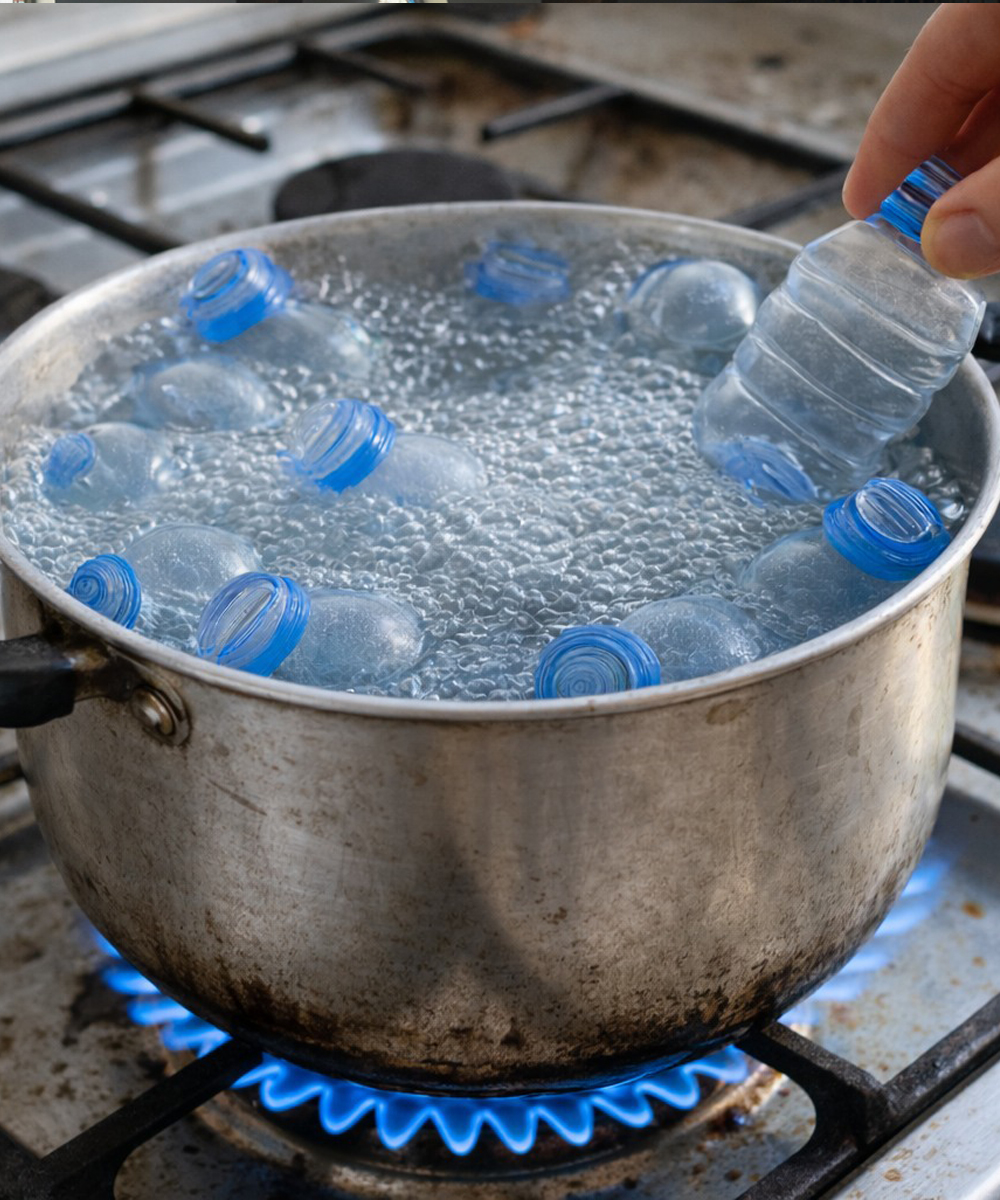
    A simple and surprising method has caught the attention of thousands of people: boiling plastic bottles to transform them into strong, reusable materials.

    It’s not magic. It’s basic physics… and a little ingenuity.
    The day I understood that plastic isn’t trash

    I confess something: I used to throw away clear plastic bottles without a second thought. Until, talking to a craftsman who has been working with wood and tools for decades, he showed me something so simple it’s unbelievable it isn’t more widely known.

    “That’s not trash,” he told me, pointing to an empty bottle. And what he did next left me staring like a curious child.
    What really happens when you heat clear plastic?

    Clear plastic bottles (the most common kind) have an interesting characteristic: with very hot water, they become malleable, almost like a firm mass, without the need for industrial machinery or complicated processes.

    It’s not about burning them or doing strange experiments, but about harnessing heat to transform common waste into something useful and durable.

    That’s where the idea that surprised me the most comes in.
    A simple mold, an unexpected result

    The process is simpler than you might think:

    A wooden mold is prepared in the shape of the desired handle.

    Pieces of clear plastic are heated in very hot water.

    The plastic becomes flexible and compact.

    It’s placed in the mold and pressed.

    In seconds… the handle takes shape.

    When it cools, it becomes hard, resistant, and surprisingly comfortable in the hand.

    The final result looks like it came from a store, but it was born from something that normally ends up in the trash.
    Why are so many people interested in this?

    Because it combines several things that matter a lot today:

    Reusing everyday materials

    Reducing waste without complicating things

    Creating useful objects with your own hands

    Saving on tools and accessories

    Discovering that simple can be brilliant

    It’s not magic, it’s observation, practice, and curiosity.
    The detail that makes all the difference

    Something the expert emphasized several times: the wood of the mold is key. A good mold defines the shape, grip, and durability of the handle. It doesn’t need to be perfect, but it does need to be well thought out.

    That small detail is what transforms a curious experiment into a result that’s truly worth using.
    More than a trick, a new way of looking at the everyday

    Since that day, every clear bottle I see is no longer “trash.” It’s material. It’s possibility. It’s an idea waiting to take shape.

    And the best part is that you don’t need to be a professional or have expensive tools. Just the desire to experiment and look at things from a different perspective.

    Sometimes, the best discoveries don’t come from great inventions…but from daring to do something different with what you’ve always ignored.

  • You Must Pick One Food To Get Rid Of Forever: Your Answer Reveals Everything About You

    You Must Pick One Food To Get Rid Of Forever: Your Answer Reveals Everything About You

    You Must Pick One Food to Get Rid of Forever

    (And What Your Choice Secretly Says About You)

    Imagine this: you’re given an impossible challenge. You must permanently remove one food from your life. No cheating. No “just on weekends.” It’s gone forever.

    Your answer might seem random or based purely on taste—but psychology suggests otherwise. The foods we cling to (or willingly sacrifice) often reflect our habits, comfort zones, emotional needs, and personality traits.

    Look at the options below and notice your first instinct. Don’t overthink it.
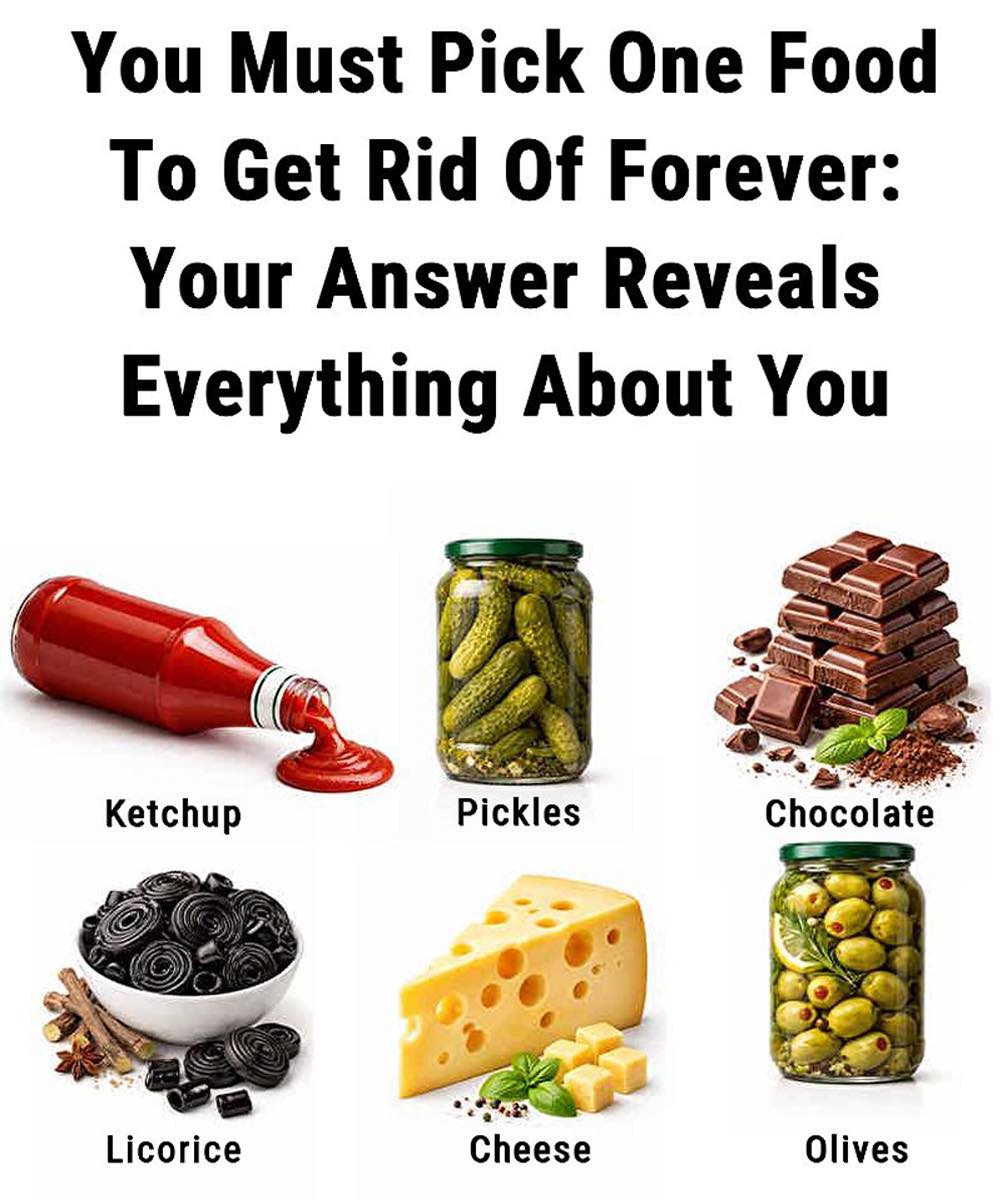
    1. Ketchup

    If you’d give up ketchup, you’re practical and adaptable. You don’t rely heavily on comfort enhancers—you’re fine eating things “as they are.” You tend to value simplicity over excess and don’t need constant emotional cushioning. You’re the kind of person who adjusts quickly when life changes.

    If ketchup feels impossible to lose, you likely crave familiarity and emotional safety. You find comfort in routine and small pleasures.
    2. Pickles

    Choosing to eliminate pickles suggests you prefer balance and stability. You don’t enjoy extremes—too sour, too intense, too much drama. You value calm environments and tend to avoid unnecessary conflict.

    If you can’t imagine life without pickles, you’re adventurous, expressive, and a little rebellious. You enjoy bold flavors—and bold choices.
    3. Chocolate

    Giving up chocolate usually means you’re emotionally independent. You don’t rely on treats to regulate stress or mood. You tend to handle emotions internally and pride yourself on self-control.

    If chocolate is the one thing you’d protect at all costs, you’re emotionally rich, empathetic, and deeply human. You feel things intensely and allow yourself joy, nostalgia, and comfort.
    4. Licorice

    If licorice is the easy one to cut, you’re likely socially flexible. You don’t cling to niche preferences just to be different. You value connection over identity through taste.

    But if licorice is your hill to die on, you’re unapologetically yourself. You don’t care if others “get it.” You’re comfortable being misunderstood and often walk your own path.
    5. Cheese

    Choosing to eliminate cheese suggests strong discipline and long-term thinking. You’re capable of sacrificing immediate pleasure for future benefits. You often take responsibility seriously—even when it’s hard.

    If cheese feels non-negotiable, you’re grounded, loyal, and deeply comfort-oriented. You appreciate warmth, tradition, and shared experiences.
    6. Olives

    Giving up olives often means you prefer harmony over acquired tastes. You don’t feel the need to force yourself to like things just because others do. You trust your instincts.

    If olives are essential to you, you’re patient and refined. You understand that some good things take time to appreciate—and you’re willing to wait.
    Why This Works (And Why It’s Fun)

    This isn’t about right or wrong choices. It’s about preference psychology. Our reactions to food are shaped by memory, culture, emotional associations, and personality patterns.

    Your choice reveals:

    How you handle comfort

    How you deal with sacrifice

    Whether you lean toward stability or intensity

    And most importantly—it shows what you’re not ready to let go of.

    So… which one would you get rid of?

    And what does that say about you?

  • Why Subtle Experiences Often Leave Us Feeling Comforted and Hopeful

    Why Subtle Experiences Often Leave Us Feeling Comforted and Hopeful

    Have you ever stepped into your home and felt an unexpected wave of calm, as though the space itself were quietly embracing you?

    Nothing appears different—no new furniture, no sudden silence—yet something inside you softens. Many people describe moments like this as deeply reassuring, a pause in the noise of life that feels almost intentional. Across cultures and belief systems, angels are often understood not as dramatic figures, but as symbols of protection, guidance, and emotional comfort. While science does not confirm their presence, countless individuals believe that certain gentle experiences can serve as reminders that they are not alone.
    These experiences are rarely overwhelming.

    Instead, they tend to be subtle—easy to dismiss, yet difficult to forget. Some people notice small details that feel oddly comforting: a feather resting in an unexpected place, a shift in light that seems warmer than usual, or a moment where the air feels calmer, lighter. Others mention brief changes in temperature that feel soothing rather than startling. Even things like flickering lights or electronic devices behaving unpredictably are sometimes interpreted symbolically, especially when they occur during emotionally charged moments. Practical explanations often exist, but for many, the meaning lies less in the cause and more in the feeling these moments inspire.

    Scent and dreams are also commonly mentioned. A sudden, pleasant fragrance—flowers, clean air, or a familiar scent tied to memory—can evoke a deep sense of comfort or emotional connection. These moments often arrive quietly and disappear just as gently, leaving behind a feeling rather than a question. Dreams, too, can carry significance. Peaceful imagery, soft light, or comforting figures may linger long after waking. While psychology explains dreams as reflections of the mind’s inner world, some people choose to see especially calming dreams as encouragement—subtle reminders to rest, heal, or keep going.

    Perhaps the most meaningful experiences are the ones that cannot be seen at all.

    In moments of stress or grief, a sudden clarity or calm can feel like a quiet reassurance, a reminder that strength still exists even when circumstances feel heavy. Many people also notice patterns—repeating numbers, song lyrics that appear at just the right time, or words encountered unexpectedly that resonate deeply. These moments don’t demand belief or obedience; instead, they invite reflection, gratitude, and presence.

    Whether one views these experiences as spiritual signs, emotional responses, or moments of heightened awareness, their impact is often the same. They slow us down. They encourage us to breathe. They remind us to be gentle with ourselves. In a world that constantly pulls us forward, these quiet moments—however we choose to interpret them—offer something rare and valuable: a sense of support, hope, and connection to an inner peace that was there all along.

  • When the Past Came Back, I Chose to Protect My Peace.

    When the Past Came Back, I Chose to Protect My Peace.

    I used to think the end of my marriage would arrive with noise—with arguments, slammed doors, or at least explanations that made sense.
    Instead, it ended quietly. One day my husband was there, and the next day he simply wasn’t. No long conversations. No attempt to repair what we had built. Just absence.

    I was left with two children and a life that suddenly depended entirely on me.

    Those early years were unforgiving. Every decision mattered. Every dollar, every hour of sleep, every emotional reaction had consequences. I learned to carry responsibility without complaint because there was no one else to carry it for me. I worked, I parented, I listened, I stayed calm even when exhaustion felt endless. Slowly—almost without noticing—I stopped waiting for him to return, stopped hoping for apologies that never came.

    I didn’t heal by forgetting. I healed by adapting.

    Time did its quiet work. My children grew stronger. So did I. The pain became something I understood rather than something that ruled me. I believed that chapter of my life was firmly closed.
    Then one afternoon, the doorbell rang.

    When I opened the door, I saw him standing there as if years had collapsed into minutes. Beside him stood a little girl, no older than seven or eight, holding his hand. His daughter. A child from the life he had chosen after leaving ours.

    He spoke casually, almost lightly, explaining that he needed help for a while. Would I mind watching her? Just temporarily. As if the years of silence, abandonment, and rebuilding hadn’t existed.

    I didn’t feel anger. I felt stunned.

    I looked at the child—innocent, unaware of the history she was standing inside—and then back at him. I thought of the nights I had stayed awake worrying alone. The birthdays he missed. The strength I had built without him. And I realized something with surprising clarity: I didn’t owe him anything.

    So I said no.

    Not sharply. Not cruelly. Just honestly. I explained that I couldn’t take on that responsibility, that my life was full, that boundaries mattered.

    The shift in him was immediate. His voice hardened. He accused me of being heartless, of lacking compassion, and then he left in a rush of anger, pulling the child gently behind him. The door closed, and the silence returned—but heavier this time.

    For days, I questioned myself. Could I have handled it differently? Had I been unfair? But as the weeks passed, that doubt faded. I understood that protecting my peace did not make me unkind. It made me honest.

    Two months later, my phone rang again.

    This time, it was his wife.

    Her tone was calm, respectful. She said she wanted to apologize—for putting me in an awkward position, for assuming I would say yes, for not considering the past I had lived through. She acknowledged that I had been asked to carry something that was never mine to carry.
    The call was short, but it mattered.

    When it ended, I sat quietly, feeling a sense of closure I hadn’t realized I was still missing. Not because everything had been resolved—but because I had learned something essential:

    Strength isn’t loud.
    It isn’t dramatic.
    Sometimes, strength is simply knowing when to say no—and trusting that you don’t need permission to protect the life you worked so hard to rebuild.

  • A Father’s Doubt Shattered His Family — And the Regret Still Haunts Him

    A Father’s Doubt Shattered His Family — And the Regret Still Haunts Him

    The nursery had once been a place of shared joy, painted softly and filled with plans for the future. Now, standing beside the crib where our two-week-old son slept, I felt only certainty that something was wrong. When I demanded a paternity test, Emma’s shock and quiet compliance felt, to me, like confirmation. I told myself I was protecting myself from betrayal.

    The test results arrived quickly and decisively. Zero percent probability. I wasn’t the father. I left without listening, filed for divorce, and erased Emma and the child from my life. I told friends I’d done what any reasonable man would do, and for years I believed it.

    Three years later, that certainty shattered in a coffee shop. A mutual friend told me the truth: the lab had made a mistake. Emma had never cheated. The child I abandoned was biologically mine. By the time she proved the error, I had blocked her from my life entirely.

    A second test confirmed what I had destroyed my family over. My son was mine. The realization came with crushing regret. I tried to apologize, to explain, to make amends, but Emma never responded. She had built a life without me, one she had every right to protect.

    From a distance, I watched her raise our son with strength and care. I sought therapy, confronted my mistrust, and worked to become someone who would never repeat the same mistake. I saved letters, money, and truth for a future that might never include me.

    I live now with the lesson I learned too late: trust is the foundation of love. Doubt, once chosen, can destroy everything. All I can do is grow, accept the consequences, and hope that someday my son will know the full truth and decide for himself who I am.

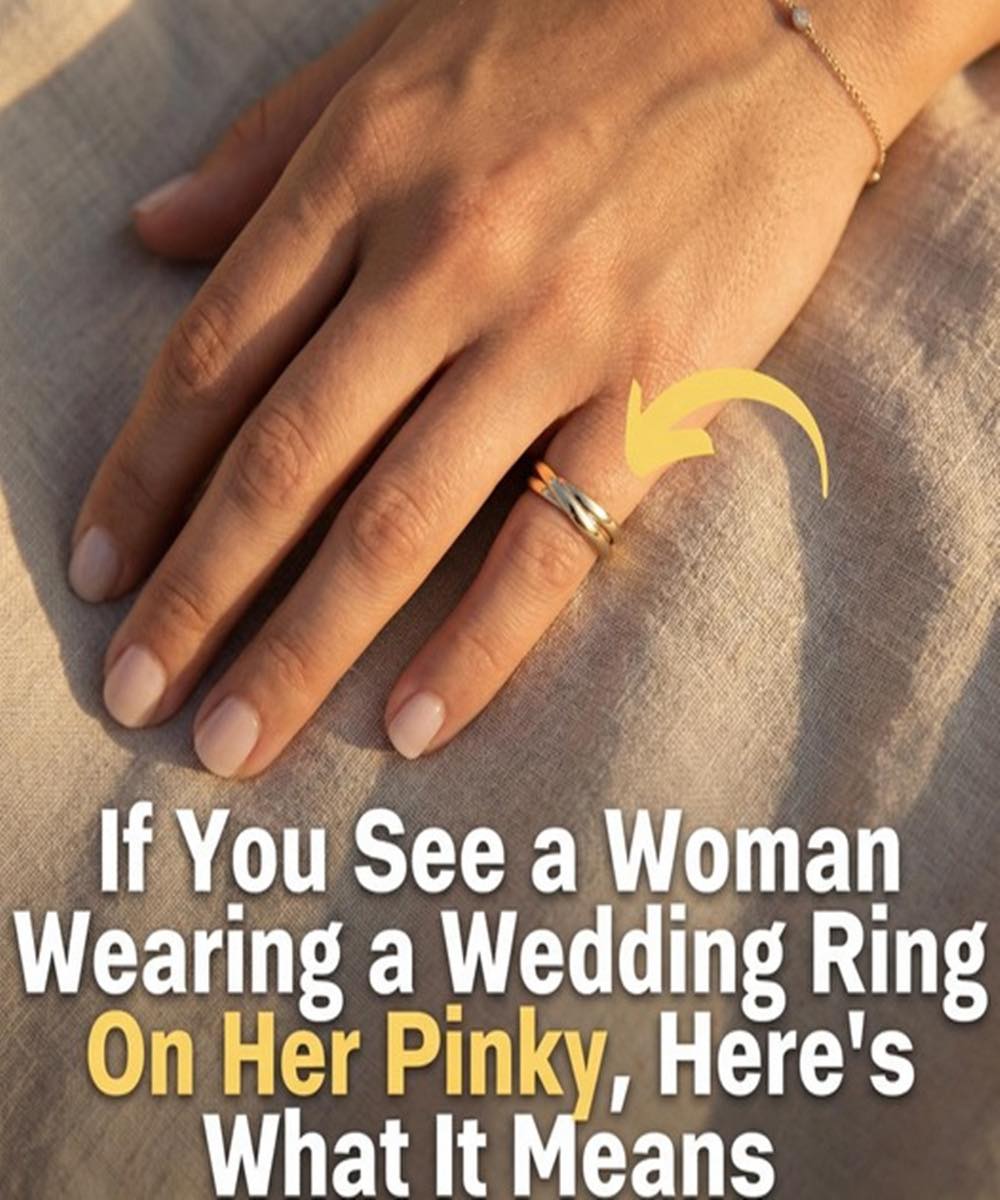
  • If You See a Woman Wearing a Wedding Ring On Her Pinky, Here’s What It Means

    If You See a Woman Wearing a Wedding Ring On Her Pinky, Here’s What It Means

    Seeing a wedding ring on someone’s pinky finger can be surprising. Most of us are taught that wedding rings belong on the ring finger of the left hand, so when that tradition is broken, curiosity kicks in fast. Is she married? Is it a fashion statement? Or does it symbolize something deeper? The truth is, a wedding ring on the pinky can mean many different things—and not all of them have anything to do with marriage at all.

    First, let’s clear up the biggest misconception. A ring on the pinky does not automatically mean a woman is married. In most cultures, the pinky has never been the traditional finger for wedding rings. However, that hasn’t stopped people from using it to express identity, independence, or personal values.

    One of the most common meanings today is self-love and self-commitment. Many women choose to wear a ring—sometimes even called a “self-marriage” or “self-love ring”—on their pinky to symbolize a promise to themselves. This can represent independence, emotional growth, or a commitment to personal goals. In this context, the ring is powerful, intentional, and deeply personal.

    Another popular reason is fashion and aesthetics. Pinky rings have made a huge comeback in recent years. Designers and stylists often recommend the pinky because it balances the hand visually and adds a bold, confident touch. Some women move a wedding ring or a meaningful ring to the pinky simply because it looks better there—or because it no longer fits comfortably on another finger.

    In some cases, the ring may belong to a past marriage or relationship. A woman who is divorced or widowed may choose to wear her wedding ring on her pinky instead of the traditional ring finger. This can symbolize respect for the past without signaling that she is currently married. It’s a subtle way of honoring a chapter of life without living in it.

    There are also cultural and symbolic interpretations. Historically, pinky rings have been associated with intellect, communication, and status. In certain traditions, wearing a ring on the pinky reflects confidence, individuality, or social standing. For some women, it’s simply about reclaiming a symbol and redefining what it means to them.

    Let’s not forget the practical side. Sometimes the explanation is simple: the ring doesn’t fit anywhere else. Weight changes, pregnancy, or swelling can make the traditional ring finger uncomfortable. The pinky may be the only finger where the ring feels right.

    So, what should you not do? Don’t assume. A ring on the pinky is not a universal sign of marriage, availability, or relationship status. It’s often a personal choice loaded with meaning—or sometimes, no meaning at all.

    In the end, a woman wearing a wedding ring on her pinky is sending one clear message: she’s wearing it for her own reason. And that reason is hers alone.