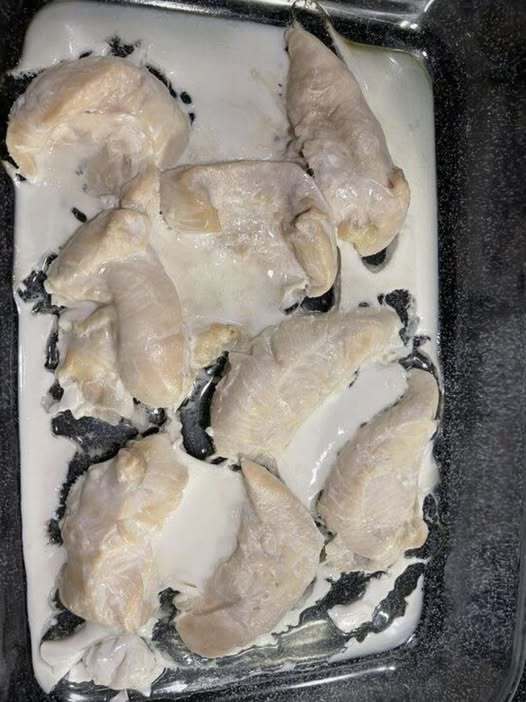
You take a perfectly seasoned chicken breast out of the oven. It looks golden, smells amazing, and seems ready to serve. Then you notice it — a strange white, slightly jelly-like substance sitting on top. It can look alarming if you have never seen it before.
The good news? Nothing is wrong. That white “goo” is completely normal. It is simply protein and water reacting to heat during the cooking process.
Chicken breast is naturally high in protein and contains a significant amount of water. When exposed to heat, the proteins inside the meat change structure in a process called denaturation. This is the same transformation that turns egg whites from clear to solid white when cooked.
As chicken heats up, its muscle fibers tighten. When they contract, they squeeze out water trapped inside. That water mixes with dissolved proteins and rises to the surface. Once it continues cooking on the outside, it solidifies into the white substance you see. It may look unusual, but it is just cooked protein.
This effect is most noticeable with boneless, skinless chicken breasts because they are lean. They contain less fat than thighs or drumsticks, so there is nothing to mask the protein release. Lean meats tend to show this reaction more clearly.
Cooking temperature plays a major role. High heat — such as baking at 400°F (205°C) or aggressive pan-searing — causes proteins to contract quickly. Rapid contraction pushes out more liquid, making the white substance more visible. Lower, gentler cooking allows proteins to tighten gradually, reducing the effect.
Cooking frozen or partially frozen chicken can also increase the white residue. Freezing forms ice crystals inside the muscle fibers, which can damage their structure. When thawed and cooked, those damaged fibers release more moisture, leading to more protein rising to the surface. Fully thawing chicken before cooking helps minimize this.
Importantly, the white substance is safe to eat. It is not bacteria, spoilage, or contamination. However, you should always assess chicken before cooking. A sour smell, slimy texture, or gray-green discoloration in raw chicken are signs of spoilage. The white substance that appears during cooking is unrelated to those issues.
If you would prefer to reduce its appearance, there are simple adjustments you can make. Cook at a slightly lower temperature, such as 350°F (175°C), to allow proteins to contract more gently. Brining the chicken in saltwater for 30 to 60 minutes can help it retain moisture. Letting the meat sit out briefly before cooking reduces temperature shock. Avoid overcooking by using a thermometer and removing the chicken at an internal temperature of 165°F (74°C). Higher-quality or air-chilled chicken may also release less excess moisture.
The white protein does not affect flavor or safety. At most, heavy leakage can signal slight overcooking, which may reduce juiciness — but the substance itself does not ruin the meal. If presentation matters, you can gently wipe it away.
In simple terms, heat changes protein structure. The proteins tighten, squeeze out water, and that mixture cooks on the surface. What looks strange at first is simply chemistry at work.
So if you see that white substance on your chicken, there is no need to panic. You did not ruin dinner. You simply witnessed a normal reaction that happens in kitchens everywhere — from home cooks to professional chefs. Your meal is safe, and everything is perfectly fine.
Leave a Reply