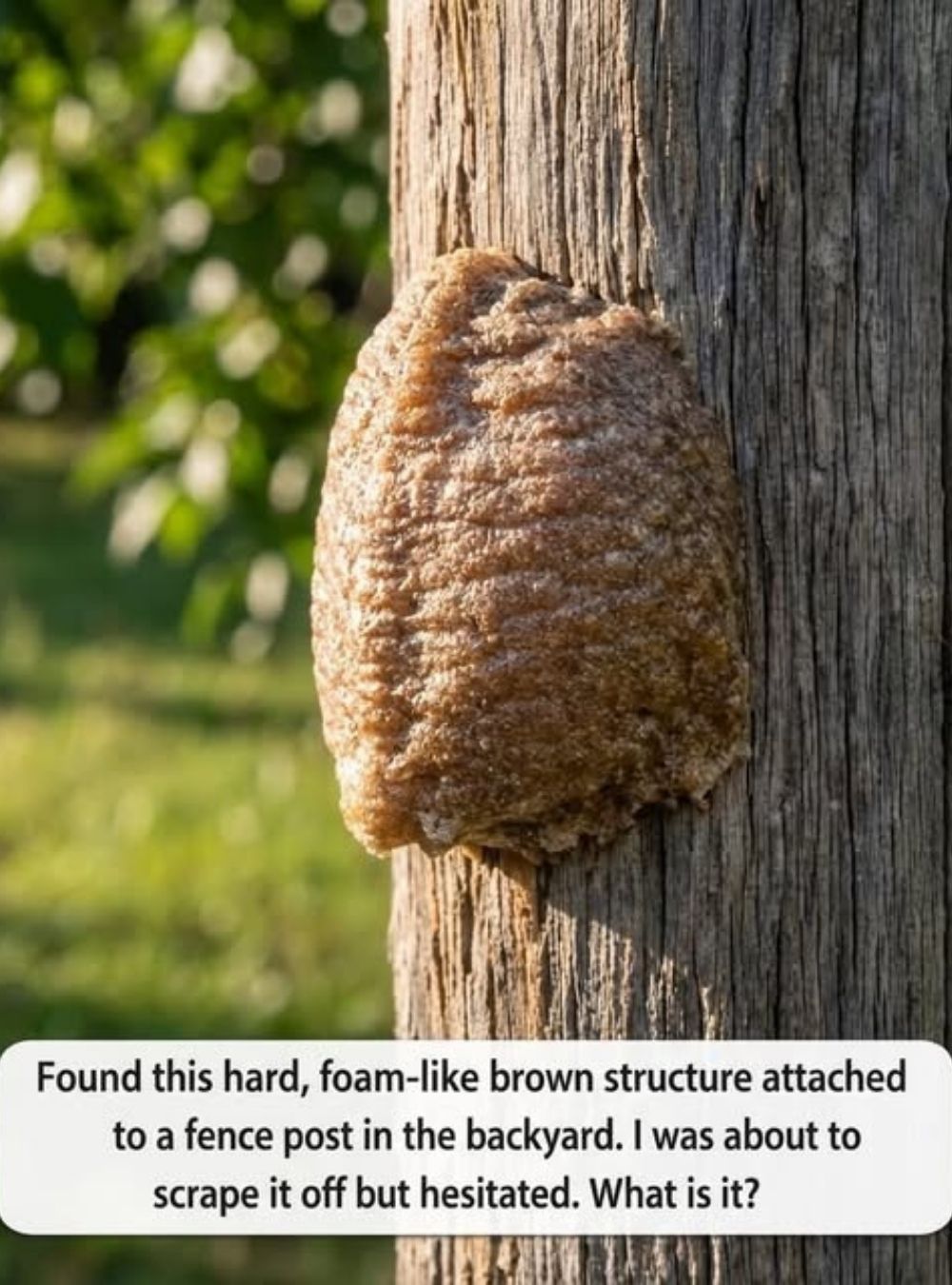
At first glance, it looks completely out of place — a hard, brown, foam-like mass attached to a fence post, tree branch, or garden structure. It doesn’t resemble a bird’s nest, it’s not quite fungus, and it certainly wasn’t something you remember putting there. The instinct for many people is to scrape it off immediately. But before you do, it’s worth pausing. That unusual clump may actually be a sign that your backyard ecosystem is thriving.
In most cases, that mysterious structure is a praying mantis egg case, known as an ootheca.
What Is an Ootheca?
Female praying mantises create these protective egg cases in late summer or early fall after mating. They release a frothy, foam-like substance that quickly hardens when exposed to air. The result is a sturdy, insulated casing designed to protect dozens — sometimes even hundreds — of eggs throughout the winter months.
The ootheca is usually tan or light brown and measures about one to two inches long. Its ridged, slightly spongy texture helps shield the developing mantises from cold temperatures, moisture, and predators. Because its color and shape blend naturally with branches, posts, and shrubs, it often goes unnoticed until someone looks closely.
What Happens Inside
While the outside may look dry and lifeless, the inside tells a very different story. When temperatures warm in spring, tiny mantises emerge fully formed and ready to hunt. From the moment they hatch, they are skilled predators.
Young mantises feed on common garden pests such as aphids, flies, moth larvae, and caterpillars. Their presence can help reduce the need for chemical pesticides and supports a balanced, healthy outdoor environment.Is It Dangerous?
No. Praying mantis egg cases are harmless to people and pets. They do not sting, spread disease, or damage property. In fact, they are often considered beneficial for gardens and natural landscapes.Should You Remove It?
If possible, it’s best to leave the ootheca undisturbed. It plays an important role in the natural life cycle of a helpful insect. Removing it unnecessarily can interrupt that cycle.
If you truly need to relocate it — for example, if it’s on a door frame or high-traffic area — you can carefully trim the small branch it’s attached to and move it to a sheltered outdoor spot, such as a shrub or fence line.
A Small Sign of a Healthy Ecosystem
What initially appears to be an odd or unattractive clump is actually a fascinating example of nature at work. It signals biodiversity, natural pest control, and ecological balance right in your backyard.
Sometimes the things that seem strange at first glance are simply quiet reminders that the natural world is functioning exactly as it should.
Leave a Reply