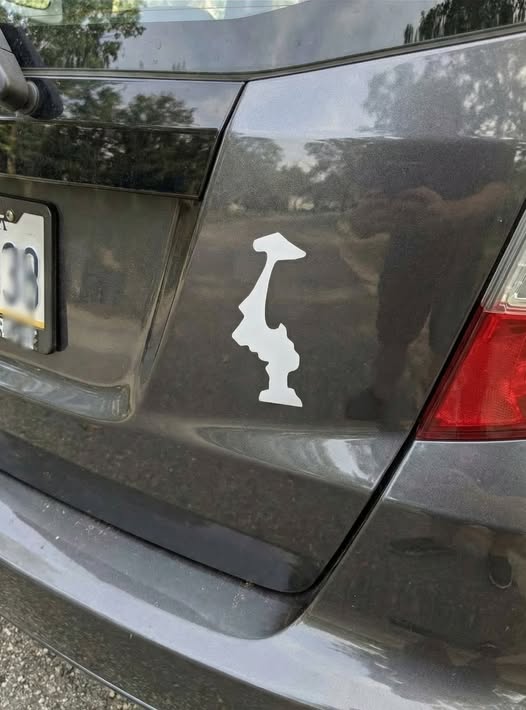
A drive anywhere through the Pacific Northwest reveals a small but curious detail: the outline of Washington state displayed on cars, tumblers, and laptops — except it’s completely upside down. At first, it can look like someone applied the sticker incorrectly. Look a little closer, though, and it becomes clear that the reversal is deliberate. For many residents, the flipped silhouette has evolved into a quiet badge of belonging and regional pride.
The design gained traction in the early 2010s, when minimalist state-outline decals became popular accessories for vehicles and outdoor gear. Washington’s rectangular profile is instantly recognizable, making it an easy candidate for playful reinterpretation. Turning it upside down transformed a simple shape into an insider’s wink — subtle enough that only fellow Washingtonians would immediately understand.
What began as a lighthearted visual joke steadily turned into a small cultural phenomenon. The upside-down decal started appearing on hiking equipment, reusable coffee cups, and commuter cars parked at trailheads and ferry terminals. It resonated especially with longtime locals who wanted a symbol of home that felt authentic rather than tourist-oriented.
One widely shared explanation for the flip references the region’s famously wet climate. In a place known for gray skies and steady drizzle, some joke that the state has simply been “rained over” or tipped upside down. The humor fits the Northwest temperament — dry, understated, and delivered with a straight face.
Others interpret the inverted shape as a low-key statement of affection. Instead of bold slogans or flashy graphics, the backward outline communicates pride in a more restrained way. It reflects a culture that values subtlety over spectacle and inside jokes over overt declarations.
There is also a scenic interpretation. Some residents say the upside-down border resembles a rugged mountain peak, a nod to the towering presence of Mount Rainier and the state’s dramatic landscapes. Whether intentional or not, the comparison reinforces Washington’s deep ties to the outdoors.
Over time, the sticker has come to represent more than a playful twist on geography. It embodies the character of the Pacific Northwest — creative, nature-oriented, and slightly unconventional. The simple act of flipping a familiar shape has created a shared visual language among people who call the region home.
Even those who relocate often keep the decal long after leaving. For them, it serves as a portable reminder of evergreen forests, ferry rides across Puget Sound, and mist drifting over quiet shorelines. In the end, the upside-down Washington outline carries a message that doesn’t need explanation: if you recognize it, you’re already part of the story.
Leave a Reply